

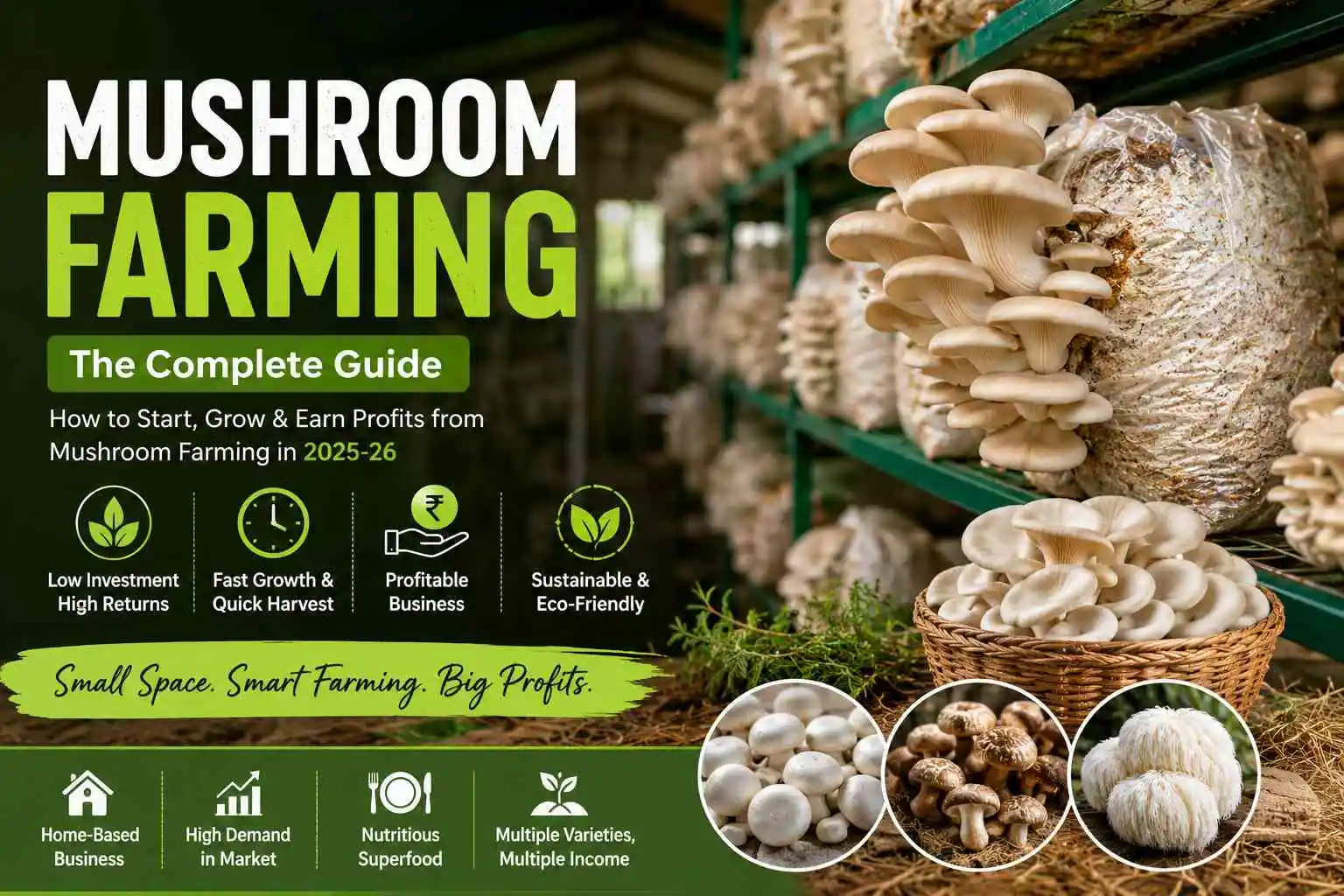

Mushroom Farming | Grow Mushroom at Home
Here’s something most people don’t expect: some of the most profitable farms in the world aren’t sprawling fields under open skies. They’re dark, humid rooms — sometimes no bigger than a garage — quietly producing thousands of kilograms of mushrooms every month.
Mushroom farming is rapidly becoming one of the most profitable and sustainable agricultural businesses.With increasing awareness about healthy eating, rising demand for nutritious food, and limited land requirements, mushroom cultivation offers an excellent opportunity for farmers, entrepreneurs, and even individuals looking to start a home-based business.
Unlike traditional farming, mushroom farming does not require large agricultural land holdings. It can be started in a small room, shed, basement, or controlled environment with relatively low investment. The short production cycle and high market demand make mushroom cultivation an attractive venture for both beginners and experienced farmers.
What you do need is the right knowledge. That’s exactly what this guide is here to give you.In this comprehensive guide, we will explore everything you need to know about mushroom farming, including types of mushrooms, climate requirements, cultivation methods, investment, profitability, challenges, and future opportunities.
What Is Mushroom Farming?
Mushroom farming — also called mushroom cultivation or fungiculture — is the controlled growing of edible or medicinal fungi for commercial or personal use. Unlike most crops, mushrooms don’t grow in soil. They grow on organic substrates like straw, sawdust, wood logs, rice husks, or even spent coffee grounds.
This makes mushroom farming extraordinarily versatile. You can run a meaningful operation in a basement, a shipping container, a converted barn, or a purpose-built climate-controlled facility. The barrier to entry is lower than almost any other form of food production, and the potential upside is genuinely impressive.
Why Mushroom Farming Makes Smart Business Sense
Before we get into the how, let’s look at the why — because the numbers here are worth paying attention to.
The global mushroom market was valued at approximately USD 65.6 billion in 2024 and is expected to reach USD 71.9 billion in 2025, with strong growth projected through 2033 at a CAGR of about 10.2%.
In India, the mushroom industry has expanded rapidly over the last two decades, with production increasing by more than ten times due to rising consumer awareness, growing demand for nutritious foods, expansion of the food-processing sector, and increasing export opportunities. Industry estimates indicate that India’s mushroom sector has been growing at approximately 10–15% annually in recent years.
Here’s what makes mushroom farming particularly compelling as a business:
- Fast turnaround: Many varieties go from inoculation to first harvest in 3 to 6 weeks. Compare that to most crops, which take months.
- High yield per square foot: Mushroom farming is one of the most space-efficient forms of food production on the planet. Vertical growing setups multiply this advantage dramatically.
- Low water usage: Mushrooms require moisture, but not irrigation in the traditional sense. Water consumption is a fraction of what field crops need.
- Year-round production: Unlike seasonal crops, mushroom farming is not weather-dependent. With the right indoor environment, you harvest every week of the year.
- Multiple revenue streams: Beyond fresh mushrooms, there’s a booming market for dried mushrooms, mushroom powder, spawn, grow kits, and medicinal extracts.
- Low land requirement: A serious commercial operation can be run on as little as 500–1,000 square feet of indoor space.
Best Varieties for Commercial Mushroom Farming
Choosing the right species for your mushroom farming venture is critical. Different varieties have different growing requirements, market prices, and target audiences.
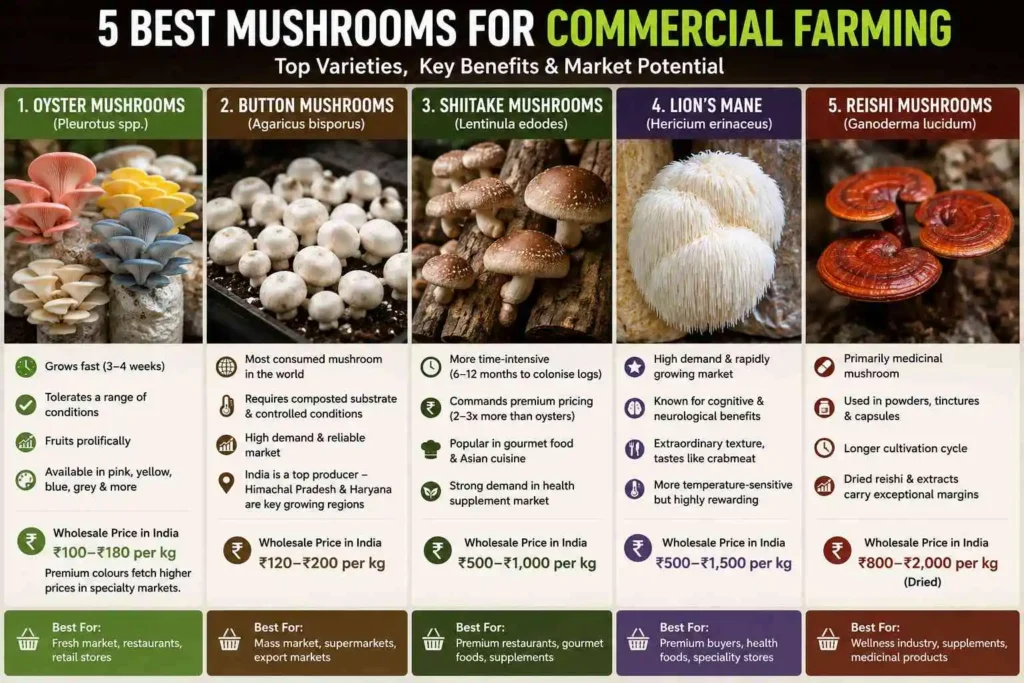
1. Oyster Mushrooms (Pleurotus spp.)
Oyster mushrooms are the single best starting point for beginner mushroom farmers. They grow fast (3–4 weeks), tolerate a range of conditions, and fruit prolifically. If you’re planning to grow them commercially, our complete oyster mushroom farming guide covers everything from substrate selection and growing conditions to harvesting and profitability. Pink, yellow, blue, and grey oysters each have their own appeal, and together they offer a visually compelling product range.
Wholesale prices in India typically range from ₹100–₹180 per kg, with premium markets paying considerably more for specialty colours.
2. Button Mushrooms (Agaricus bisporus)
The most consumed mushroom in the world. Button mushrooms require a composted substrate and more controlled conditions than oysters, making them slightly more demanding to grow — but the market is enormous and reliable. India is one of the world’s top button mushroom producers, with Himachal Pradesh and Haryana being key growing regions.
3. Shiitake Mushrooms (Lentinula edodes)
Shiitake farming is more time-intensive (logs can take 6–12 months to colonise), but the payoff is real. Shiitake commands premium pricing — often 2–3 times more than oyster mushrooms — and has loyal customers in gourmet food, Asian cuisine, and the health supplement market.
4. Lion’s Mane (Hericium erinaceus)
One of the most exciting varieties in mushroom farming right now. Lion’s mane has exploded in demand thanks to growing interest in its potential cognitive and neurological benefits. It looks extraordinary (like a white, shaggy waterfall), tastes like crabmeat, and sells for ₹500–₹1,500 per kg in premium markets. It’s more temperature-sensitive than oysters, but absolutely worth mastering.
5. Reishi (Ganoderma lucidum)
Reishi is primarily a medicinal mushroom, rarely eaten fresh but widely used in powders, tinctures, and capsules. The cultivation cycle is longer, but dried reishi and reishi extract products carry exceptional margins in the wellness market.
Beginner recommendation: Start with oyster mushrooms. Once your operation is stable and profitable, expand into shiitake or lion’s mane for higher margins.
What You Need to Start Mushroom Farming
One of the most refreshing things about mushroom farming is how modest the initial setup can be. Here’s what a basic operation requires:
Space: A clean, enclosed room or shed with the ability to control temperature and humidity. Ideal temperature for most varieties is 20–28°C during fruiting. Good air circulation is essential — mushrooms need fresh air exchange to fruit properly.
Substrate: The growing medium. Oyster mushrooms thrive on pasteurised wheat straw, sugarcane bagasse, or rice straw. Shiitake and lion’s mane prefer hardwood sawdust supplemented with wheat bran. Button mushrooms need a compost-based substrate, typically made from paddy straw, wheat straw, and poultry manure.
Spawn: Mushroom spawn is the “seed” of mushroom farming — the mycelium inoculated onto a carrier (usually grain or sawdust). Quality spawn from a reputable supplier is non-negotiable. Poor spawn means poor results, regardless of everything else you do right.
Basic equipment: Pressure cooker or drum steriliser (for substrate preparation), spray bottles or fogger (for humidity management), polypropylene grow bags, thermometer and hygrometer, and simple shelving for vertical stacking.
Total startup cost (small-scale): A beginner mushroom farming setup can be launched for as little as ₹20,000–₹50,000 in India for a 100–200 bag operation. Medium-scale commercial setups (1,000+ bags) typically require ₹1–3 lakh, depending on automation and infrastructure.
Step-by-Step: How Mushroom Farming Actually Works
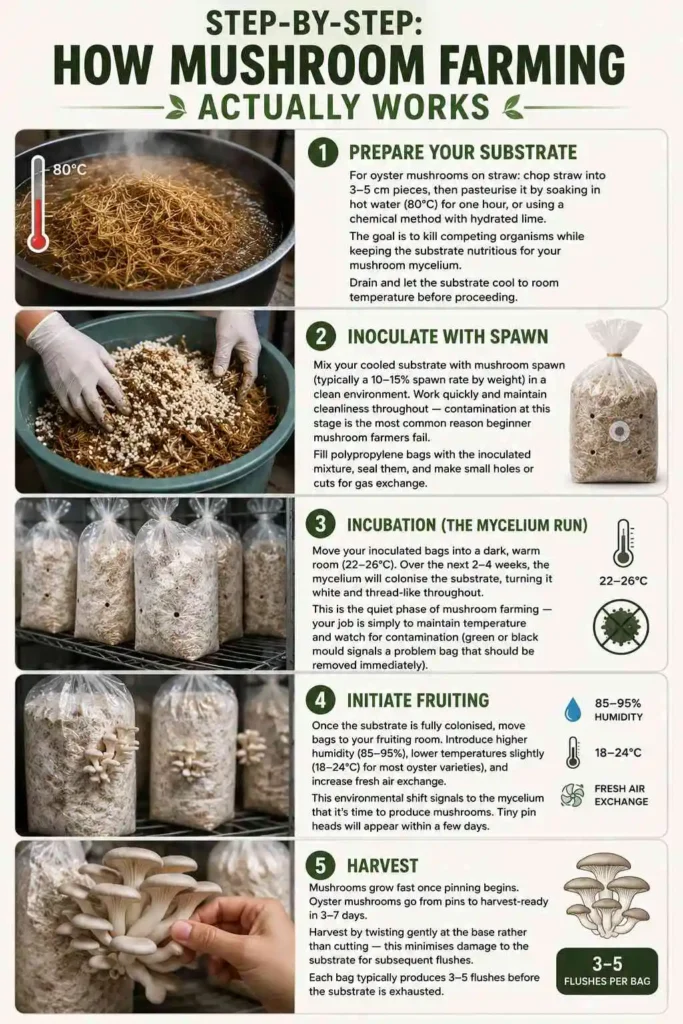
Step 1 — Prepare Your Substrate
For oyster mushrooms on straw: chop straw into 3–5 cm pieces, then pasteurise it by soaking in hot water (80°C) for one hour, or using a chemical method with hydrated lime. The goal is to kill competing organisms while keeping the substrate nutritious for your mushroom mycelium. Drain and let the substrate cool to room temperature before proceeding.
Step 2 — Inoculate with Spawn
Mix your cooled substrate with mushroom spawn (typically a 10–15% spawn rate by weight) in a clean environment. Work quickly and maintain cleanliness throughout — contamination at this stage is the most common reason beginner mushroom farmers fail. Fill polypropylene bags with the inoculated mixture, seal them, and make small holes or cuts for gas exchange.
Step 3 — Incubation (The Mycelium Run)
Move your inoculated bags into a dark, warm room (22–26°C). Over the next 2–4 weeks, the mycelium will colonise the substrate, turning it white and thread-like throughout. This is the quiet phase of mushroom farming — your job is simply to maintain temperature and watch for contamination (green or black mould signals a problem bag that should be removed immediately).
Step 4 — Initiate Fruiting
Once the substrate is fully colonised, move bags to your fruiting room. Introduce higher humidity (85–95%), lower temperatures slightly (18–24°C for most oyster varieties), and increase fresh air exchange. This environmental shift signals to the mycelium that it’s time to produce mushrooms. Tiny pin heads will appear within a few days.
Step 5 — Harvest
Mushrooms grow fast once pinning begins. Oyster mushrooms go from pins to harvest-ready in 3–7 days. Harvest by twisting gently at the base rather than cutting — this minimises damage to the substrate for subsequent flushes. Each bag typically produces 3–5 flushes before the substrate is exhausted.
Mushroom Farming Profitability: Real Numbers
Let’s look at a practical small-scale example:
- Setup: 500 oyster mushroom bags
- Substrate + spawn cost: Approx. ₹15,000
- Expected yield per bag (total flushes): 400–600 grams
- Total yield: 200–300 kg
- Wholesale price: ₹120/kg
- Gross revenue: ₹24,000–₹36,000
- Net profit (after costs): ₹9,000–₹20,000 per cycle
With cycle times of 6–8 weeks and overlapping batches running simultaneously, a well-organised mushroom farmer running 500+ bags continuously can generate ₹1.5–₹3 lakh per month from a modest indoor setup. Direct-to-consumer sales (restaurants, farmers’ markets, subscription boxes) push margins even higher.
| Mushroom Type | Growing Time | Difficulty | Selling Price (India) | Best For |
|---|---|---|---|---|
| Oyster | 3–4 weeks | Easy | ₹100–₹180/kg | Beginners |
| Button | 6–8 weeks | Medium | ₹120–₹200/kg | Large-scale farming |
| Shiitake | 2–6 months | Medium | ₹500–₹1,000/kg | Premium markets |
| Lion’s Mane | 4–6 weeks | Medium | ₹500–₹1,500/kg | Specialty buyers |
| Reishi | 3–6 months | Hard | ₹800–₹2,000/kg (dried) | Medicinal products |
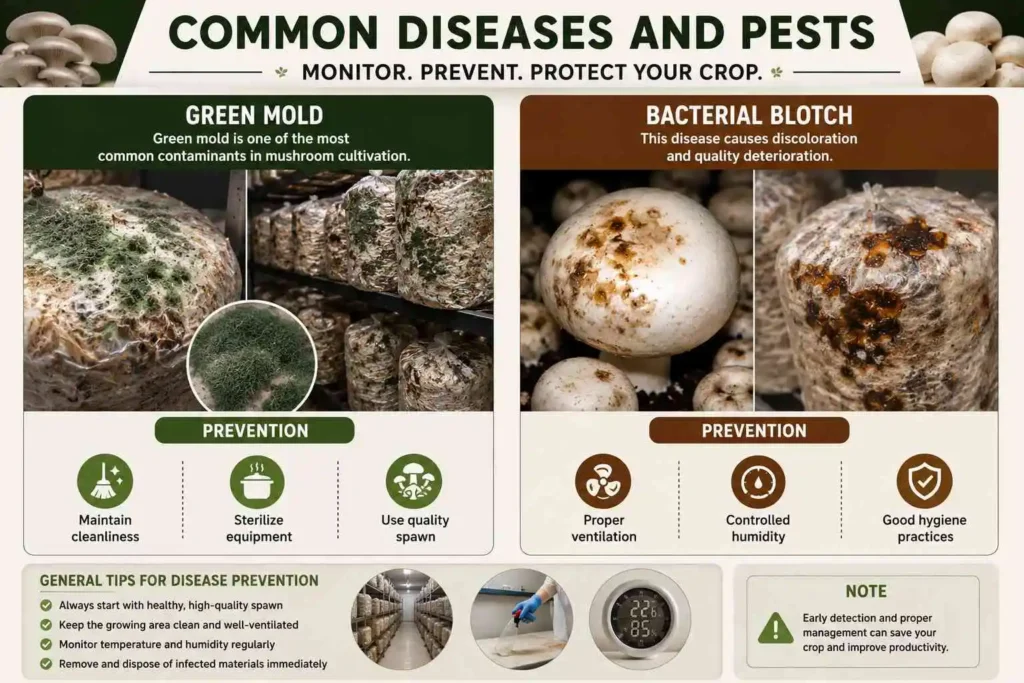
Common Diseases and Pests in Musroom Farming
Although mushroom farming can be profitable, growers must monitor for diseases and pests.
Green Mold
Green mold is one of the most common contaminants in mushroom cultivation.
Prevention
- Maintain cleanliness
- Sterilize equipment
- Use quality spawn
Bacterial Blotch
This disease causes discoloration and quality deterioration.
Prevention
- Proper ventilation
- Controlled humidity
- Good hygiene practices
Insect Pests
Common pests include:
- Flies
- Mites
- Beetles
Regular monitoring helps prevent infestations.
Common Mistakes New Mushroom Farmers Make
Even smart people make these errors when starting out in mushroom farming:
Skimping on substrate preparation. Inadequate pasteurisation is the number one cause of contamination. Don’t rush this step.
Buying cheap spawn. Spawn quality directly determines your yields. Source from a certified, reputable supplier, even if it costs more.
Ignoring air exchange. Mushrooms need CO₂ to leave and fresh air to enter during fruiting. Stuffy rooms produce long, leggy, low-quality mushrooms.
Starting too big. Run a small pilot batch first. Learn your environment, troubleshoot your process, then scale.
Having no market plan. Growing the mushrooms is only half the job. Know where you’re selling them before the first flush appears.
Where to Sell Your Mushrooms
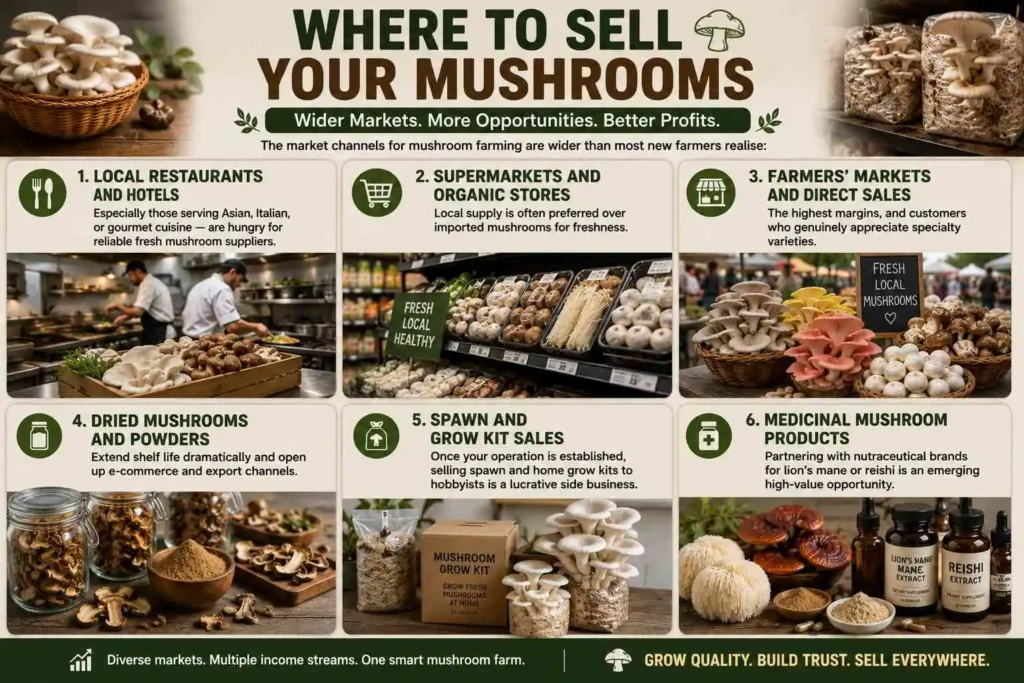
The market channels for mushroom farming are wider than most new farmers realise:
- Local restaurants and hotels — especially those serving Asian, Italian, or gourmet cuisine — are hungry for reliable fresh mushroom suppliers.
- Supermarkets and organic stores — local supply is often preferred over imported mushrooms for freshness.
- Farmers’ markets and direct sales — the highest margins, and customers who genuinely appreciate specialty varieties.
- Dried mushrooms and powders — extend shelf life dramatically and open up e-commerce and export channels.
- Spawn and grow kit sales — once your operation is established, selling spawn and home grow kits to hobbyists is a lucrative side business.
- Medicinal mushroom products — partnering with nutraceutical brands for lion’s mane or reishi is an emerging high-value opportunity.
Government Support for Mushroom Farming
Various government agencies promote mushroom cultivation through training programs and financial assistance.
Support may include:
- Subsidies
- Skill development programs
- Agricultural loans
- Technical guidance
Farmers should check with:
- National Horticulture Board
- National Horticulture Mission
- State horticulture departments
Conclusion
Mushroom farming sits in a rare sweet spot for agricultural entrepreneurs: low startup costs, fast returns, year-round production, and a market that’s genuinely growing. Whether you’re looking to start a side hustle, build a full-time farming business, or add a high-margin product to an existing operation, mushrooms deserve serious consideration.
The learning curve is real — contamination, environmental control, and market development all take time to master. But unlike many farming ventures, mushroom farming gives you rapid feedback loops. You’ll know within weeks whether a batch succeeded or failed, which means you learn fast and improve faster.
Start small. Stay clean. Know your market. And don’t be surprised when what started as a hundred bags in a spare room grows into something you never expected.
Found this useful? Share it with someone who’s been sitting on the fence about starting their own mushroom farm.
Want to diversify your farming business? Explore our detailed guides on Dragon Fruit Farming, Goat Farming, and Poultry Farming. If you’re planning to start a goat farming business and need funding, don’t miss our comprehensive Goat Farming Loan Guide for information on loans, subsidies, and eligibility requirements.
Frequently Asked Questions About Mushroom Farming
How much does it cost to start a mushroom farm?
A small-scale beginner setup in India can be started for ₹20,000–₹50,000. A commercially viable operation with consistent output typically requires ₹1–5 lakh depending on scale and automation.
Which mushroom is most profitable to farm?
Lion’s mane and shiitake offer the highest per-kg prices, but oyster mushrooms offer the best combination of ease, speed, and consistent demand for beginners.
Can mushroom farming be done at home?
Yes — many successful mushroom farmers start in a spare room, garage, or shed. The key is maintaining cleanliness, humidity, and temperature.
How long does it take to grow mushrooms commercially?
Oyster mushrooms can be harvested in as little as 3–4 weeks from inoculation. Button and shiitake mushrooms take longer, typically 6–12 weeks for the first harvest.
Is mushroom farming profitable in India?
Very much so. India’s domestic mushroom consumption is growing rapidly, and export opportunities (especially for dried and value-added products) are expanding year on year.
Newsletter