


Dragon Fruit Farming | Cost, Profit & Cultivation Guide
Let’s be honest—when most people hear “dragon fruit,” they think of the bright pink fruit they see in supermarkets or on social media. What many people don’t realize is that behind its eye-catching appearance lies a fast-growing and profitable farming business. As demand for healthy and exotic fruits continues to rise, dragon fruit farming is becoming an attractive opportunity for farmers looking to earn higher profits from their land.
Dragon fruit farming has evolved from a niche tropical curiosity into one of the most profitable specialty crops in the world. And if you’re a farmer, landowner, or agricultural entrepreneur who hasn’t seriously considered pitaya yet, this might be the article that changes that.
Originally native to Central and South America, dragon fruit is now successfully cultivated in many Indian states, including Gujarat, Maharashtra, Karnataka, Andhra Pradesh, Tamil Nadu, and West Bengal. The fruit’s ability to thrive in hot and dry climatic conditions makes it an ideal crop for Indian farmers looking for alternatives to traditional farming.
Whether you’re starting from scratch or scaling an existing operation, this guide breaks down exactly what it takes to farm dragon fruit successfully, including climate requirements, land preparation, planting methods, irrigation, pest management, harvesting, and profitability.
What Is Dragon Fruit Farming?
Before understanding dragon fruit farming, it’s important to know a little about the fruit itself and why it has become so popular in recent years.
Dragon fruit, scientifically known as Hylocereus spp., is a tropical fruit that belongs to the cactus family (Cactaceae). It is also commonly known as Pitaya or Pitahaya. The fruit is easily recognized by its vibrant pink or yellow skin and white or red flesh dotted with tiny black seeds.
Apart from its unique appearance, dragon fruit is highly valued for its nutritional benefits. It is packed with essential nutrients such as:
- Vitamin C
- Dietary Fiber
- Antioxidants
- Magnesium
- Iron
- Calcium
Regular consumption of dragon fruit may help support immunity, improve digestion, promote heart health, and provide essential nutrients for overall well-being.
Thanks to its impressive health benefits and growing demand for nutritious foods, dragon fruit has become increasingly popular among health-conscious consumers. Today, it is commonly found in supermarkets, fitness centers, hospitals, juice bars, and premium fruit markets, making it a highly profitable crop for farmers.
Dragon fruit farming is the practice of growing dragon fruit plants for commercial sale or personal use.
Although it originated in Central America, dragon fruit is now grown in many countries, including India, Vietnam, Thailand, Israel, and Australia. Due to its increasing demand and good market value, dragon fruit farming has become a popular choice among farmers worldwide.
What makes dragon fruit farming unique is its combination of low water demand, high market value, and long productive lifespan. A well-managed dragon fruit plant can produce fruit for 20 to 30 years, which means your initial setup investment keeps paying off long after competitors have replanted.
Why Dragon Fruit Farming Is Worth Your Attention Right Now
The global dragon fruit market is estimated to be worth more than USD 1.2 billion in 2025 and is expected to continue growing in 2026 as consumer demand for healthy and exotic fruits increases worldwide. Demand is rising particularly in North America, Europe, and the Middle East, where local production is limited and imports supply most of the market. This growing international demand is creating new opportunities for dragon fruit farmers and exporters.
Here’s why more farmers are making the switch:
- High profit margins: Dragon fruit can fetch anywhere from ₹80 to ₹200 per kg in Indian wholesale markets, and far more in premium export channels.
- Drought tolerance: Unlike many high-value crops, dragon fruit handles dry conditions well, making it viable in areas where water is scarce.
- Growing demand: Health-conscious consumers are driving demand for superfruits — and dragon fruit is right at the top of that list.
- Government support: In India, countries across Southeast Asia, and parts of Africa, dragon fruit cultivation is supported through subsidies and horticultural schemes.
- Year-round income potential: Staggered planting and variety selection can result in multiple harvests throughout the year.
Varieties You Should Know Before You Plant
Choosing the right variety is one of the most important decisions in dragon fruit farming. Each has different market demand, taste profiles, and yield behaviour.
1. White-fleshed (Hylocereus undatus)The most widely grown variety worldwide. It has a bright pink skin with white flesh and mild sweetness. It’s hardy, easy to grow, and has the longest shelf life — making it ideal for export.
2.Red-fleshed ( Hylocereus costaricensis ) Known for its deep magenta flesh and higher antioxidant content, this variety commands premium pricing. It’s more heat-sensitive but highly sought in urban markets.
3.Yellow Dragon Fruit (Selenicereus megalanthus) Yellow on the outside, white on the inside — and arguably the sweetest of the three. It grows more slowly and is harder to cultivate, but growers who crack it enjoy some of the highest prices in the market.
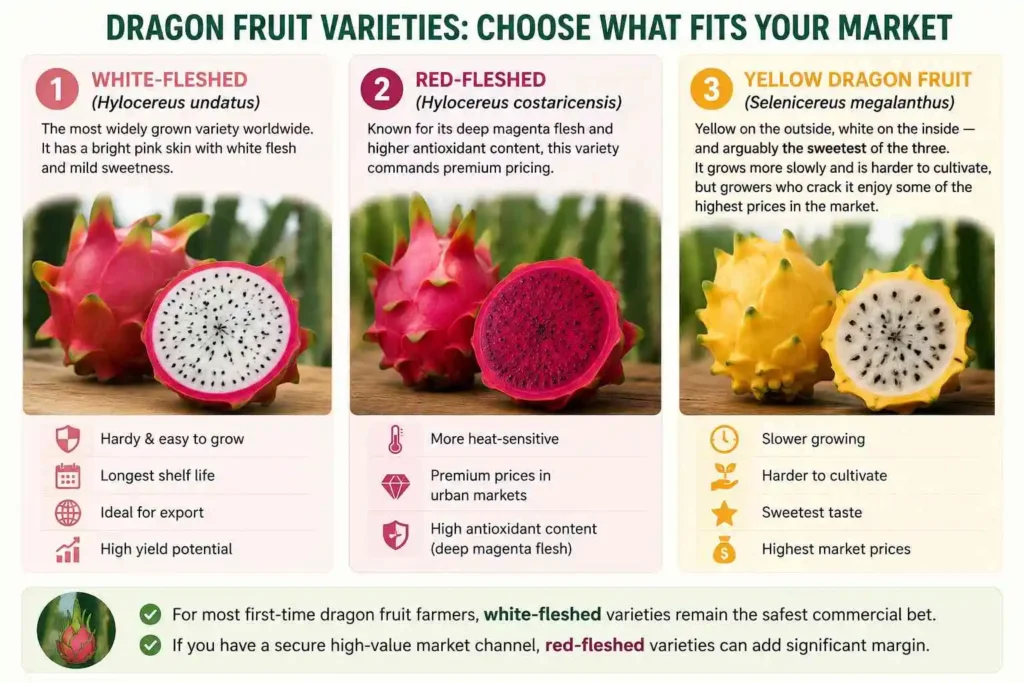
For most first-time dragon fruit farmers, white-fleshed varieties remain the safest commercial bet. If you have a secure high-value market channel, red-fleshed varieties can add significant margin.
Climate Requirements for Dragon Fruit Farming
Dragon fruit farming thrives in specific environmental conditions. Get these right and half the battle is already won.
Climate: Dragon fruit grows best in warm tropical and subtropical climates with temperatures ranging between 20°C and 38°C. Since it is a cactus plant, it can tolerate dry conditions better than many other fruit crops. However, it does not grow well in areas that experience frost or extremely cold temperatures.
The crop performs well in regions receiving moderate rainfall, but farmers in drier areas can successfully grow dragon fruit by using drip irrigation. This makes dragon fruit a suitable option for many parts of India.
Soil: Well-drained sandy loam or loamy soil with a pH of 5.5 to 7 suits dragon fruit best. Waterlogging is the enemy here — root rot sets in quickly if drainage is poor. Raised beds or sloped terrain naturally help with this.
Sunlight: Full sun exposure (at least 6–8 hours daily) is non-negotiable. Shaded areas significantly reduce flowering and fruiting. Keep this in mind when planning farm layout.
How to Start Dragon Fruit Farming: Step by Step
1. Land Preparation
Clear the land thoroughly and till to about 30–45 cm depth. Add organic matter (compost or well-rotted farmyard manure) to improve soil structure. Dragon fruit roots are shallow, so enriched topsoil matters more than subsoil quality.
2.Setting Up Support Structures
Dragon fruit is a climbing cactus — it needs support to grow upright and bear fruit effectively. The two most common systems are:
- Concrete or wooden posts (single-pole or T-bar) with a circular iron ring at the top, allowing the cactus to sprawl outward.
- Trellis systems for high-density farming operations.
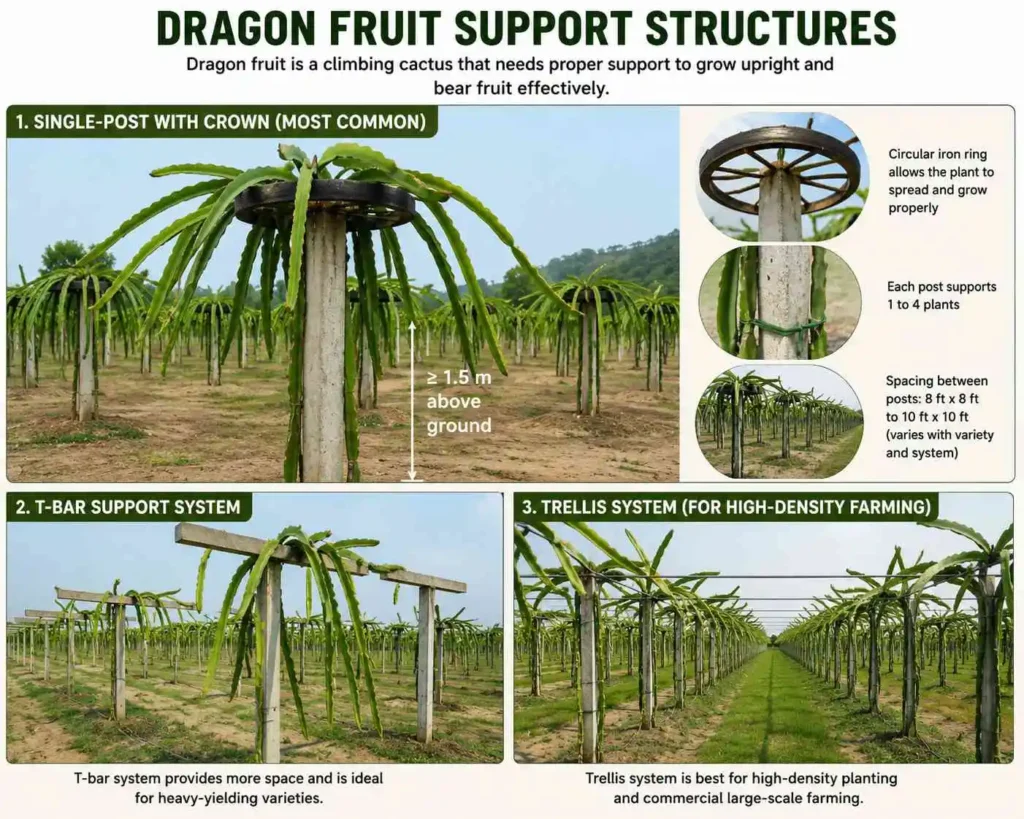
The single-post method with a crown frame remains the most popular globally. Each post supports one to four plants and should be at least 1.5 metres above ground.
3. Planting of Dragon Fruit— Cuttings vs. Seeds
Almost all commercial dragon fruit farming uses stem cuttings, not seeds. Seeds take too long (3–5 years to fruit), while cuttings from healthy, high-yielding mother plants can begin fruiting in as little as 12–18 months.
Select cuttings that are at least 30 cm long from mature, disease-free plants. Let them dry in a shaded area for 5–7 days before planting to prevent rot at the cut end. Plant them 5–8 cm deep at the base of your support posts.
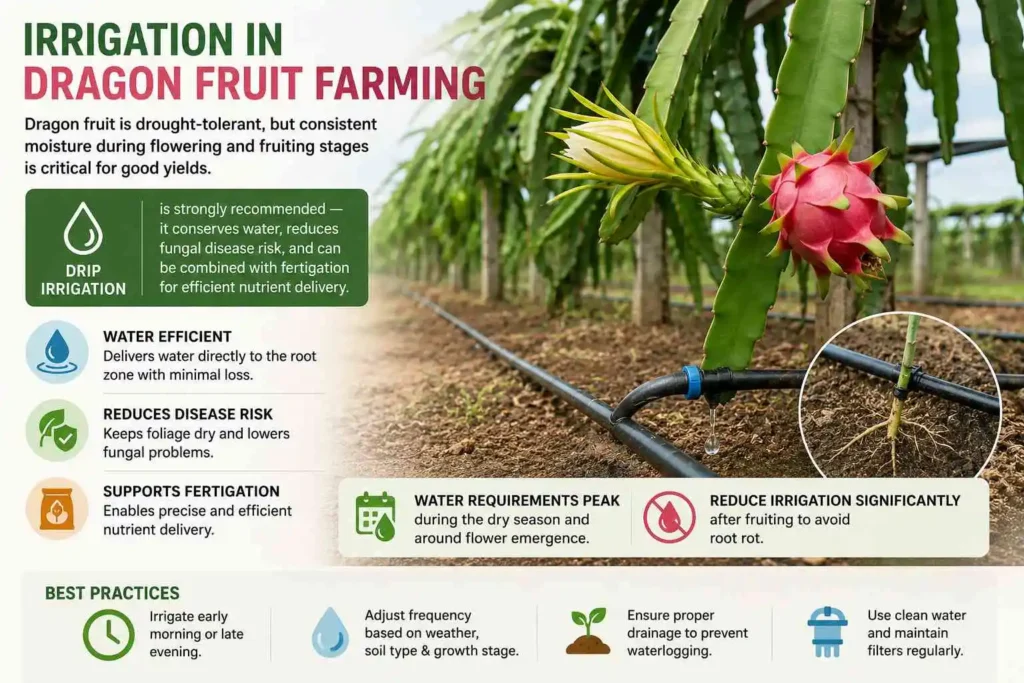
4. Irrigation in Dragon Fruit Farming
Dragon fruit is drought-tolerant, but consistent moisture during flowering and fruiting stages is critical for good yields. Drip irrigation is strongly recommended — it conserves water, reduces fungal disease risk, and can be combined with fertigation for efficient nutrient delivery.
Water requirements peak during the dry season and around flower emergence. Reduce irrigation significantly after fruiting to avoid root rot.
5. Fertilisation in Dragon Fruit Farming
Balanced nutrition drives productive dragon fruit farming. A phased approach works best:
- Vegetative phase: Nitrogen-heavy fertilisers to support stem and branch growth.
- Pre-flowering phase: Shift to phosphorus and potassium to encourage flowering.
- Post-harvest: A balanced NPK application to restore plant vigour.
Organic farmers can use vermicompost, neem cake, and bone meal to grow dragon fruit. These natural fertilizers help the plants grow well. Organic dragon fruit can often be sold at a higher price because many customers prefer organic produce.
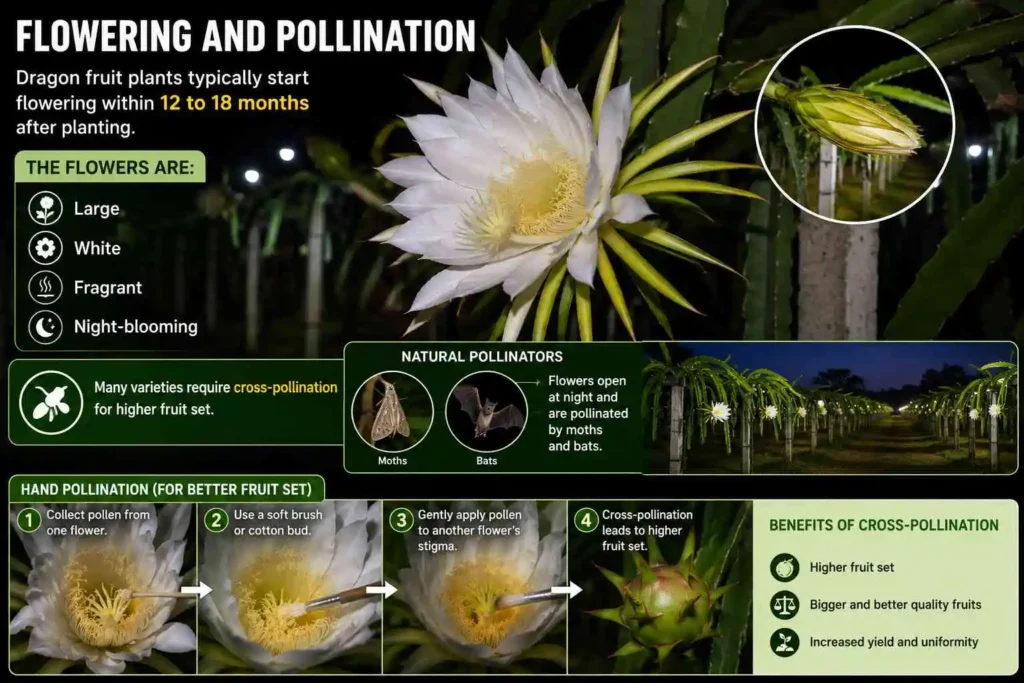
6 Flowering and Pollination
Dragon fruit plants typically start flowering within 12 to 18 months after planting.
The flowers are:
- Large
- White
- Fragrant
- Night-blooming
Many varieties require cross-pollination for higher fruit set. Farmers often encourage pollinators or manually pollinate flowers to improve productivity.
7.Weed Management
Weeds compete with dragon fruit plants for nutrients, water, and sunlight.
Weed Control Measures
- Manual weeding
- Mulching
- Organic ground cover
- Controlled herbicide use where necessary
Mulching is especially beneficial because it conserves soil moisture and suppresses weed growth.
8. Pest and Disease Management
Dragon fruit farming faces relatively few pest pressures compared to many crops, but a few threats deserve attention:
- Stem rot (Fusarium): Caused by overwatering or poor drainage. Prevention through proper soil structure is key.
- Mealybugs and scale insects: Treat with neem oil spray or introduce natural predators like ladybirds.
- Fruit flies: Use pheromone traps around harvest season.
- Birds and bats: Simple netting protects fruit in the final ripening stage.
Regular farm walks and early detection go a long way in keeping your crop clean.
Yield, Harvesting, and Profitability
When Does Dragon Fruit Start Producing? From cuttings, expect the first flowers in about 12–18 months. Commercial yields typically begin from year two onward and improve significantly from year three.
Yield Expectations: A mature dragon fruit farm under good management produces between 5–10 tonnes per acre per year from year 3. Premium varieties in optimal conditions can exceed this range.
Harvesting: Dragon fruit flowers bloom at night (they’re pollinated by moths and bats), and each flower only opens for one night. Fruit takes approximately 28–35 days after successful pollination to reach full maturity. You’ll know it’s ready when the fruit wings (the green leaf-like projections on the skin) begin to wilt and the skin transitions to full colour. Harvest by hand using clean, sharp pruning shears.
Investment & Profitability of Dragon Fruit Farming
Dragon fruit farming is considered one of the most profitable fruit farming ventures in India.
| Item | Approximate Cost (₹) |
|---|---|
| Cement poles and support structures | 2.5–4 lakh |
| Planting material (cuttings) | 50,000–1 lakh |
| Drip irrigation system | 40,000–80,000 |
| Labour and land preparation | 30,000–50,000 |
| Miscellaneous expenses | 20,000–50,000 |
| Total Estimated Cost | 4–8 lakh |
Note: Actual costs may vary depending on region, input prices, planting density, and government subsidy availability.
Income Potential
Assuming:
- Yield: 10 tonnes per acre
- Average selling price: ₹100 per kg
Gross income can reach:
₹5 lakh to ₹15 lakh per acre.
With efficient management and premium market access, profits can be significantly higher.
Conclusion
Dragon fruit farming is a profitable and sustainable agricultural venture that offers excellent opportunities for Indian farmers. With proper planning, suitable infrastructure, efficient irrigation, and good management practices, farmers can generate substantial income from dragon fruit cultivation.
The crop’s growing popularity, low water requirement, long productive lifespan, and premium market value make it a smart investment for modern agriculture. Whether you are a new farmer or an experienced grower looking to diversify your income, dragon fruit farming can be a rewarding business with strong long-term potential.
If you’re interested in the livestock farming business or already running a livestock farm, you may also find our Goat Farming Guide helpful. You can also explore our Chicken Farming Guide.
If you want to grow another exotic crop like dragon fruit, you can also read our Blueberry Farming Guide for more practical tips and information.
Frequently Asked Questions About Dragon Fruit Farming
How many years does dragon fruit take to produce commercially?
Most farms see their first significant harvest in year 2, with full commercial production from year 3 onward.
Can dragon fruit farming be done on 1 acre?
Absolutely. In fact, many successful operations start on 1–2 acres and scale from there.
Is dragon fruit farming profitable in India?
Yes — India’s domestic demand is growing fast, and export opportunities to the Middle East and Europe are significant. States like Maharashtra, Karnataka, Andhra Pradesh, and Tamil Nadu have seen strong adoption.
What is the lifespan of a dragon fruit plant?
With proper care, dragon fruit plants remain productive for 20–30 years.
Newsletter




It’s awesome to visit this web page and reading the views of all colleagues on the topic of this piece of writing, while I am also keen of getting know-how.
Hi Godesi,
Thank you so much for your kind words — really glad you found the article useful! Dragon fruit farming is indeed a fascinating topic, and there’s a lot to learn from real experiences shared by fellow readers too.