


How to Start Chicken Farming Business | Poultry Farming
The poultry farming business has become one of the fastest-growing agricultural industries in India and is considered one of the most profitable and accessible agribusinesses in the world. With a relatively low startup cost, a fast production cycle, and an ever-growing global demand for eggs and poultry meat, it is no wonder that millions of entrepreneurs are turning to chicken farming as a reliable source of income.
Whether you live in a village or a semi-urban area, starting a poultry farming business can generate steady monthly income with proper planning and management.
Today, poultry farming is no longer limited to traditional methods. Modern poultry farming techniques, smart equipment, online marketing, and organic farming models are helping farmers increase profits and build successful brands. Many young entrepreneurs are also entering the poultry industry because it requires relatively low investment compared to many other businesses.
If you are planning to start a chicken farming business, understanding the basics is very important. From choosing the right chicken breed to managing feed and marketing your poultry products, every step plays a major role in your success.
This guide walks you through every essential step — from planning and setup to modern innovations that are transforming the industry.
Research & Business Planning
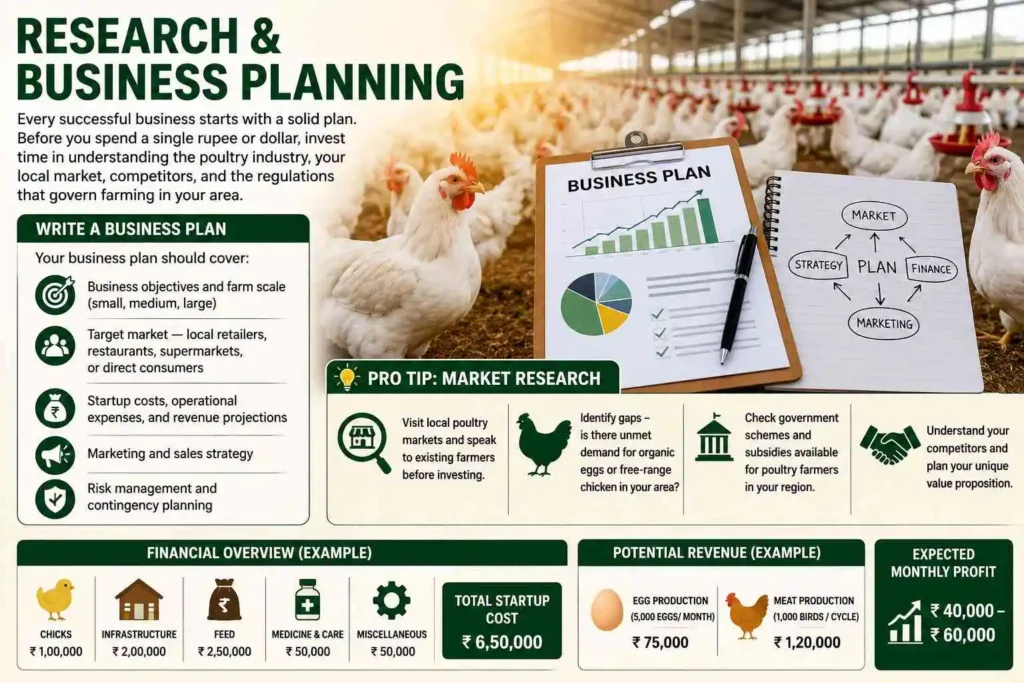
Every successful business starts with a solid plan. Before you spend a single rupee or dollar, invest time in understanding the poultry industry, your local market, competitors, and the regulations that govern farming in your area.
Write a Business Plan Your business plan should cover:
• Business objectives and farm scale (small, medium, large)
• Target market — local retailers, restaurants, supermarkets, or direct consumers
• Startup costs, operational expenses, and revenue projections
• Marketing and sales strategy
• Risk management and contingency planning
Pro Tip: Market Research
- Visit local poultry markets and speak to existing farmers before investing.
- Identify gaps — is there unmet demand for organic eggs or free-range chicken in your area?
- Check government schemes and subsidies available for poultry farmers in your region.
Understanding the Chicken Farming Business
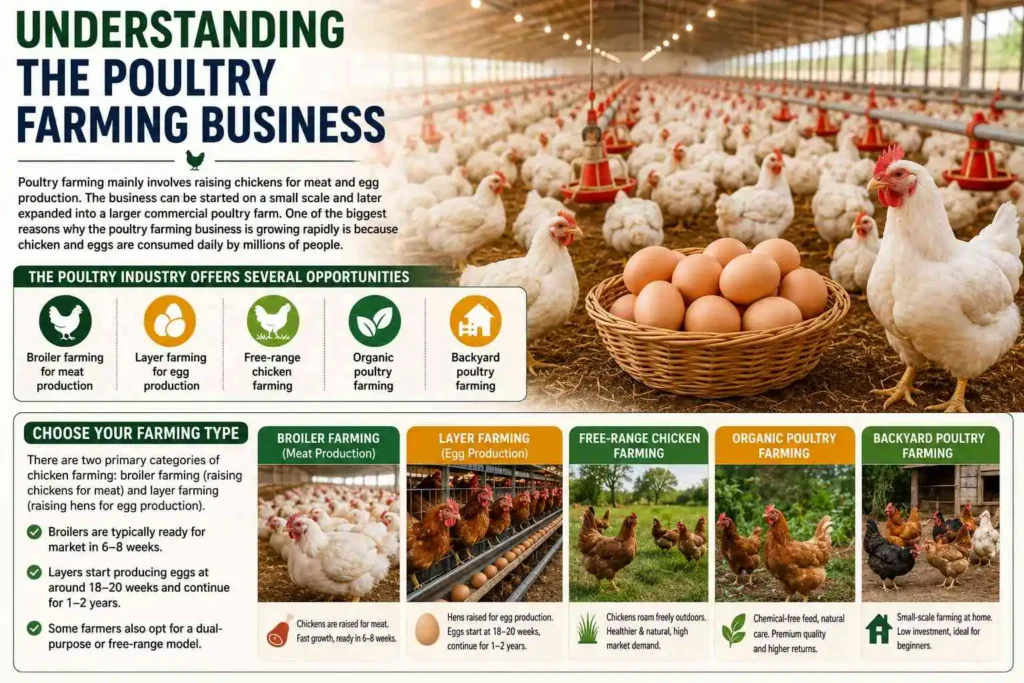
Poultry farming mainly involves raising chickens for meat and egg production. The business can be started on a small scale and later expanded into a larger commercial poultry farm. One of the biggest reasons why the poultry farming business is growing rapidly is because chicken and eggs are consumed daily by millions of people.
The poultry industry offers several opportunities, including:
- Broiler farming for meat production
- Layer farming for egg production
- Free-range chicken farming
- Organic poultry farming
- Backyard poultry farming
Choose Your Farming Type There are two primary categories of chicken farming: broiler farming (raising chickens for meat) and layer farming (raising hens for egg production). Broilers are typically ready for market in 6–8 weeks, while layers start producing eggs at around 18–20 weeks and continue for 1–2 years. Some farmers also opt for a dual-purpose or free-range model, which commands premium pricing in today’s health-conscious markets.
Selecting the Right Location & Infrastructure
Location can make or break your poultry farm. Your site should be away from residential areas (to avoid noise and odour complaints), have good road access for supply deliveries and product pickup, and be close enough to your target market to minimise transport costs. It is also important to choose a location with proper drainage systems because wet conditions increase disease risks.
Key Infrastructure Requirements for Chicken Farming
• Chicken House / Shed: A clean and airy shed that protects chickens from heat, rain, dogs, snakes, and other animals. The shed should also have enough space for the birds to stay healthy and grow properly.
• Feeding & Watering Systems: Chickens should always get clean food and water. Automatic feeders and drinkers help save time, labour, and reduce feed wastage.
• Lighting System: Proper lighting helps chickens eat well, grow faster, and improves egg production in layer farming.
• Waste Management: Chicken waste should be cleaned regularly. Farmers can use it to make organic fertiliser or biogas, which can also give extra income.
• Biosecurity Measures: Keeping the farm clean, limiting visitors, washing feet before entering, and separating sick birds help protect chickens from diseases.
Start Small and Scale Gradually
One of the biggest mistakes beginners make is starting too large without experience. It is always better to start with a smaller number of chickens and expand gradually after learning the business properly.
For beginners, a good starting point could be:
- 100 to 500 broiler chickens
- 100 to 300 layer chickens
Starting small helps reduce risk and allows you to understand poultry farm management practically.
Choosing the Right Chicken Breeds
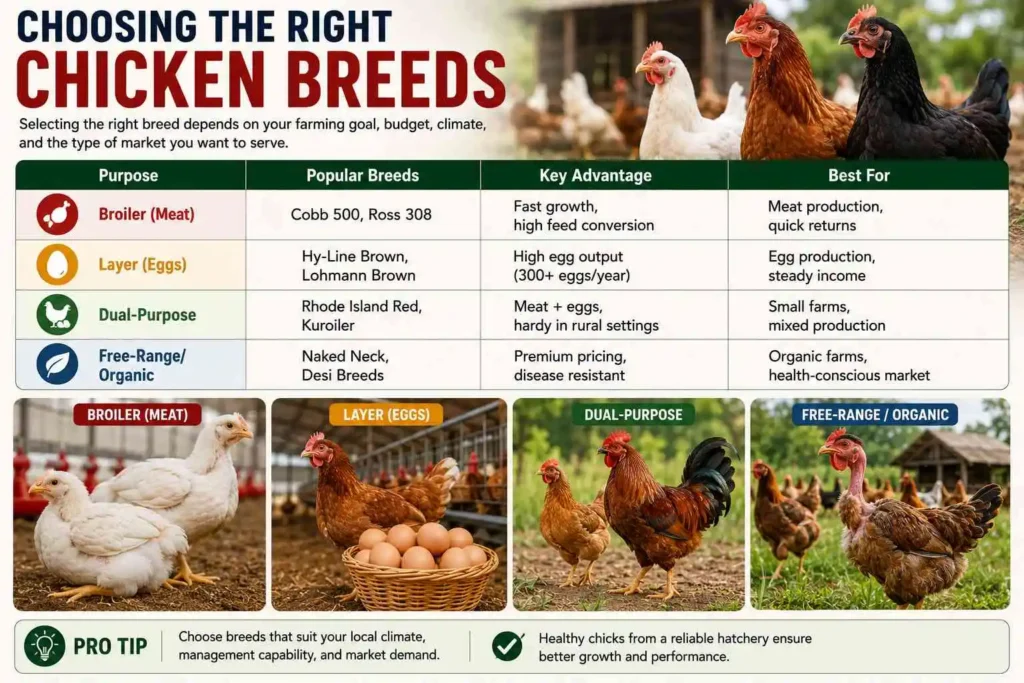
| Purpose | Popular Breeds | Key Advantage |
| Broiler (Meat) | Cobb 500, Ross 308 | Fast growth, high feed conversion |
| Layer (Eggs) | Hy-Line Brown, Lohmann Brown | High egg output (300+ eggs/year) |
| Dual-Purpose | Rhode Island Red, Kuroiler | Meat + eggs, hardy in rural settings |
| Free-Range/Organic | Naked Neck, Desi Breeds | Premium pricing, disease resistant |
Nutrition & Feed Management
Feed accounts for 60–70% of total poultry production costs, making feed management one of the most critical aspects of your business. A well-balanced diet ensures optimal growth, high egg production, and strong immunity against disease.
Feeding Phases
• Starter Feed (0–3 weeks): High protein (22–24%) to support rapid early growth.
• Grower Feed (3–6 weeks): Moderate protein (18–20%) with added energy sources.
• Finisher Feed (6 weeks to market): Lower protein, higher energy for weight gain.
• Layer Feed (from 18 weeks): High calcium content for strong eggshell formation.
Natural Feed Supplements Used in Poultry Farming
Modern poultry farmers are now using natural feed supplements to keep chickens healthy and reduce the use of antibiotics. These supplements help improve immunity, digestion, growth, and overall bird health.
• Garlic: Garlic is commonly used as a natural immunity booster. It may help improve digestion, reduce harmful bacteria, support respiratory health, and help control some parasites. Farmers usually mix small amounts of crushed garlic in feed or drinking water.
• Turmeric: Turmeric contains natural anti-inflammatory and antibacterial properties. It helps improve immunity, supports liver health, and may help chickens recover faster from stress or illness. Turmeric powder is often mixed with feed in small quantities.
• Probiotics: Probiotics are good bacteria that help maintain a healthy digestive system in chickens. They improve nutrient absorption, digestion, feed efficiency, and help reduce stomach infections and diarrhoea. Probiotics are available as powders or liquid supplements.
• Herbal Additives: Many farmers use natural herbs such as neem, tulsi (holy basil), oregano, aloe vera, and ginger. These herbs may help improve immunity, reduce stress, support digestion, and protect birds from common diseases naturally.
Using natural supplements regularly can:
- Improve bird immunity
- Support faster and healthier growth
- Improve feed efficiency
- Reduce disease problems
- Lower dependence on antibiotics
- Produce healthier poultry products
However, these supplements should be used in the correct quantity along with balanced poultry feed, clean water, proper vaccination, and good farm hygiene for the best results.
Ways to Reduce Feed Cost in Poultry Farming
Feed is the biggest expense in poultry farming, so reducing feed waste and using smart feeding methods can increase profit.
1. Reduce Feed Wastage
A lot of feed is wasted when chickens throw it outside the feeder.
To reduce waste:
- Use good quality feeders
- Do not overfill feeders
- Keep feeders at the correct height
- Clean wet or spoiled feed regularly
Even small feed savings can increase profit.
2. Use Locally Available Feed Ingredients
Farmers can reduce costs by using local ingredients such as:
- Maize
- Broken rice
- Wheat bran
- Rice bran
- Bajra
- Soybean meal
Health Management & Disease Control
Disease outbreaks can destroy an entire poultry farm within days. This is why vaccination and biosecurity are critical in poultry farming.
Some common poultry diseases include Newcastle disease, bird flu, coccidiosis, and fowl pox. Farmers must follow proper vaccination schedules and maintain cleanliness throughout the farm.
Core Health Practices
• Follow a strict vaccination schedule (Newcastle Disease, Marek’s Disease, Gumboro, Fowl Pox).
• Maintain biosecurity — limit farm visitors, disinfect equipment, and use dedicated farm clothing.
• Conduct daily health inspections; remove and isolate sick birds immediately.
• Keep mortality records and consult a licensed veterinarian at the first sign of unusual behaviour.
• Clean and disinfect the poultry house between each batch of birds (all-in, all-out system).
Expert Health Tips
- Partner with a local veterinarian before you even stock your first birds.
- Keep a 7-day emergency feed stock to handle supply chain disruptions.
- Monitor litter quality — wet litter is a sign of health problems and increases ammonia levels.
Financial Planning & Funding
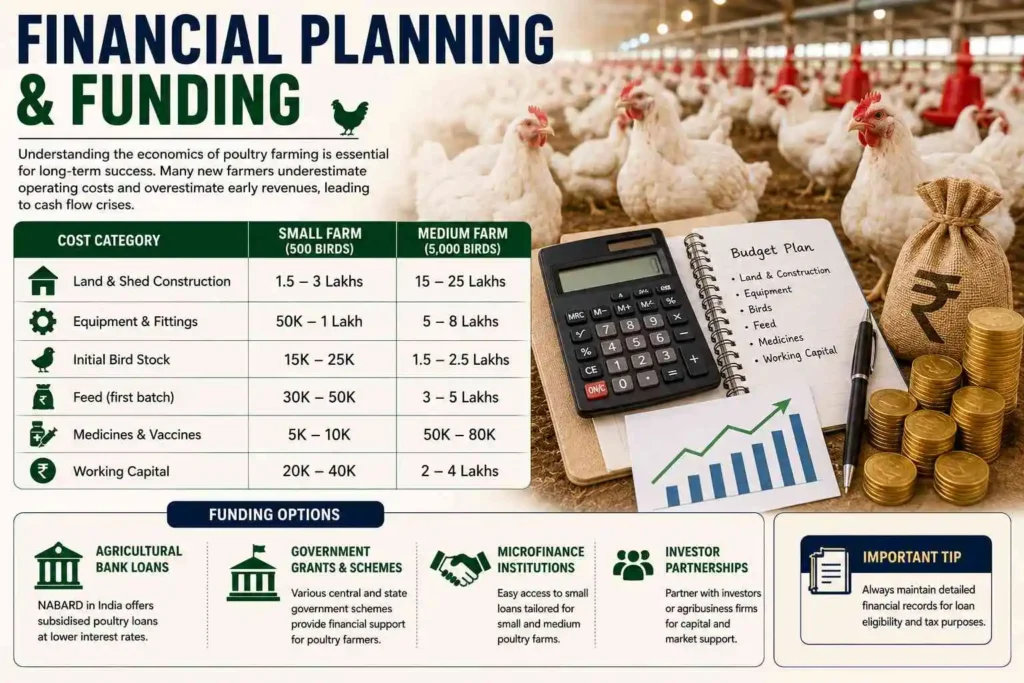
Understanding the economics of poultry farming is essential for long-term success. Many new farmers underestimate operating costs and overestimate early revenues, leading to cash flow crises.
| Cost Category | Small Farm (500 birds) | Medium Farm (5,000 birds) |
| Land & Shed Construction | 1.5 – 3 Lakhs | 15 – 25 Lakhs |
| Equipment & Fittings | 50K – 1 Lakh | 5 – 8 Lakhs |
| Initial Bird Stock | 15K – 25K | 1.5 – 2.5 Lakhs |
| Feed (first batch) | 30K – 50K | 3 – 5 Lakhs |
| Medicines & Vaccines | 5K – 10K | 50K – 80K |
| Working Capital | 20K – 40K | 2 – 4 Lakhs |
Funding options include agricultural bank loans (NABARD in India offers subsidised poultry loans), government grants, microfinance institutions, and investor partnerships. Always maintain detailed financial records for loan eligibility and tax purposes.
Marketing & Selling Your Products
Production without sales is just expense. Building strong marketing channels from day one is what separates thriving farms from struggling ones.
Traditional Marketing Channels
• Local wholesale markets and poultry mandis
• Direct supply contracts with restaurants, hotels, and hospitals • Tie-ups with supermarkets and organised retail chains
• Local butcher shops and egg retailers Modern Digital Marketing Channels
• WhatsApp Business for direct customer orders and community groups
• Instagram and Facebook pages showcasing your farm and products
• Listing on agri-commerce platforms (e.g., Aadhaar Agri, DeHaat, Agribazaar)
• Google My Business listing for local SEO visibility
Modern Idea: Farm-to-Table & Organic Branding
→ Register as an organic or free-range producer to command 30–50% price premiums.
→ Offer subscription egg boxes delivered weekly to urban households.
→ Partner with fitness influencers or nutritionists to promote high-protein poultry products.
→ Create a farm tour experience — agri-tourism is a growing trend generating secondary income.
Top 10 Quick Tips for Poultry Farming Success
- Start small — 500 birds is enough to learn before scaling up.
- Maintain an all-in, all-out system to control disease effectively.
- Never compromise on feed quality — it directly impacts your bottom line.
- Build relationships with multiple suppliers to avoid shortages.
- Keep meticulous records of mortality, feed consumption, and sales.
- Join a poultry farmers’ cooperative for better buying and selling power.
- Vaccinate on schedule — prevention is far cheaper than treatment.
- Insure your flock against disease outbreaks and natural disasters.
- Reinvest at least 20% of profits into farm improvement and technology.
- Stay updated — follow poultry industry publications and government advisories.
Common Challenges & How to Overcome Them
| Challenge | Solution |
| Disease Outbreaks | Strict biosecurity + vaccination schedules + veterinary tie-up |
| Rising Feed Costs | Bulk purchasing, alternative feed sources (BSF larvae, fermented feed) |
| Price Volatility | Long-term supply contracts + value-added processing |
| Labour Shortage | Automation (auto-feeders, drinkers, egg belts) |
| Capital Constraints | NABARD loans, government subsidies, farmer cooperatives |
| Climate Stress | Evaporative cooling systems + shade nets + IoT monitoring |
Conclusion: Your Path to a Profitable Poultry Business
Chicken farming is not a get-rich-quick scheme — it is a real business that rewards knowledge, discipline, and smart management. With the right planning, quality inputs, strong biosecurity, and a willingness to embrace modern technology, you can build a poultry enterprise that provides stable income, employment for your community, and food security for your region.
The poultry industry in India alone is projected to be worth over 3.5 lakh crore by 2030, growing at over 8% annually. Global protein demand is rising with population growth and increasing middle-class incomes — and chicken remains the most affordable animal protein worldwide. Whether your goal is a small backyard flock of 200 birds or a commercial operation of 50,000+, the principles remain the same: plan carefully, start humbly, manage rigorously, and scale sustainably. The future of poultry farming belongs to those who combine traditional farming wisdom with the power of modern technology and data-driven decision making. Good luck on your poultry farming journey — the world needs more farmers like you.
If you are interested in other livestock farming businesses, you can explore more guides of Livestock Farming.
Which poultry farming business is more profitable: broiler or layer?
Broiler farming: Faster returns (usually 35–45 days per batch).
Layer farming: Long-term regular income from eggs.
For beginners with low investment, broiler farming is usually easier to start.
How much land is required?
100 broilers need around 100–150 sq ft shed space.
Open ventilation and proper drainage are important.
Can poultry farming be started from home?
Yes. Many people start with 50–100 birds from home, especially in villages.
Starting small helps you learn without large losses.
Which season is best for poultry farming?
Winter is generally better because chickens grow faster in cooler weather. Summer requires extra cooling and water management.
Newsletter




Very useful information
Glad you liked it
It’s very good information
Best luck
Thanks