

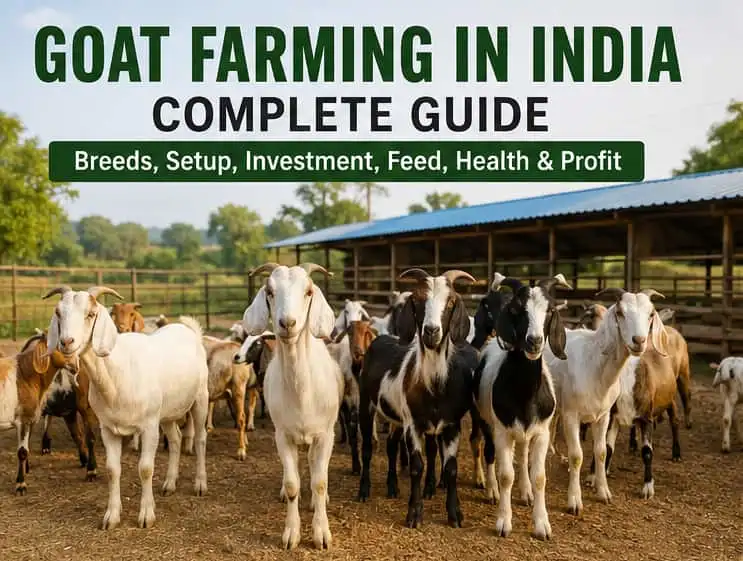

How to Start Goat Farming in India|Complete Guide
Planning to start goat farming in India but confused about the setup, investment, and breeds? You’re in the right place. This complete guide will help you get started.
Goat farming in India is rapidly becoming one of the most profitable and sustainable livestock businesses for rural and semi-urban entrepreneurs.With rising demand for goat meat, milk, manure, and breeding animals, many farmers are turning toward goat rearing as a reliable source of income.
Goat farming requires comparatively low investment, adapts well to Indian climatic conditions, and offers quick returns when managed properly.
For anyone willing to invest time, modest capital, and disciplined management, goat farming offers one of the most accessible paths into profitable business.
Goats are often called the “poor man’s cow” because they are easy to maintain and can survive in diverse environments. Whether you own agricultural land or want to begin a small-scale livestock business, goat farming can become a steady and scalable income source.
This guide covers everything you need: why goats make sense commercially, how to choose the right breed, what a realistic budget looks like, how to keep your herd healthy, and how to find buyers. Whether you are starting with 10 animals or planning a 100-head commercial operation, the principles are the same.
Before we dive into the guide, let’s answer one important question: why is goat farming such a profitable business in India?
Why Goat Farming Is Profitable in India
1. High Demand for Goat Meat
Goat meat, commonly known as mutton in India, has consistently strong demand across the country. It is widely accepted across different religions and communities, making it one of the most stable livestock markets.
Prices generally range from ₹600 to ₹1,000 per kilogram depending on location, breed, and seasonal demand. Consumption increases significantly during festivals, weddings, and other special occasions, often leading to higher market prices.
2. Low Initial Investment
Compared to dairy farming or poultry farming, goat farming requires less capital. Small farmers can begin with just 5–10 goats and gradually expand the business.
3. Fast Reproduction Rate
Goats reproduce quickly. Most breeds give birth twice in 14-18 months, often producing twins. This helps farmers grow their livestock population rapidly.
4. Multiple Income Sources
Goat farming generates income from:
- Meat production
- Milk production
- Selling breeding stock
- Goat manure
Choosing the Right Goat Farming Model
Before starting, decide the type of goat farming business you want to establish.
1. Meat Production Farming
This is the most common and profitable model in India. Farmers rear goats mainly for meat purposes.
Best Breeds:
- Sirohi
- Black Bengal
- Osmanabadi
- Jamunapari
- Sojat
- Beetal
- Totapari
- Boer
2. Dairy Goat Farming
Some farmers focus on goat milk production, which has growing demand because of its nutritional and medicinal value.
Popular Dairy Breeds:
- Beetal
- Jamunapari
- Barbari
- Saanen
3. Breeding Farm
In this model, farmers raise pure breeds and sell kids or breeding bucks to other farmers.
Before spending a single rupee, spend time on the ground. Visit two or three working goat farms in your district. Spend a day helping with feeding, cleaning, and health checks. This will give you a better understanding of how a goat farm operates.
I would also advise getting formal training from a commercial farm or government training centers. Several agricultural universities offer short goat husbandry courses — IVRI Bareilly, TANUVAS in Tamil Nadu, and CIRG Mathura are the best known. Once committed, write a business plan covering: what you will produce, your starting herd size, 3-year financial projections, and who your buyers will be.
Selecting the Best Goat Breeds for Goat Farming in India
Breed selection directly affects profitability. Always choose breeds suited to your climate and business goals. This is one of the most important decisions you will make.
An animal that thrives in Rajasthan may struggle in West Bengal. Therefore, always match the breed to your agro-climatic zone and your primary production objective.
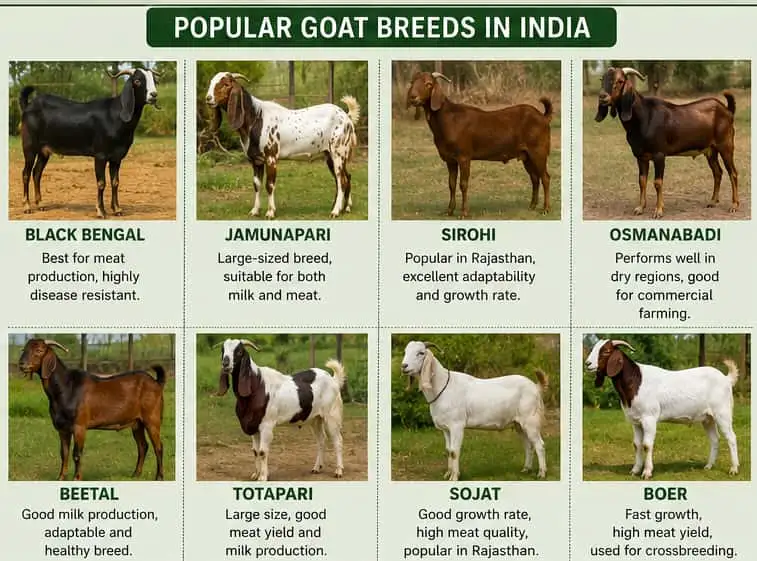
1. Black Bengal
- Best for meat production
- Highly disease resistant
- Produces excellent quality meat
- Common in eastern India
2. Jamunapari
- Large-sized breed
- Suitable for both milk and meat
- Requires good management
3. Sirohi
- Popular in Rajasthan
- Excellent adaptability
- Good growth rate
4. Osmanabadi
- Common in Maharashtra and Telangana
- Performs well in dry regions
- Good for commercial farming
5. Boer Goat
- Imported breed
- Very fast growth
- High meat yield
- Often used for crossbreeding
These are some of the most popular and high-demand, profitable breeds in India. You can choose among them based on your farm objectives. Now, let’s move on to shelter requirements.
Tip: Always try to buy goats from a well-established farm. Although they may cost ₹1,000–₹2,000 more, they usually have proper vaccination records and a known genetic background, which improves productivity and reduces disease risk.
It is advisable to ensure Peste des Petits Ruminants (PPR) vaccination is completed before transport. After vaccination, keep the goats at their original farm or under observation for at least 14–15 days to monitor their health and allow proper recovery.
Once they are stable and healthy, transport them to your farm and keep them under quarantine before mixing with the main herd. This significantly reduces the risk of introducing infections into your livestock.
Land and Shelter for Goat Farming in India
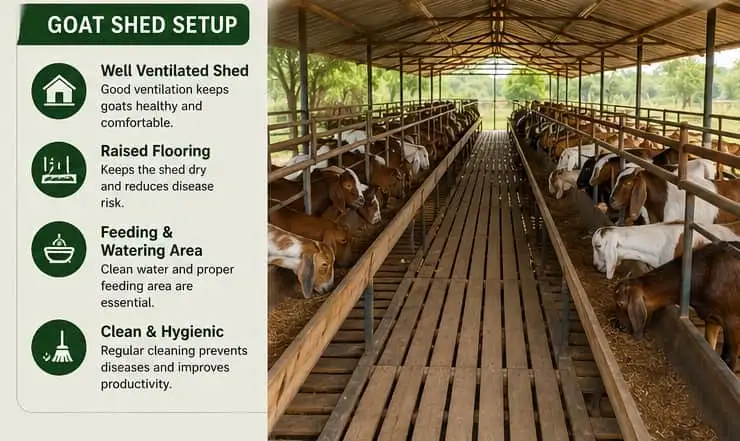
The shed is one of the most important infrastructure investments in goat farming. Goats are highly sensitive to moisture and respiratory diseases, and a properly designed shed helps prevent many health issues before they occur.
If you are starting with a limited budget, you do not need a highly expensive structure, but you should never compromise on basic requirements such as good ventilation, dry flooring, proper drainage, and protection from rain and heat. A simple, well-planned shed is far more effective than a poorly designed expensive one.
Location Selection
Choose a location that:
- Has good drainage
- Is free from waterlogging
- Has access to clean water
- Is near grazing areas
- Is easily accessible to markets
Space Requirement
Generally:
- Adult goat: 10–12 square feet
- Kids: 4–6 square feet
Goat Shed Design
An ideal goat shed should:
- Have proper ventilation
- Protect goats from rain and heat
- Remain dry and clean
- Include feeding and watering areas
Raised platform sheds are highly recommended because they help maintain hygiene and reduce the risk of disease in goats. If your goats are suffering from illness, or if you want to prevent common diseases that many new farmers face, read our blog on Goat Diseases and Treatment Guide
Feeding Management in Goat Farming
Goats are browsers, not grazers — they prefer leaves, shrubs, and mixed vegetation over grass.The daily feed requirement for an adult goat (30-35 kg live weight) is roughly 1-1.5 kg dry fodder, 1-2 kg green fodder (berseem, napier grass, subabul), and 200-300 g concentrate feed for lactating does and growing kids. A mineral lick block should always be freely available.
1. Green Fodder
Includes:
- Napier grass
- Berseem
- Lucerne
- Cowpea
2. Dry Fodder
Examples:
- Hay
- Straw
- Dry leaves
3. Concentrate Feed
Contains:
- Maize
- Wheat bran
- Oil cakes
- Mineral mixtures
Choosing the right feed is important for healthy growth and better productivity. Check our guide to Best Goat Feed in India for suitable feed options and feeding choices.
Feeding Schedule
A balanced feeding routine improves growth and reproduction.
Adult Goats
- Green fodder: 3–5 kg daily
- Concentrates: 300–500 grams
Pregnant Goats
Require extra nutrients during the final months of pregnancy.
Kids
Need milk and soft feed initially, followed by gradual introduction to solid feed.
Cost-saving tip: Azolla, a small aquatic fern grown on-farm in a simple trough for almost nothing, contains 25-30% crude protein and can replace up to 20% of concentrate feed — saving Rs.8,000-12,000 annually on a 25-head farm.
Importance of Clean Water
Always provide clean drinking water. Dehydration can reduce productivity and increase disease risk.
Goat Health and Disease Management
In goat farming, prevention is everything. A single disease outbreak can wipe out 30-40% of a herd within weeks.
Common Goat Diseases in India
- Foot and Mouth Disease (FMD)
- PPR (Peste des Petits Ruminants)
- Goat pox
- Pneumonia
- Enterotoxemia
The most critical vaccinations are for Peste des Petits Ruminants (PPR) — free at most government veterinary camps — Foot-and-Mouth Disease (FMD), Enterotoxaemia, and Hemorrhagic Septicemia. Deworm the entire herd every 3 months, rotating between drug classes.
Annual health calendar
| January | Deworming round 1 + FMD booster |
| March | PPR vaccination camp (government-organised) |
| April | Deworming round 2 before monsoon |
| June | Tick and external parasite treatment |
| September | Deworming round 3 post-monsoon |
| October | Enterotoxaemia + HS vaccination |
| December | Annual herd health audit with local vet |
Keep a written health log for every animal. Record weight monthly, vaccination dates, deworming drugs used, and any illness observed. Quarantine all new animals for a minimum of 21 days before introducing them to your main herd.
Hygiene Practices
- Clean sheds daily
- Remove manure regularly
- Isolate sick animals
- Maintain dry flooring
Breeding Management
Good breeding practices ensure healthy offspring and higher profitability.
Ideal Breeding Age
- Female goats: 10–12 months
- Male goats: 12–15 months
Heat Detection Signs
- Tail wagging
- Frequent urination
- Restlessness
- Reduced appetite
Pregnancy Period
The gestation period in goats is approximately 150 days.
Kid Management
Newborn kids require:
- Colostrum feeding within the first few hours
- Warm shelter
- Vaccination and deworming
Investment Required for Goat Farming in India
Investment varies depending on farm size and infrastructure.
Approximate Cost:
| Item | Estimated Cost |
| Goats purchase | ₹60,000–₹1,20,000 |
| Shed construction | ₹50,000–₹1,00,000 |
| Feed and fodder | ₹30,000 |
| Vaccination and medicines | ₹5,000 |
| Miscellaneous | ₹15,000 |
Total Investment:
₹1.5 lakh to ₹3 lakh
Medium-Scale Farm (50 Goats)
Investment may range between ₹8 lakh and ₹15 lakh. It’s always advised to start from small.
Marketing and Selling Goats
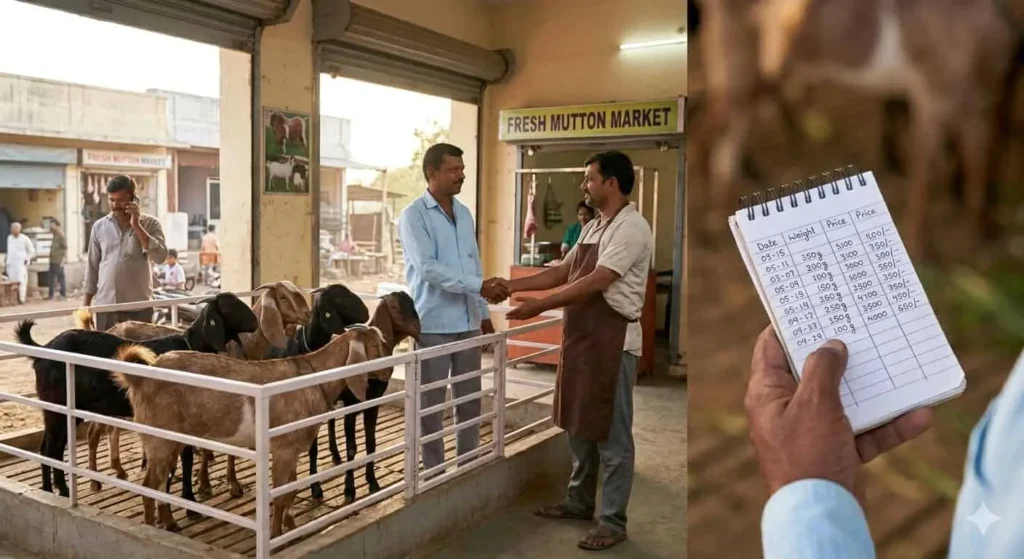
Profitability in livestock farming depends heavily on effective marketing. One of the most powerful strategies is to build buyer relationships before your herd is ready for sale.
Farmers should approach local meat retailers, hotel purchase managers, and restaurant owners 3–4 months in advance of their first batch being ready. Establishing trust early and inviting potential buyers for a farm visit can significantly improve the chances of securing repeat buyers and long-term supply agreements.
Best Places to Sell Goats
- Local livestock markets
- Meat traders
- Restaurants and hotels
- Bakrid markets
- Direct farm sales
Online Marketing
Farmers increasingly use:
- Social media
- WhatsApp groups
- Online livestock marketplaces
Tip: Try to sell directly to customers whenever possible and reduce dependency on middlemen. Direct selling can improve your profit margins because you avoid commission cuts and get better control over pricing. However, in many rural markets, middlemen still play an important role, so building both direct and local buyer networks is the most practical approach for stable sales.
Common Mistakes in Goat Farming
Many beginners fail because of poor planning. Avoid these common mistakes:
1. Starting Without Training
Learn goat management before investing heavily.
2. Poor Breed Selection
Always buy healthy goats from trusted breeders.
3. Overcrowding
Overcrowded sheds increase disease transmission.
4. Ignoring Vaccination
Skipping vaccinations can lead to major financial losses.
5. Poor Feeding Practices
Improper nutrition reduces growth and fertility.
Tips for Successful Goat Farming
Maintain Farm Records
Track:
- Breeding dates
- Vaccinations
- Feed expenses
- Weight gain
- Sales
Start Small
Begin with a manageable number of goats and expand gradually.
Focus on Hygiene
Clean surroundings reduce disease risk and improve productivity.
Build Veterinary Contacts
Good veterinary support is essential for emergencies.
Learn Continuously
Attend training programs and connect with experienced farmers.
After reading this blog, you now have a better idea about goat farming in India, including how to start, which breeds to choose, how much investment is required, and how to manage feeding, housing, and health care effectively. With the right planning and proper management, goat farming can become a profitable and sustainable business opportunity in India.
Have a great day!
You can aslo read chicken farming guide.
Is goat farming profitable in India?
Yes, goat farming is considered one of the most profitable livestock businesses in India due to strong demand for goat meat, milk, and breeding animals.
How much investment is required to start goat farming?
A small-scale goat farm with 10–20 goats may require an investment of around ₹1.5 lakh to ₹3 lakh, depending on breed selection, shed construction, and feeding costs.
How much land is needed for goat farming?
Land requirements depend on the farming model. Small farms can start with limited space using stall-feeding, while grazing-based systems require more open land.
Which goat breed is most profitable in India?
Breeds like Sirohi, Black Bengal, Boer, Osmanabadi, and Jamunapari are among the most profitable goat breeds in India depending on your farming objective and region.
What are the biggest problems in goat farming?
Common challenges include disease outbreaks, poor feeding management, lack of vaccination, parasite infestation, and improper breed selection.
Newsletter




Mashallah, that was very useful information. Best wishes for you and your website
You did great