

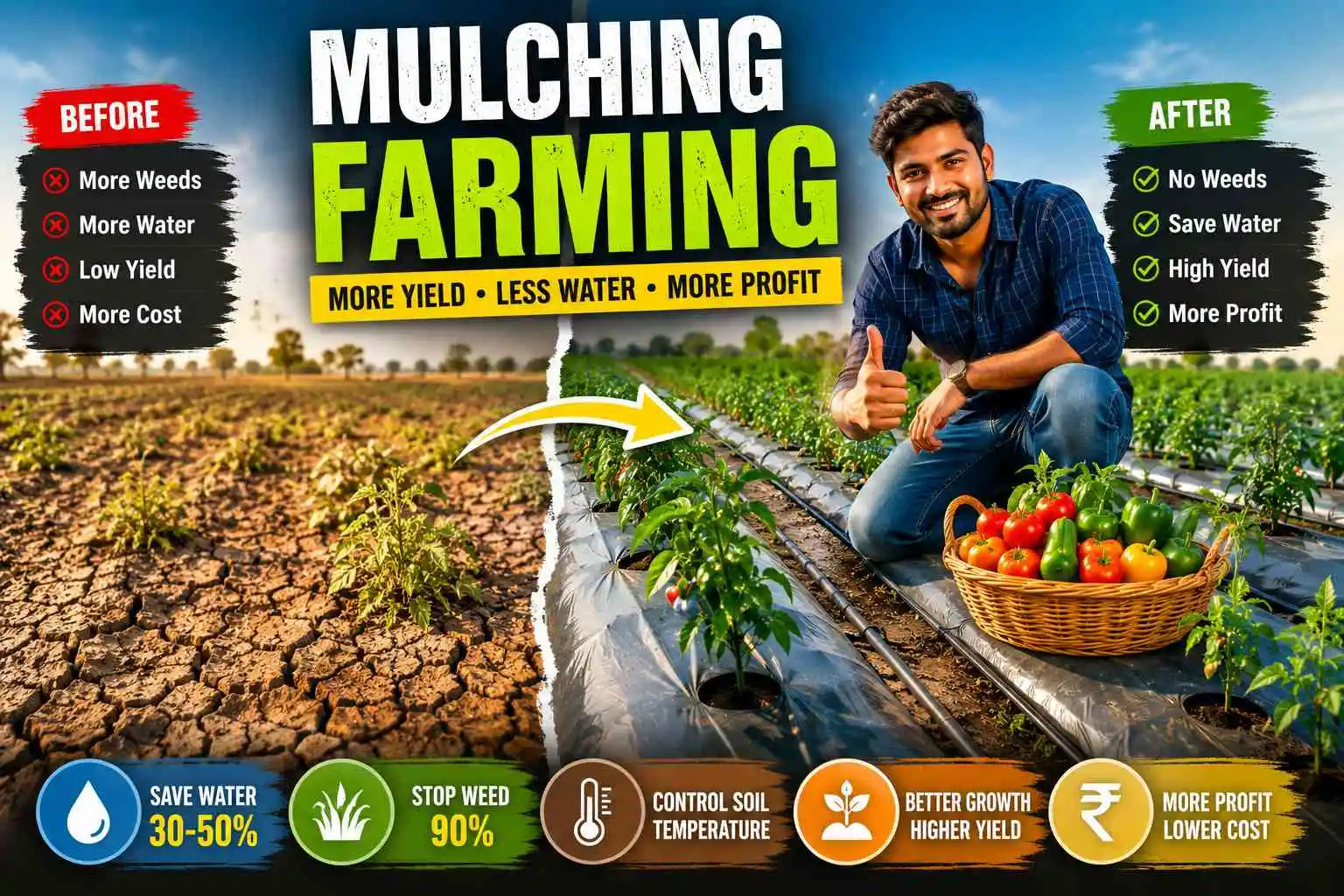

Mulching Farming in India: Types, Cost Per Acre, Benefits & Methods
Every farmer knows this feeling: you irrigate on Monday, and by Thursday the topsoil is cracking again. A few more hot days, and that water is gone — evaporated before it reached the roots. Meanwhile, weeds grow faster than the crop, pulling away the nutrients you paid good money for.
This is exactly the gap that mulching farming closes — with one of the cheapest, most underused tools available to Indian farmers: a simple covering layer over the soil.
In this guide, you’ll learn how mulching works below the surface, which material suits your crop and budget, how to apply it correctly, what it costs in rupees, and the mistakes that quietly waste farmers’ money every season.
Let’s get into it.
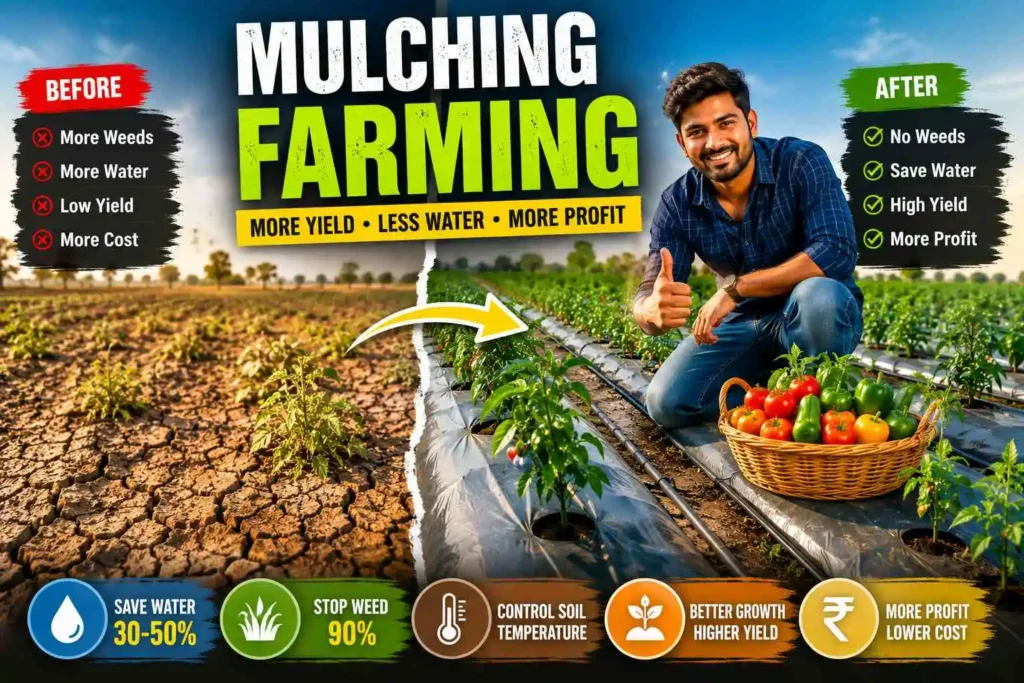
Why Are More Farmers Choosing to Cover Their Soil Instead of Leaving It Bare?
Bare soil loses moisture fast. In hot, dry weather, a large share of applied irrigation water disappears through direct evaporation before the crop can use it. That’s water you paid to pump, and in water-stressed regions, water you can’t spare.
On top of that, bare soil invites weeds, and every weed that germinates competes with your crop for nutrients, sunlight, and water — an hour spent weeding is an hour (and a wage) you could’ve spent elsewhere.
This is exactly why mulching farming has picked up so much interest lately. A layer of material — plastic, straw, or crop residue — sits between the sun and the soil, cutting evaporation, blocking weeds, and steadying soil temperature for root growth.
🔍 Key Takeaway: Mulching isn’t a “nice-to-have” input. In water-stressed regions and for high-value crops, it’s often the single change that protects your yield the most.
What Actually Happens Underneath That Layer of Mulch?
Here’s why this matters: mulch doesn’t just sit on your field doing nothing. It actively changes three things below the surface.
First, it slows evaporation, so moisture stays where roots can reach it. Second, it blocks sunlight from weed seeds — without light, most simply refuse to germinate. Third, it moderates soil temperature: organic mulch cools root zones in peak summer, while dark plastic film warms the soil in cooler months, giving early-season crops a head start.
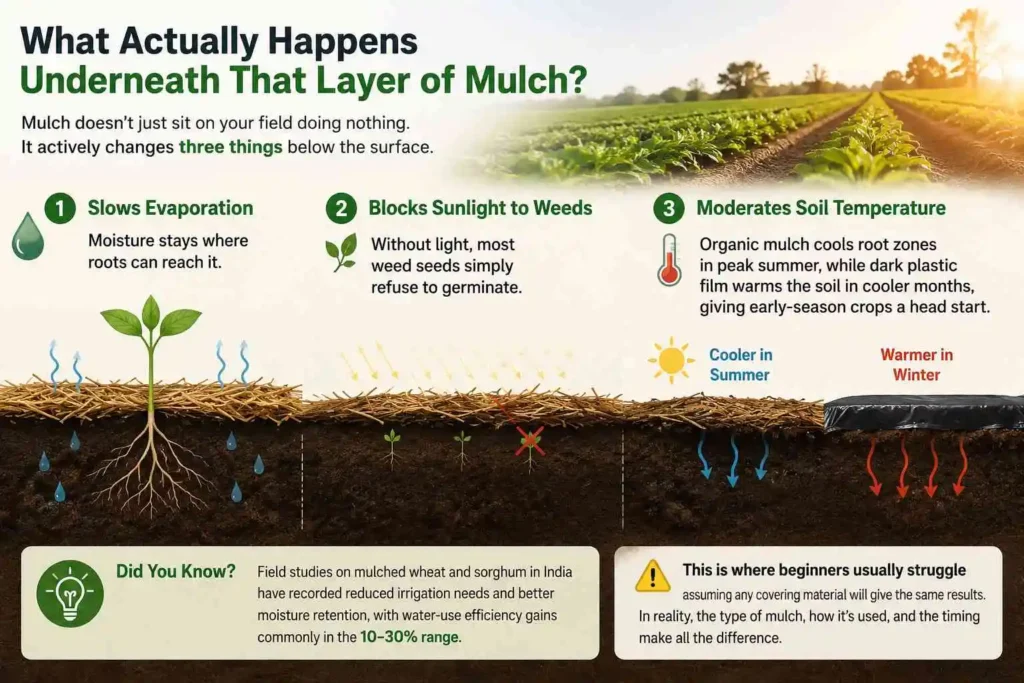
💡 Did You Know? Field studies on mulched wheat and sorghum in India have recorded reduced irrigation needs and better moisture retention, with water-use efficiency gains commonly in the 10–30% range.
This is where beginners usually struggle — assuming any covering material works the same way. It doesn’t; the mulch you pick decides which benefit you get the most of.
Which Mulch Works Best – Plastic, Organic, or Crop Residue?
Choosing the right mulch depends on your crop, budget, and how long it stays in the ground. Vegetable growers usually lean toward one option; orchard and field-crop farmers lean toward another. Here’s how they compare.
| Factor | Organic / Crop Residue Mulch | Plastic Mulch (LDPE Film) |
|---|---|---|
| Approx. cost per acre | ₹1,000 – ₹3,000 (often free using farm residue) | ₹10,000 – ₹20,000 (surface); up to ₹30,000 (sub-surface) |
| Weed control | Moderate — needs a thick, even layer | Excellent — near-total blockage |
| Soil temperature effect | Cools the root zone in summer | Black film warms soil in cool months; silver/white cools it in summer |
| Water conservation | Good | Very high — almost stops direct evaporation |
| Effect on soil health | Adds organic matter as it breaks down | No nutrient value; needs proper disposal after use |
| Typical lifespan | 2–4 months, may need topping up | One full season (100–120 days) per roll |
| Best suited for | Field crops, orchards, long-duration crops | Vegetables, melons, strawberries |
| Subsidy support | Limited (mainly organic farming schemes) | Up to ~50% under NHM/MIDH in most states |
Plastic mulch is often the better pick for vegetable growers — it gives near-total weed control and keeps fruits like tomato and melon clean off the soil. Farmers growing long-duration crops (sugarcane, banana, orchards) usually get better long-term value from organic mulch, since it slowly breaks down and feeds the soil instead of just sitting on it. The real decision in mulching farming isn’t whether to mulch — it’s which material earns back its cost fastest for your crop.
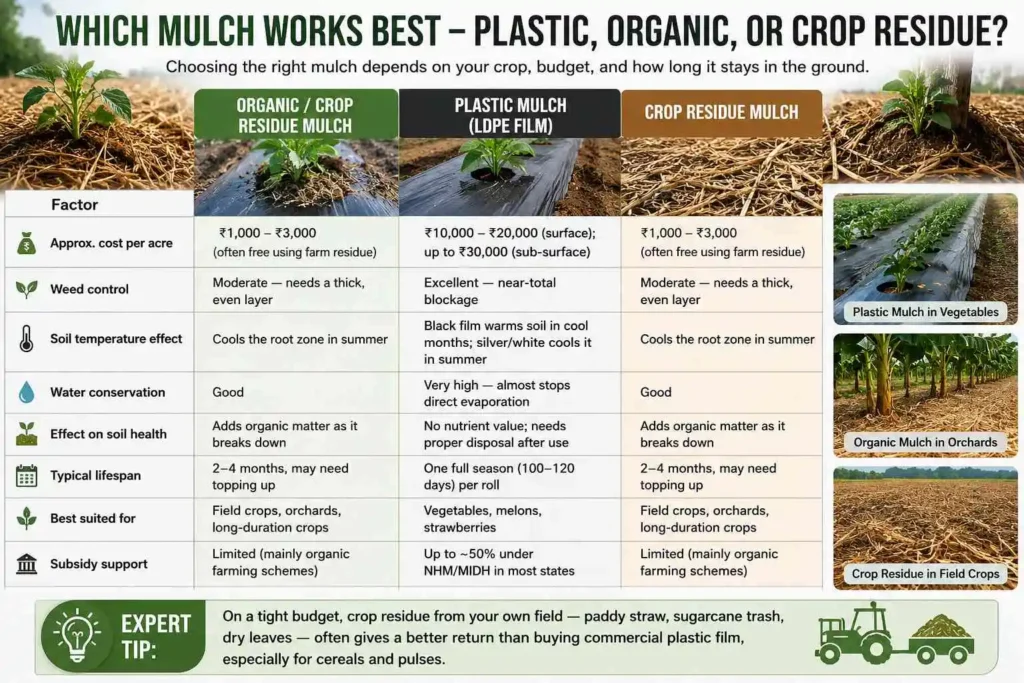
✅ Expert Tip: On a tight budget, crop residue from your own field — paddy straw, sugarcane trash, dry leaves — often gives a better return than buying commercial plastic film, especially for cereals and pulses.
How Should You Actually Lay Mulch in Your Field?
This is where a lot of the benefit gets lost — not because mulch doesn’t work, but because it’s applied the wrong way.
Clear the weeds from the bed before laying anything down — skipping this step is one mistake many farmers make. For plastic mulch, a 25–30 micron film suits most vegetable crops, and it shouldn’t be pulled too tight across the bed — it needs room to expand and contract with temperature swings, or it tears within weeks.
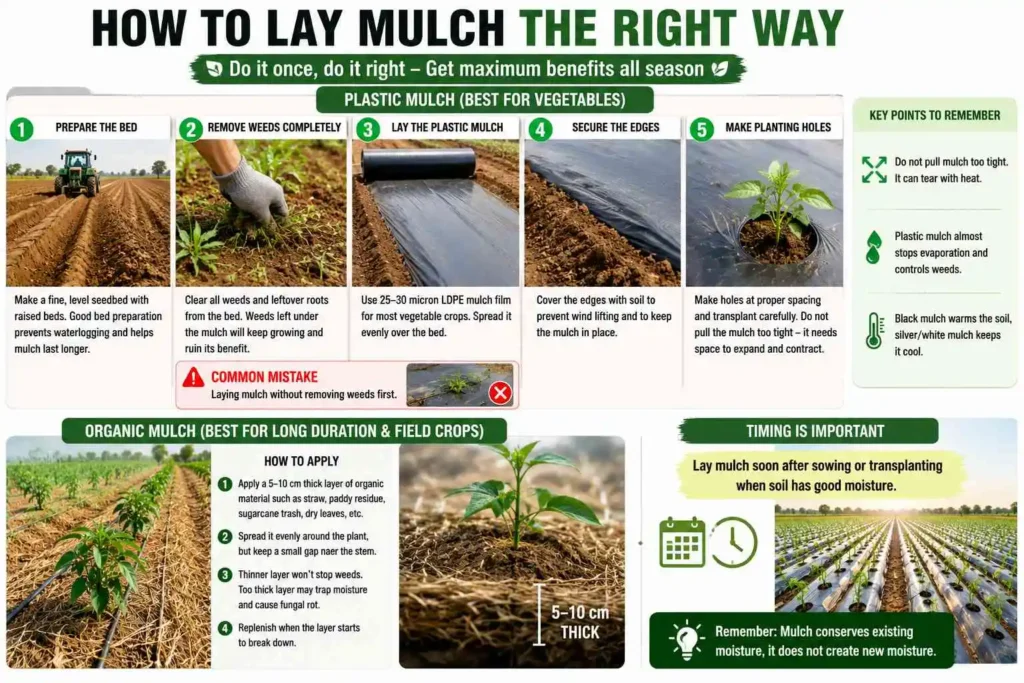
⚠️ Common Mistake: Many farmers spread mulch without removing existing weeds first, so the weeds keep growing right underneath the layer — defeating the purpose entirely.
For organic mulch, a 5–10 cm layer works well. Thinner won’t block enough light to stop weeds; much thicker traps moisture near the stem and invites fungal rot.
Timing matters too: lay mulch soon after sowing or transplanting, while the soil still has good moisture — mulch conserves existing moisture, it doesn’t create new moisture.
What Do Farmers Really Gain From Mulching Farming?
The benefits go well beyond “less watering.” Farmers who mulch consistently see fewer weeding cycles, steadier soil temperature through heatwaves, better-quality fruit, and less soil erosion during heavy rain.
The financial upside adds up fast:
- Fewer irrigation cycles needed per season
- Lower weeding labour costs
- Better market-grade produce, with less rot and fruit damage
- Improved soil structure over time with organic mulch
📌 Quick Summary: Mulching doesn’t just save water — it quietly reduces three cost centres on your farm at once: irrigation, labour, and post-harvest losses.
Where Do Most Farmers Go Wrong With Mulching?
A few mistakes keep repeating across most regions:
- Laying plastic mulch without a drip line underneath — watering the crop gets difficult once the film is down.
- Choosing mulch that’s too thin, so it tears within weeks and stops doing its job.
- Ignoring disposal — leftover non-biodegradable film damages soil health over time and needs proper collection.
- Picking plastic mulch for long-duration crops, where organic mulch works out cheaper over the crop’s full life.
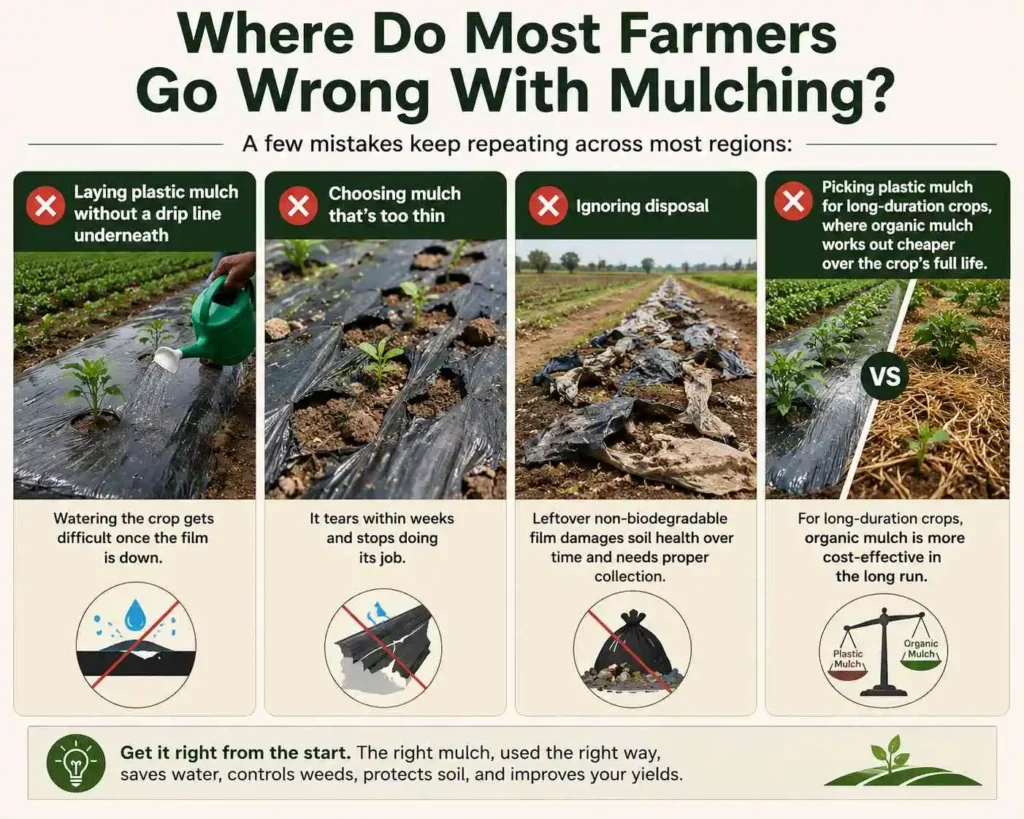
None of these mistakes are expensive to fix. They just need planning before the mulch goes down, not after.
Is Mulching Farming Actually Profitable? Here’s the Real Cost in Rupees
This is usually the deciding question, and it deserves a straight answer instead of vague promises.
| Item (per acre, plastic mulch) | Approx. Amount |
|---|---|
| Mulch film (25–30 micron) + laying labour | ₹12,000 – ₹18,000 |
| Govt. subsidy support (NHM/MIDH, ~50% of mulch material cost) | ₹5,000 – ₹9,000 |
| Net cost to farmer after subsidy | ₹6,000 – ₹10,000 |
| Weeding labour saved per season | ₹4,000 – ₹8,000 |
| Fewer irrigation cycles needed | 25–40% reduction |
| Yield gain recorded in field trials (vegetables) | 20% to well over 50%, depending on crop and season |
Figures are indicative and vary by state, season, and local market rates.
Under central schemes like the National Horticulture Mission (NHM) and MIDH, many states offer close to 50% assistance on mulching costs for horticulture crops — though the exact amount varies by state, so confirm with your local Department of Horticulture or Krishi Vigyan Kendra before buying anything.
🌱 Practical Tip: Apply for the subsidy before purchasing material wherever your state needs prior approval. Buying first and applying later often disqualifies the claim entirely.
Which Crops Respond Best to Mulching?
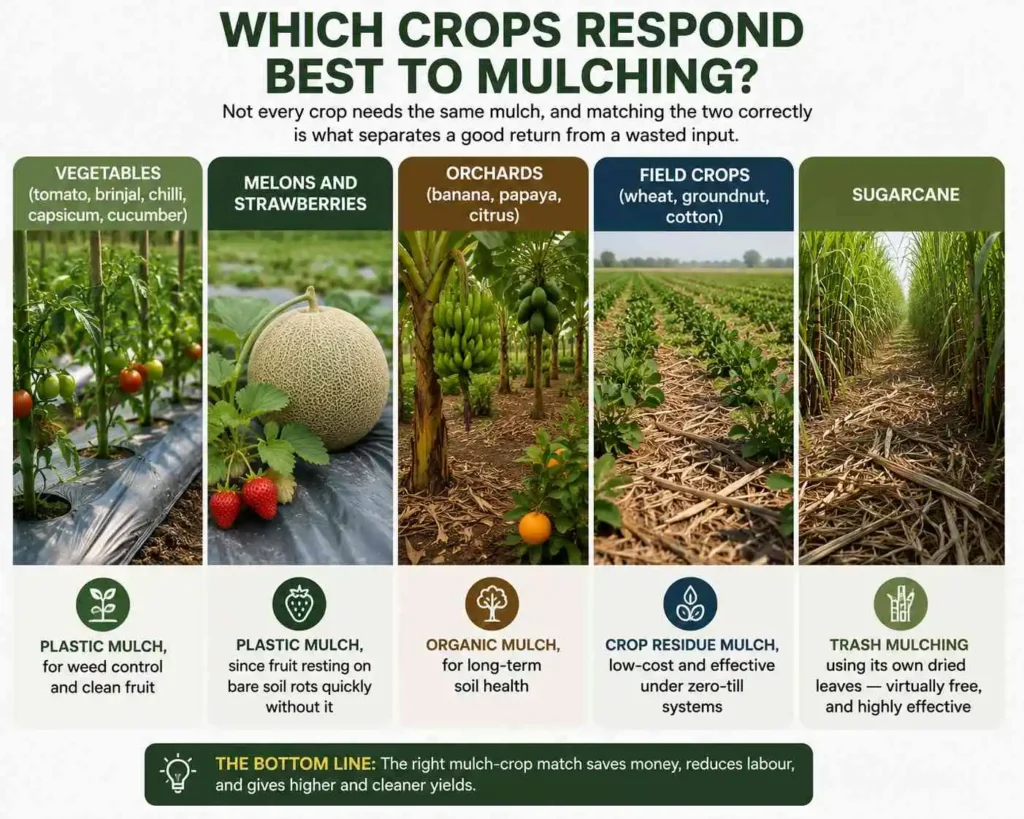
Not every crop needs the same mulch, and matching the two correctly is what separates a good return from a wasted input.
- Vegetables (tomato, brinjal, chilli, capsicum, cucumber): plastic mulch, for weed control and clean fruit
- Melons and strawberries: plastic mulch, since fruit resting on bare soil rots quickly without it
- Orchards (banana, papaya, citrus): organic mulch, for long-term soil health
- Field crops (wheat, groundnut, cotton): crop residue mulch, low-cost and effective under zero-till systems
- Sugarcane: trash mulching using its own dried leaves — virtually free, and highly effective
Start Small, But Start This Season
Mulching farming isn’t complicated technology — it’s a simple habit that changes how well your soil holds water, how many weeds you fight, and how steady your crop’s root zone stays through a hot season. The farmers who benefit most aren’t the ones who mulch the whole farm on day one — they’re the ones who trial it on one plot, watch the water bill and weeding hours drop, and expand from there.
If you’re growing a water-sensitive or high-value crop this season, one acre of properly mulched, weed-free, drip-irrigated bed will tell you more than any article can. That’s where to start.
Frequently Asked Question about Mulching Farming
What are the main benefits of mulching?
Mulching offers several benefits, including reduced water evaporation, better weed control, healthier soil, improved root development, reduced soil erosion, and higher crop yields. It can also lower labour costs by reducing the need for frequent weeding.
Can mulching increase crop yield?
Yes. By conserving moisture, regulating soil temperature, and reducing weed competition, mulching creates better growing conditions that often result in healthier plants, improved fruit quality, and higher yields.
When is the best time to apply mulch?
Mulch should be applied after land preparation and irrigation, either before or immediately after transplanting seedlings. Applying mulch early helps conserve moisture and suppress weeds from the beginning of the crop cycle.
Does mulching reduce fertilizer requirements?
Mulching does not replace fertilizers, but it improves nutrient use efficiency by reducing nutrient leaching and maintaining better soil moisture. Organic mulches also release nutrients as they decompose, improving soil fertility over time.
Is mulching suitable for all types of soil?
Yes. Mulching benefits sandy, loamy, and clay soils by improving moisture retention, reducing erosion, and maintaining a stable soil temperature. However, proper irrigation management is still essential for the best results.
Newsletter