


Tomato Planting at Home: Secrets to a High-Yield Harvest
There’s something almost magical about walking up to a plant you grew, plucking a warm, sun-ripened tomato, and biting into it. The flavor is completely different from anything you’ll find at a supermarket. Sweeter. More complex. A little bit earned.
If you’ve been thinking about tomato planting at home but keep putting it off because it feels complicated — good news: it’s really not. Tomatoes are forgiving, fast-growing, and incredibly rewarding. Whether you’ve got a sprawling backyard or a single sunny windowsill, you can do this.
Let’s get into it.
Why Grow Tomatoes at Home in the First Place?
Before we talk soil and sunlight, let’s talk why. Because once you understand what you’re actually getting, you’ll be way more motivated to stick with it.
The taste is genuinely incomparable. Store-bought tomatoes are picked early and ripened in trucks with ethylene gas. Home-grown tomatoes ripen on the vine, developing sugars and depth of flavor that commercial farming simply can’t replicate.
It saves money. A single healthy tomato plant can yield anywhere from 4 to 10 kg of fruit over a season. Compare that to the cost of a small starter plant (often less than ₹50–₹100) and you’re looking at serious returns.
It’s surprisingly therapeutic. Gardening is a known stress-reliever. Tending to your plants, watching them grow, problem-solving when something goes wrong — it gets you out of your head in the best way.
And honestly? There’s a quiet kind of pride in saying, “I grew that.”
Step 1: Choose the Right Tomato Variety for Your Space
Not all tomatoes are created equal, and picking the right variety for your situation is the first real decision in your tomato planting journey at home.
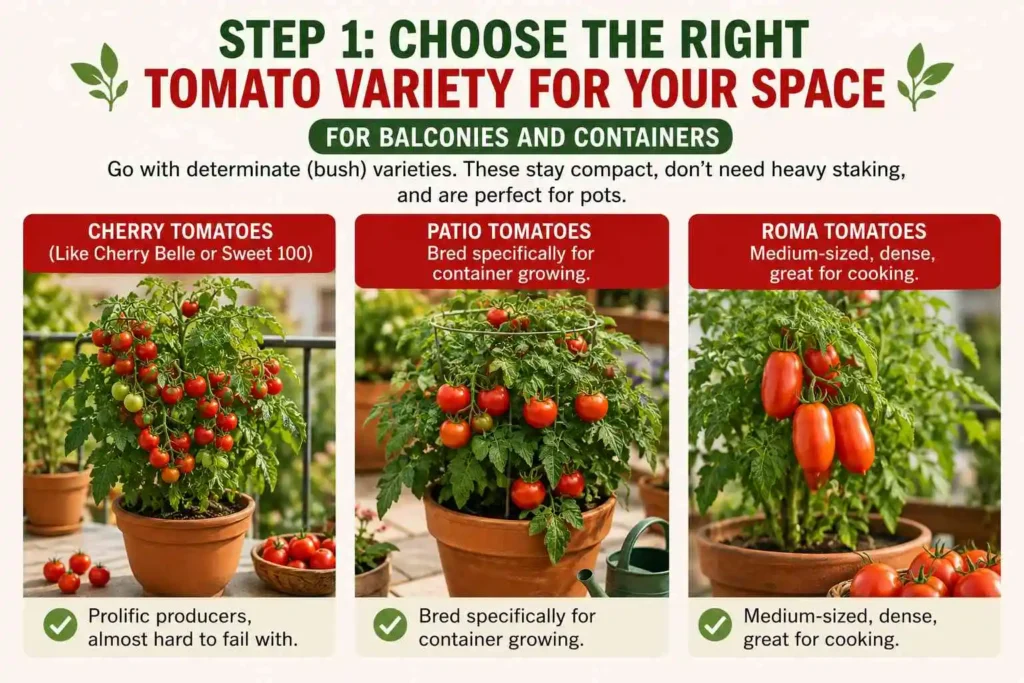
For Balconies and Containers:
Go with determinate (also called “bush”) varieties. These stay compact, don’t need heavy staking, and are perfect for pots. Great options include:
- Cherry tomatoes (like Cherry Belle or Sweet 100) — prolific producers, almost hard to fail with
- Patio tomatoes — bred specifically for container growing
- Roma tomatoes — medium-sized, dense, great for cooking
For Ground Gardens or Raised Beds:
Indeterminate varieties keep growing and producing all season long, but they need support (cages or stakes). Try:
- Beefsteak for large, meaty fruits
- Brandywine for heirloom lovers
- Early Girl for faster harvests
If you’re just starting out, cherry tomatoes are genuinely the safest bet. They’re resilient, fast, and you’ll be picking tomatoes in weeks rather than months.
Step 2: Get Your Soil Right (This Part Actually Matters)
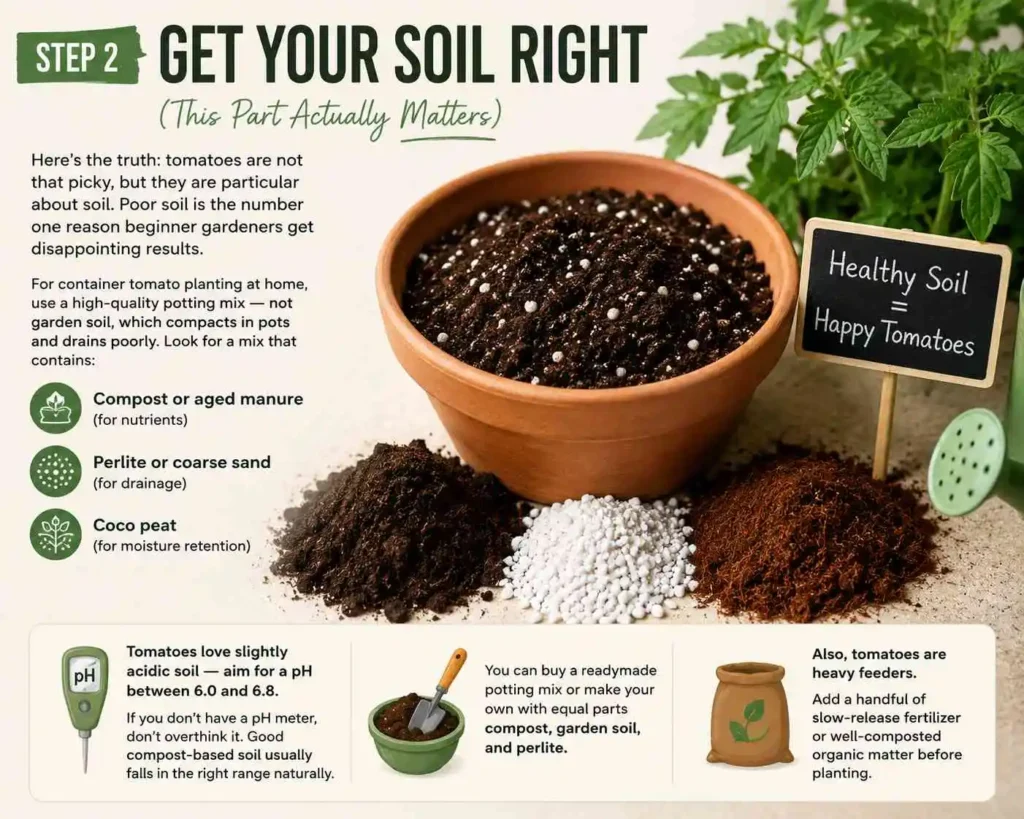
Here’s the truth: tomatoes are not that picky, but they are particular about soil. Poor soil is the number one reason beginner gardeners get disappointing results.
For container tomato planting at home, use a high-quality potting mix — not garden soil, which compacts in pots and drains poorly. Look for a mix that contains:
- Compost or aged manure (for nutrients)
- Perlite or coarse sand (for drainage)
- Coco peat (for moisture retention)
You can buy a readymade potting mix or make your own with equal parts compost, garden soil, and perlite.
Tomatoes love slightly acidic soil — aim for a pH between 6.0 and 6.8. If you don’t have a pH meter, don’t overthink it. Good compost-based soil usually falls in the right range naturally.
Also, tomatoes are heavy feeders. Add a handful of slow-release fertilizer or well-composted organic matter when you’re filling your pot or preparing your bed. They’ll thank you later.
Step 3: Sunlight — The Non-Negotiable
This is where a lot of people go wrong. Tomatoes need at least 6–8 hours of direct sunlight per day. Not dappled light. Not bright indirect light. Direct sun.
If you’re doing tomato planting at home on a balcony, scout out the sunniest spot you have. South-facing balconies in the Northern Hemisphere tend to get the most exposure. If your space only gets 4–5 hours of sun, you can still grow tomatoes — but expect smaller harvests and slower growth.
Indoors? Unless you’re using grow lights, it’s very difficult to give tomatoes enough light through a window. A south-facing window with no obstructions is your best case scenario, but outdoor growing will always outperform indoor for tomatoes.
Step 4: Planting — Seeds vs. Seedlings
You’ve got two options: start from seed or buy a seedling from a nursery.
Starting from seed is cheaper and gives you more variety choices, but it takes longer (6–8 weeks before transplanting). Sow seeds indoors in small trays or cups, about 6mm deep, and keep them warm and moist. Once seedlings have 2–3 sets of true leaves and the weather is warm enough, they’re ready to go outside.
Buying seedlings is faster and more beginner-friendly. You skip the early fragile stage and get straight to growing. If you’re trying home tomato planting for the first time, this is the move.
When planting your seedling, here’s a pro tip: bury the stem deep. Tomatoes can grow roots all along their buried stem, making the plant stronger and more drought-resistant. Remove the lower leaves and plant the seedling so that only the top few sets of leaves are above the soil.
Step 5: Watering — Consistent, Not Constant
Tomatoes need consistent moisture — the key word being consistent. Irregular watering (soaking then letting them dry out, soaking again) leads to problems like blossom end rot and cracked fruits.
A good rule of thumb: water deeply 2–3 times a week rather than a little every day. You want the water to reach the roots, not just wet the surface. Stick your finger about 5 cm into the soil — if it’s dry, water. If it’s still moist, hold off.
For container plants, you’ll likely need to water more frequently since pots dry out faster. In peak summer heat, this might mean watering every day.
Always water at the base of the plant, not on the leaves. Wet leaves invite fungal diseases, while excess moisture around young seedlings can also contribute to Tomato Damping-Off. Morning watering is ideal — any moisture on leaves dries off during the day.
Step 6: Feeding Your Plants
Once your plant starts flowering (usually 4–6 weeks in), switch to a fertilizer higher in phosphorus and potassium and lower in nitrogen. High nitrogen at this stage encourages leafy growth at the expense of fruit.
A simple liquid fertilizer (like a diluted banana peel tea, fish emulsion, or a balanced NPK fertilizer) every two weeks does the job beautifully. Go easy — over-fertilizing is a real thing and it burns roots.
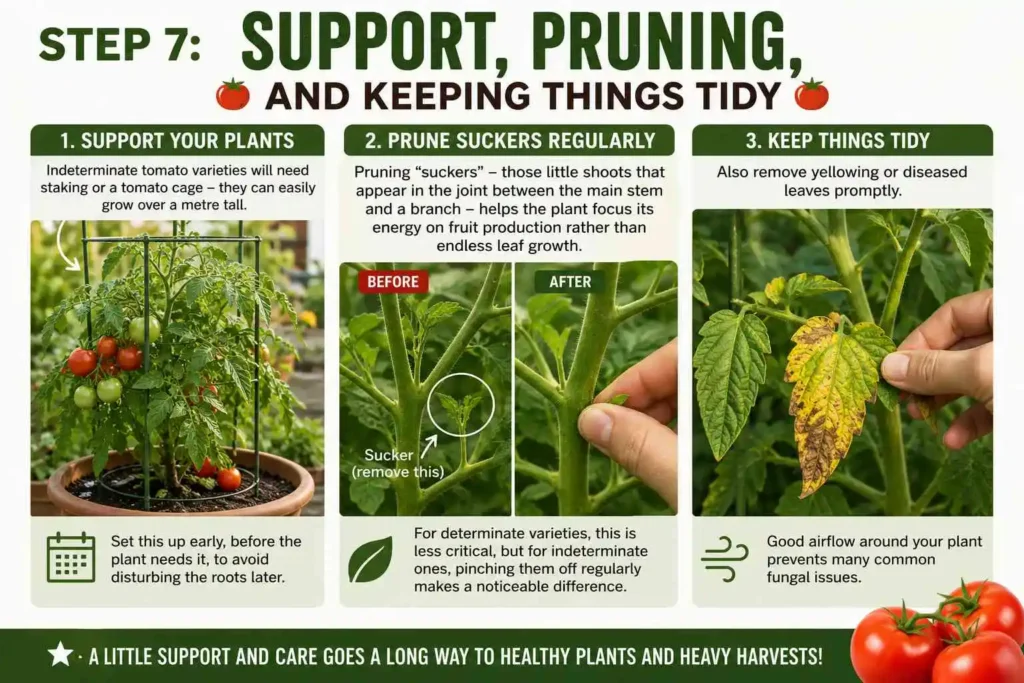
Step 7: Support, Pruning, and Keeping Things Tidy
Indeterminate tomato varieties will need staking or a tomato cage — they can easily grow over a metre tall. Set this up early, before the plant needs it, to avoid disturbing the roots later.
Pruning “suckers” — those little shoots that appear in the joint between the main stem and a branch — helps the plant focus its energy on fruit production rather than endless leaf growth. For determinate varieties, this is less critical, but for indeterminate ones, pinching them off regularly makes a noticeable difference.
Also remove yellowing or diseased leaves promptly. Good airflow around your plant prevents many common fungal issues.
Common Mistakes to Avoid
- Planting too early: Tomatoes hate cold. Wait until nighttime temperatures are consistently above 10°C.
- Overwatering: More tomatoes die from too much love (water) than too little.
- Neglecting support: A heavy plant without support will break or fall over.
- Ignoring pests: Check the undersides of leaves weekly. Aphids and whiteflies love tomatoes. A neem oil spray handles most infestations early.
- Planting in too small a pot: A single tomato plant needs at least a 12–15 litre container. Go bigger if you can.
When Will You Get Tomatoes?
From seedling transplant to first harvest, expect about 60–85 days, depending on variety. Cherry tomatoes are on the faster end; large beefsteaks take longer.
You’ll know a tomato is ready when it gives slightly to gentle pressure and has fully developed its colour — whether that’s red, yellow, orange, or whatever variety you chose. For most varieties, the colour should be uniform and vibrant.
Don’t refrigerate freshly picked tomatoes — it kills the flavour. Room temperature is where they belong.
| Factor | Requirement |
|---|---|
| Sunlight | 6–8 hours daily |
| Soil pH | 6.0–6.8 |
| Pot Size | 12–15 litres minimum |
| Watering | 2–3 times weekly |
| Harvest Time | 60–85 days |
Final Thoughts: Just Start
The biggest mistake in home tomato planting isn’t a gardening mistake — it’s never getting started. You’ll learn more in one actual season of growing than from reading ten guides (including this one).
Pick up a cherry tomato seedling this weekend. Find your sunniest spot. Get a decent pot with good soil. Water it, feed it, watch it. You might just fall in love with a new hobby — and eat better for it.
Frequently Asked Questions (FAQs)
How long does it take for tomatoes to grow at home?
Most tomato plants start producing fruit within 60–85 days after transplanting, depending on the variety. Cherry tomatoes usually mature faster than larger varieties like Beefsteak tomatoes.
Which tomato variety is best for beginners?
Which tomato variety is best for beginners?
Why are my tomato plant leaves turning yellow?
Yellow leaves can be caused by overwatering, nutrient deficiencies, poor drainage, or fungal diseases. Remove affected leaves and check your watering schedule.
Can tomatoes be grown indoors?
Tomatoes can be grown indoors if they receive sufficient light. A sunny south-facing window or grow lights are usually necessary for successful indoor growth.
Newsletter