
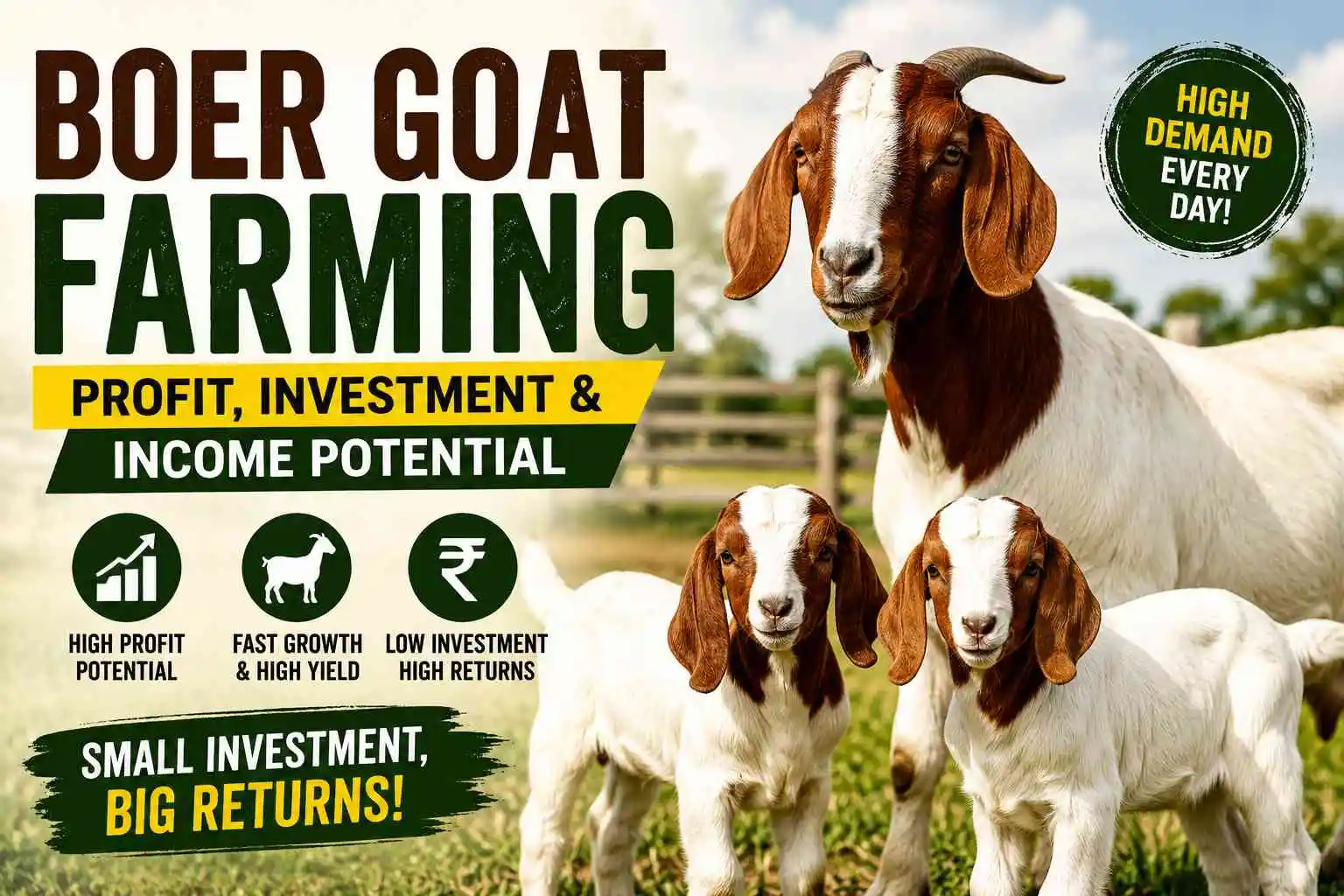

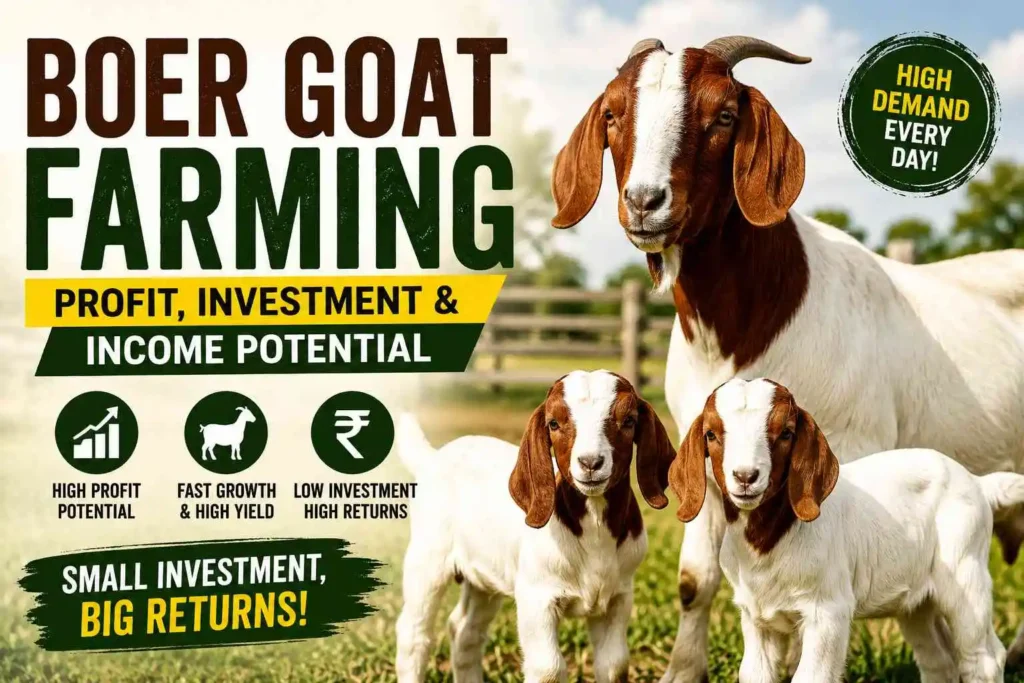
Boer Goat Farming: Profit, Investment and Income Potential
Why Boer Goat Farming Is One of the Smartest Choices You Can Make Today
Let me ask you something. Are you looking for a farming business that gives you fast returns, doesn’t need a massive piece of land, and has a market that never seems to slow down?
That’s boer goat farming for you.
Boer goats are not just any goats. They are the kings of meat goat breeds. Farmers across India, South Africa, Australia, and the United States swear by them — and for good reason. These animals grow fast, breed well, and put money in your pocket quicker than most other livestock.
Whether you are a first-time farmer or someone looking to expand what you already have, this guide will walk you through everything — simple, step by step, and straight to the point.
What Is a Boer Goat? (And Why Does Everyone Want One?)
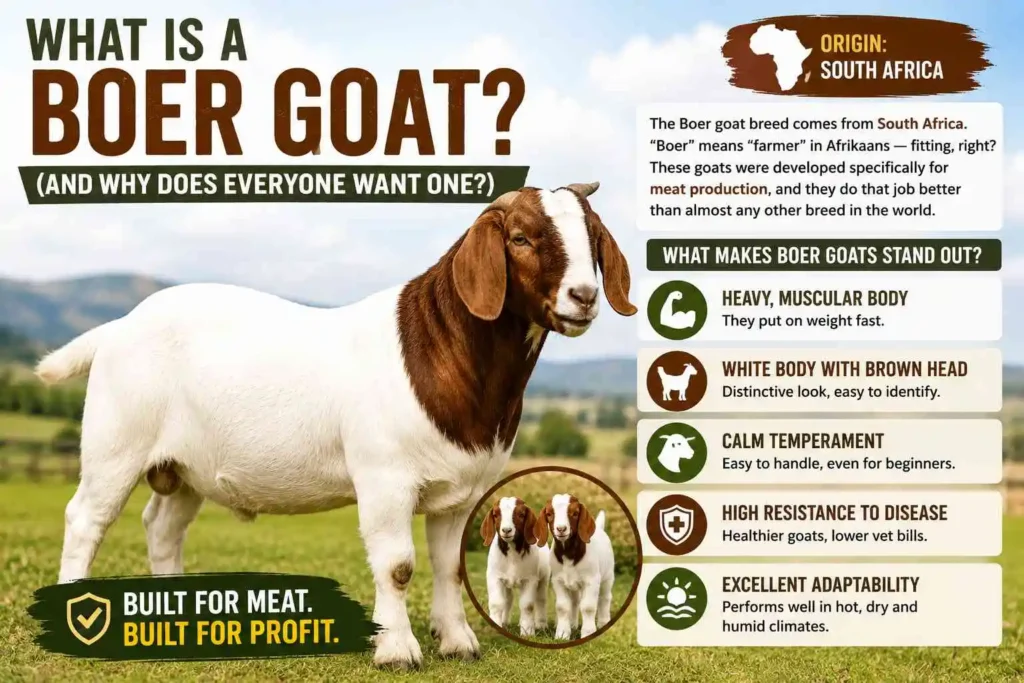
The Boer goat breed originally comes from South Africa. The name “Boer” actually means “farmer” in Afrikaans — fitting, right? These goats were developed specifically for meat production, and they do that job better than almost any other breed on the planet.
Here is what makes them stand out:
- Heavy, muscular body — they put on weight fast
- White body with a distinctive brown head — easy to identify
- Calm temperament — easy to handle, even for beginners
- High resistance to disease — lower vet bills for you
- Excellent adaptability — they do well in hot, dry, and humid climates
If you are planning boer goat farming for beginners, this breed is honestly the best place to start.
Boer Goat Key Facts & Figures at a Glance
Before we dive into the how-to, here are the numbers that matter most to any farmer thinking about starting a boer goat farm:
| Parameter | Details |
|---|---|
| Origin | South Africa |
| Primary Use | Meat production |
| Average Adult Buck Weight | 110 – 135 kg (242 – 298 lbs) |
| Average Adult Doe Weight | 90 – 100 kg (198 – 220 lbs) |
| Daily Weight Gain | 200 – 250 g/day (peak potential under intensive feeding)* |
| Slaughter Age | 6 – 8 months |
| Kidding Rate | 180 – 200% (often twins/triplets) |
| Gestation Period | 145 – 155 days (~5 months) |
| Breeding Season | Year-round |
| Dressing Percentage | 48 – 52% of body weight |
| Lifespan | 8 – 12 years |
| Feed Conversion Ratio | 4:1 (4 kg feed = 1 kg meat) |
| Ideal Farm Temperature | 20°C – 35°C |
| Litter Size | 1 – 3 kids per birth |
*A note on that daily weight gain figure, because it matters for the money math later: 200–250 g/day is what Boer goats are genetically capable of under intensive, high-concentrate feeding — the kind of conditions you’d see on a well-resourced commercial farm.
On a typical pasture-based small farm in India, with mostly forage and modest concentrate, realistic average daily gain usually runs closer to 120–150 g/day. That’s the number the income table further down actually assumes (it’s why the selling weight there is 30–35 kg, not 50+ kg).
If you feed more intensively than that, your goats will likely hit market weight faster and heavier than these estimates — which is good news for you, but don’t plan your budget around the optimistic number.
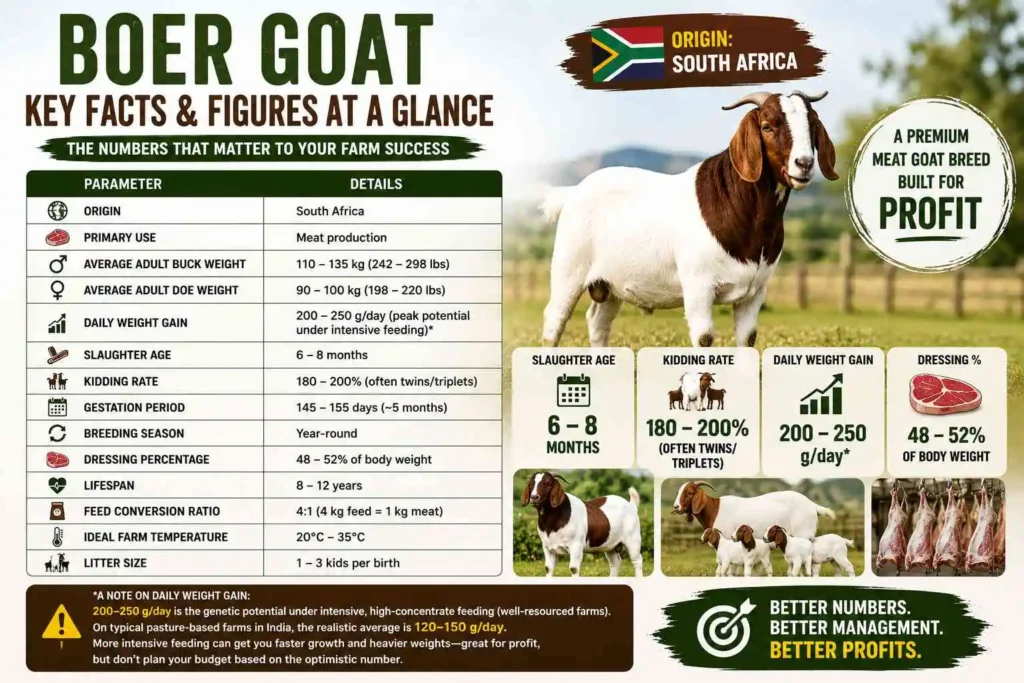
These numbers tell a clear story — boer goats are built for profit.
Setting Up Your Boer Goat Farm: Step-by-Step
1. Choose the Right Land and Location
You don’t need hundreds of acres. Even a small plot of 1–2 acres can support a starter herd of 20–30 goats comfortably.
What you do need:
- Good drainage — boer goats hate standing water and mud. Wet conditions lead to hoof rot and respiratory problems.
- Natural shade or trees — they need protection from harsh afternoon sun.
- Reliable water source — clean, fresh water every single day. No compromise here.
- Nearby grazing land — pasture grazing cuts your feed cost significantly.
2. Build the Right Housing
This is where many beginners cut corners — and regret it later.
A proper boer goat shed should:
- Have at least 1.5–2 square meters per adult goat
- Be well-ventilated — stuffy sheds cause pneumonia
- Have a raised floor or bedding (dry straw or sand) to keep goats off wet ground
- Include a separate kidding pen for pregnant does
- Face away from strong winds, especially in winter
Good housing = healthy goats = more money. Simple.
What Will It Cost You to Start?
The title of this guide promised “investment,” so let’s actually put numbers on it. Here’s a realistic starting-cost breakdown for the same 10-doe, 1-buck herd used in the profit numbers further down.
| Item | Estimated Cost (INR) | Notes |
|---|---|---|
| 10 Boer-cross does | ₹1,20,000 – ₹2,50,000 | Crossbred stock is what most commercial Indian meat operations actually buy. Registered, purebred imported genetics can cost several times more. |
| 1 buck | ₹20,000 – ₹35,000 | Worth paying more for here — one buck covers 30+ does, so his genetics shape your entire next generation. |
| Shed/housing construction | ₹50,000 – ₹90,000 | Based on roughly ₹150–200/sq ft and 300–500 sq ft of covered space for 11 adults plus a kidding pen, with room to grow. |
| Fencing | ₹15,000 – ₹30,000 | Boer goats are strong and will test weak fencing — budget for sturdy posts and wire, not light mesh. |
| Feeders, water troughs, mineral licks, basic vet kit | ₹10,000 – ₹20,000 | One-time setup cost — separate from your ongoing annual feed and vet budget below. |
| Total starting investment | ₹2,15,000 – ₹4,25,000 | Excludes land cost or lease, which varies too much by location to put a single number on. |
A couple of honest caveats on these figures: goat prices swing enormously depending on whether you’re buying Boer-cross or registered purebred stock, so get quotes from two or three local sellers before committing — the spread between them can be huge. And if you don’t already have access to 1–2 acres, land is a separate cost on top of this table, specific to your area.
This is also the moment to check government support before you spend anything. The National Livestock Mission (NLM) and NABARD both offer capital subsidies — generally in the 25–50% range — for setting up small ruminant breeding units, which can meaningfully cut this number down. Talk to your district Animal Husbandry office before you buy a single goat.
3. Feeding Your Boer Goats for Maximum Growth
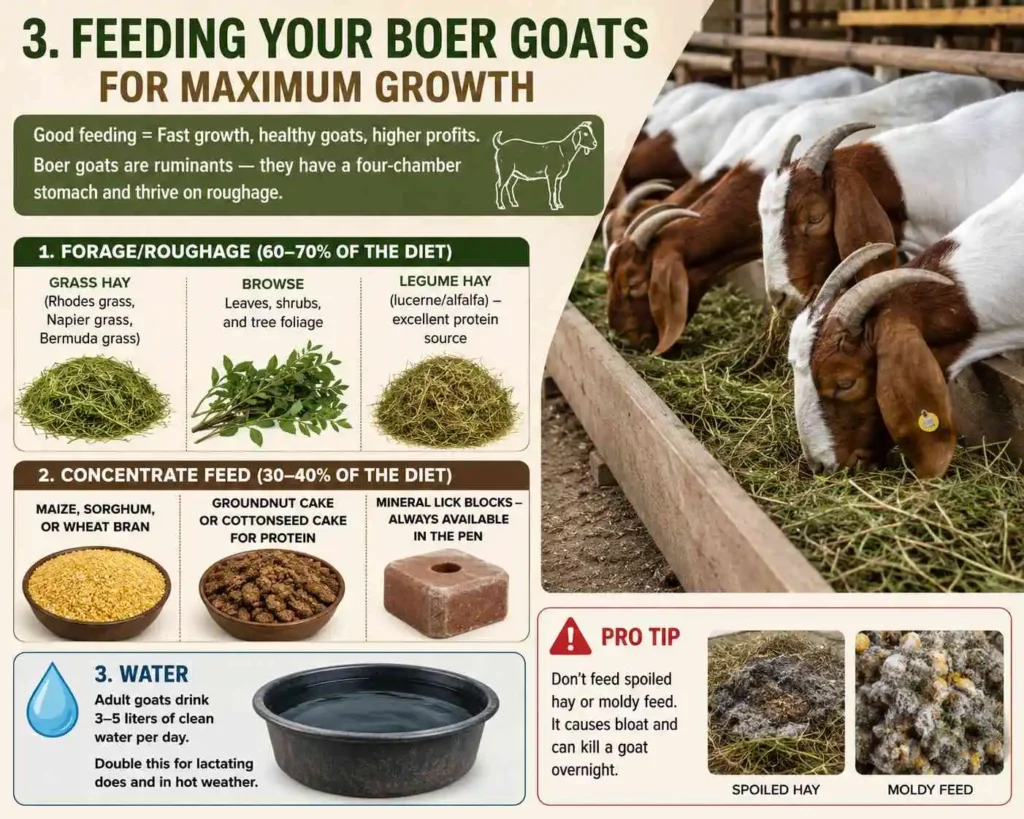
Boer goat feeding is one of the most important parts of the entire operation. Get this right and your animals will grow fast, stay healthy, and hit slaughter weight on time.
Boer goats are ruminants — they have a four-chamber stomach and thrive on roughage. Here is a basic feeding plan:
Forage/Roughage (60–70% of the diet):
- Grass hay (Rhodes grass, Napier grass, Bermuda grass)
- Browse — leaves, shrubs, and tree foliage
- Legume hay (lucerne/alfalfa) — excellent protein source
Concentrate Feed (30–40% for growing kids and pregnant does):
- Maize, sorghum, or wheat bran
- Groundnut cake or cottonseed cake for protein
- Mineral lick blocks — always available in the pen
Water: Adult goats drink 3–5 liters of clean water per day. Double this for lactating does and in hot weather.
Pro tip: Don’t feed spoiled hay or moldy feed. It causes bloat and can kill a goat overnight.
Breeding and Reproduction: How to Grow Your Herd Fast
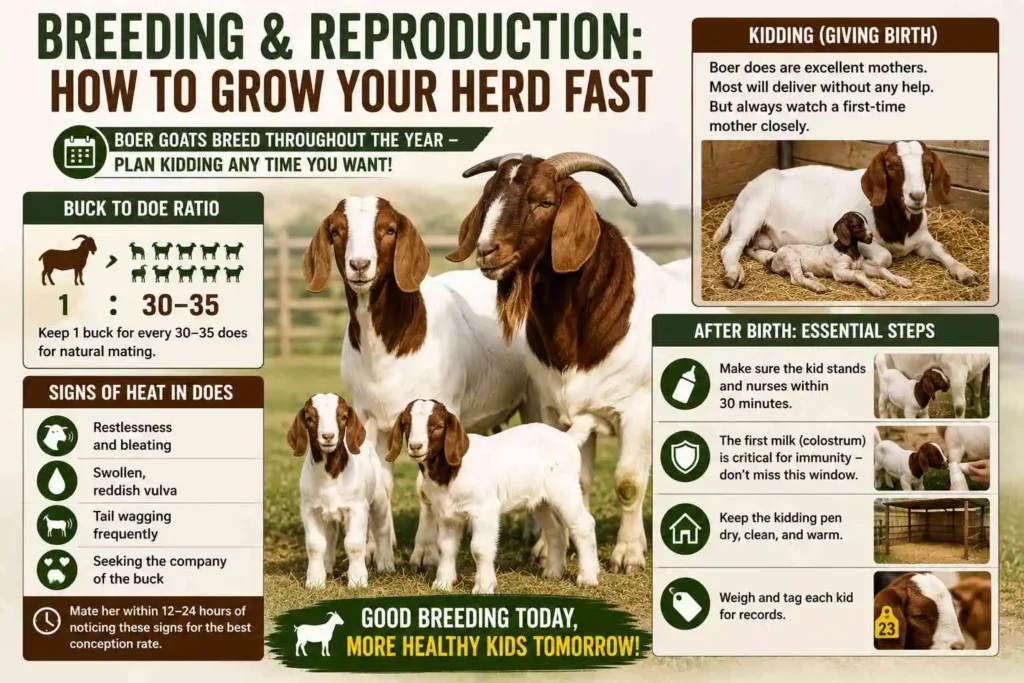
One of the biggest advantages of boer goat breeding is that these animals breed throughout the year. Unlike some seasonal breeders, you can plan kidding any time you want.
Buck to Doe Ratio
Keep 1 buck for every 30–35 does for natural mating. A healthy buck can cover a lot of ground.
Signs of Heat in Does
A doe comes into heat every 18–21 days. Signs include:
- Restlessness and bleating
- Swollen, reddish vulva
- Tail wagging frequently
- Seeking the company of the buck
Mate her within 12–24 hours of noticing these signs for the best conception rate.
Kidding (Giving Birth)
Boer does are excellent mothers. Most will deliver without any help. But always watch a first-time mother closely.
After birth:
- Make sure the kid stands and nurses within 30 minutes
- The first milk (colostrum) is critical for immunity — don’t miss this window
- Keep the kidding pen dry, clean, and warm
- Weigh and tag each kid for records
Common Boer Goat Diseases and How to Prevent Them
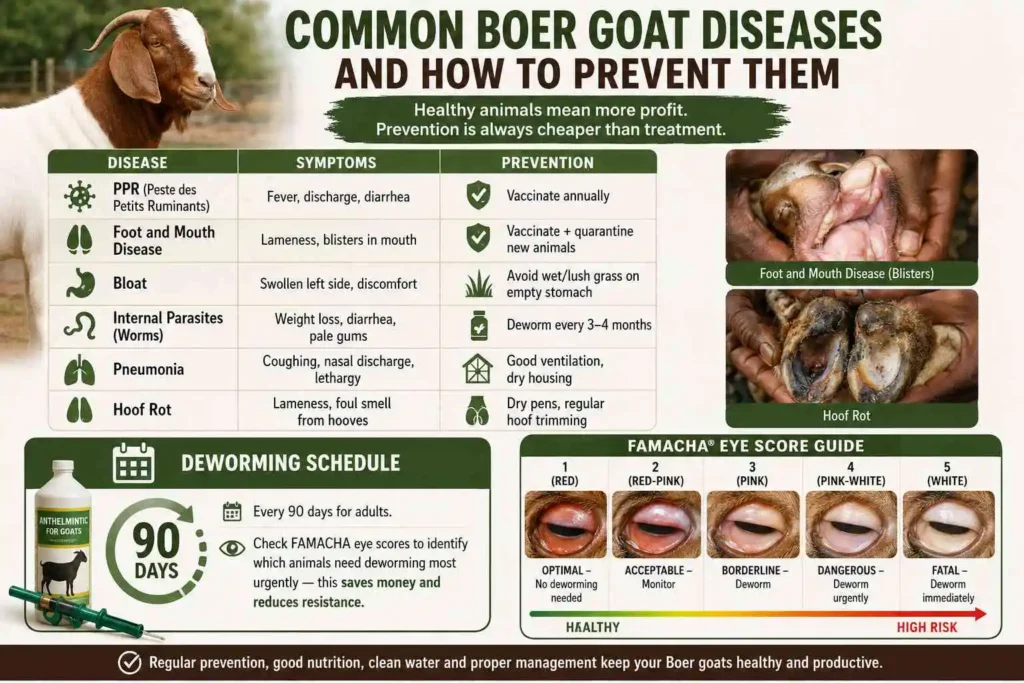
Healthy animals mean more profit. Prevention is always cheaper than treatment. Read our guide on goat disease prevention to keep your herd healthy and productive.
| Disease | Symptoms | Prevention |
|---|---|---|
| PPR (Peste des Petits Ruminants) | Fever, discharge, diarrhea | Vaccinate annually |
| Foot and Mouth Disease | Lameness, blisters in mouth | Vaccinate + quarantine new animals |
| Bloat | Swollen left side, discomfort | Avoid wet/lush grass on empty stomach |
| Internal Parasites (Worms) | Weight loss, diarrhea, pale gums | Deworm every 3–4 months |
| Pneumonia | Coughing, nasal discharge, lethargy | Good ventilation, dry housing |
| Hoof Rot | Lameness, foul smell from hooves | Dry pens, regular hoof trimming |
Deworming schedule: Every 90 days for adults. Check FAMACHA eye scores to identify which animals need deworming most urgently — this saves money and reduces resistance.
How Much Money Can You Make from Boer Goat Farming?
Let’s talk real numbers — because that’s what farming is really about.
| Income Factor | Details |
|---|---|
| Starting herd | 10 does + 1 buck |
| Kids per doe per year | 2 kiddings x 1.8 kids = ~3.6 kids/doe/year |
| Total kids from 10 does | ~36 kids per year |
| Average selling weight | 30–35 kg at 6–8 months |
| Average market price (India) | ₹400–₹600 per kg live weight |
| Revenue per kid | ₹12,000 – ₹21,000 |
| Estimated annual gross revenue | ₹4,32,000 – ₹7,56,000 |
| Annual feed + vet cost (est.) | ₹1,20,000 – ₹1,80,000 |
| Estimated Net Profit | ₹2,50,000 – ₹6,30,000 per year |
Note: Prices vary by region, season, and market — these are estimates based on average market rates, and pure-bred and stud bucks command significantly higher prices. Live-weight prices for Boer-cross meat goats commonly run anywhere from roughly ₹250 to ₹450 per kg depending on the buyer, breed purity, and your state, so check with local dealers or your nearest mandi before planning around the ₹400–₹600 figure used here. The net profit range above reflects a realistic spread: the low end pairs softer market prices with higher feed/vet costs, while the high end pairs better prices with leaner costs — your actual result will land somewhere on that spectrum depending on local goat prices and how tightly you manage feed spend.
A small boer goat farming business with just 10 does can generate meaningful income. Scale up to 50 does and you have a full-time operation.
Boer Goat Farming Tips Every Beginner Should Know
After everything above, here are the quick-fire tips that experienced boer goat farmers wish someone had told them early:
- Start small, learn fast — 10–15 animals is the right starting point. Don’t jump to 100 on day one.
- Buy from a certified breeder — know the bloodline and health history of your animals.
- Keep records — weight gain, breeding dates, kidding dates, medical treatments. Data helps you improve every year.
- Don’t mix new animals with your herd immediately — quarantine newcomers for 3 weeks first.
- Join a local goat farmers group — shared knowledge saves you from expensive mistakes.
- Watch the market — goat meat prices peak during Eid, Diwali, and other festivals. Time your sales strategically.
- Never neglect minerals — selenium and copper deficiencies are common and silent killers. Use quality mineral licks.
- Check hooves every 6–8 weeks — overgrown hooves cause lameness and stress, which slows growth.
Is Boer Goat Farming Right for You?
If you want livestock that:
- Grows fast
- Breeds year-round
- Has strong market demand
- Is easy to manage
- And gives you a real return on investment
Then boer goat farming checks every single box.
It’s not a get-rich-overnight scheme. You will have early mornings, some losses, and a learning curve. But if you put in the work, stay consistent, and follow the basics in this guide, this is one of the most rewarding and profitable forms of small-scale farming available to you today.
Final Thoughts: Your Next Step
The best time to start your boer goat farm was yesterday. The second-best time is right now.
Frequently Asked Questions (FAQ)
1.How many babies can a Boer goat produce?
A Boer doe usually gives birth to 1–3 kids per pregnancy, with twins being common.
2.Is Boer goat farming suitable for beginners?
Yes, beginners can start Boer goat farming with proper knowledge about feeding, breeding, housing, and healthcare.
3.What is the best climate for Boer goats?
Boer goats can adapt to different climates, but they perform best with good shelter, clean water, and protection from extreme weather.
4.Is Boer goat farming better than local goat farming?
Boer goats often provide faster growth and higher meat yield, but local goats may be better adapted to some environments. Many farmers choose crossbreeding for better results.
Newsletter