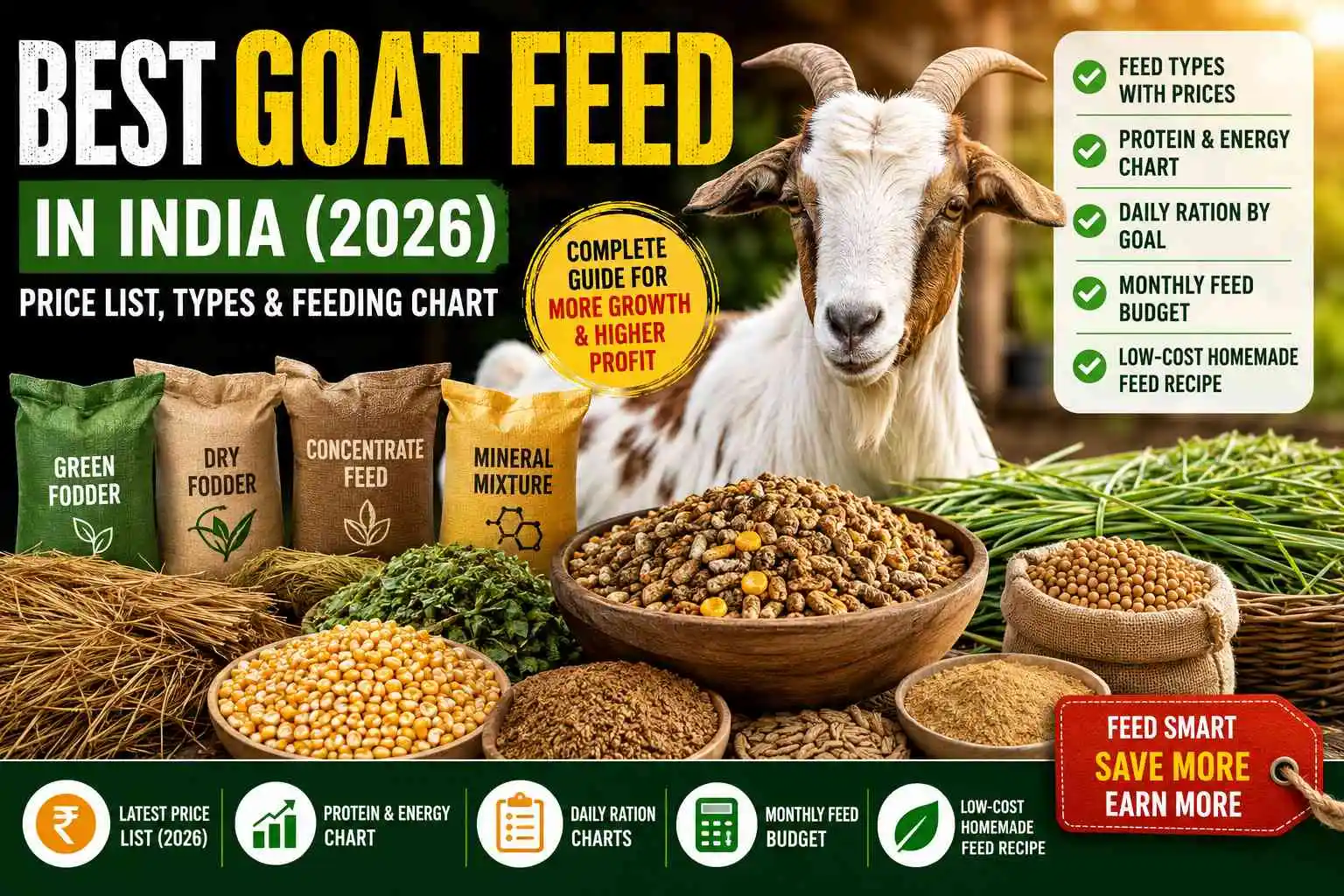

Best Goat Feed in India: Price List, Types & Feeding Chart (2026)
Quick Answer: There is no single “best goat feed” that works for every goat. The right feed is always a mix — green fodder, dry fodder, a concentrate, and a mineral mixture — balanced to match your goat’s age, breed, and purpose (milk, meat, or breeding). This guide gives you the full price list, a protein chart, and a ready monthly budget.
In this guide:
- Why feed choice decides your farm’s profit
- All goat feed types with current price ranges
- A protein and energy chart for every life stage
- Daily ration charts and a full monthly budget
- A homemade feed recipe that costs less than branded pellets
- Mistakes to avoid and simple ways to cut cost
Goats eat every single day, rain or shine. What you put in front of them decides three things: how fast they grow, how much milk they give, and how much money is left in your hand at the end of the month. Get the feed right, and everything else in goat farming becomes easier. Get it wrong, and no medicine or vaccine can fully make up for it.
This guide breaks down the best goat feed choices available in India today, with real price ranges, a proper nutrition chart, and a budget you can actually plan your month around.
Why the Best Goat Feed Decides Your Farm’s Profit
In most small goat farms, feed is not a small expense — it is usually the single biggest cost, often more than half of everything you spend in a month. Shelter, medicine, and labour matter too, but feed is what you pay for again and again, week after week.
A goat fed well gains weight faster, breeds on time, and gives more milk. A goat fed poorly — too much dry fodder, no minerals, no protein boost during pregnancy — grows slowly, falls sick more often, and often fails to conceive on schedule. Both goats cost you almost the same in labour and shed space. Only the feed bill decides which one actually makes you money.
This is exactly why picking the best goat feed for your specific herd, rather than copying whatever a neighbour uses, is one of the highest-return decisions you’ll make as a goat farmer.
Types of Goat Feed Available in India (With Price List)
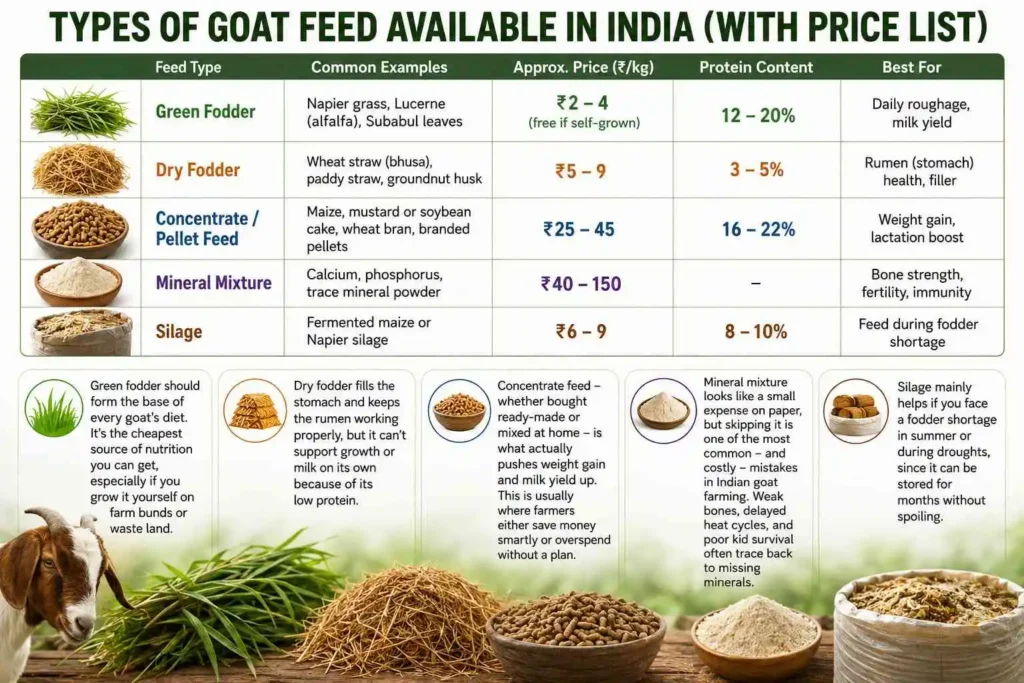
Every goat’s diet is built from a combination of these five feed types. None of them alone is the “best goat feed” — the combination is what works.
| Feed Type | Common Examples | Approx. Price (₹/kg) | Protein Content | Best For |
|---|---|---|---|---|
| Green Fodder | Napier grass, Lucerne (alfalfa), Subabul leaves | ₹2 – 4 (free if self-grown) | 12 – 20% | Daily roughage, milk yield |
| Dry Fodder | Wheat straw (bhusa), paddy straw, groundnut husk | ₹5 – 9 | 3 – 5% | Rumen (stomach) health, filler |
| Concentrate / Pellet Feed | Maize, mustard or soybean cake, wheat bran, branded pellets | ₹25 – 45 | 16 – 22% | Weight gain, lactation boost |
| Mineral Mixture | Calcium, phosphorus, trace mineral powder | ₹40 – 150 | – | Bone strength, fertility, immunity |
| Silage | Fermented maize or Napier silage | ₹6 – 9 | 8 – 10% | Feed during fodder shortage |
Prices vary by state, season, and brand — treat these as planning ranges, not fixed rates.
Green fodder should form the base of every goat’s diet. It’s the cheapest source of nutrition you can get, especially if you grow it yourself on farm bunds or waste land.
Dry fodder fills the stomach and keeps the rumen working properly, but it can’t support growth or milk on its own because of its low protein.
Concentrate feed — whether bought ready-made or mixed at home — is what actually pushes weight gain and milk yield up. This is usually where farmers either save money smartly or overspend without a plan.
Mineral mixture looks like a small expense on paper, but skipping it is one of the most common — and costly — mistakes in Indian goat farming. Weak bones, delayed heat cycles, and poor kid survival often trace back to missing minerals.
Silage mainly helps if you face a fodder shortage in summer or during droughts, since it can be stored for months without spoiling.
Goat Nutrition Chart: How Much Protein Does Your Goat Actually Need?
Livestock nutrition researchers, including those at ICAR’s Central Institute for Research on Goats (CIRG), generally recommend the protein and energy levels below for different life stages. Crude protein is simply the body-building part of feed — it drives muscle growth, milk production, and kid development. TDN, or Total Digestible Nutrients, is just a way of measuring how much usable energy a feed provides.
| Goat Stage | Crude Protein Needed | Energy (TDN) | Feeding Tip |
|---|---|---|---|
| Maintenance (adult, dry) | 7 – 9% | ~50% | Green + dry fodder alone is usually enough |
| Growing kids (up to 6 months) | 14 – 16% | 65 – 70% | Add 200 – 250 g concentrate per day |
| Late pregnancy (last 6 weeks) | 12 – 14% | 60 – 65% | Raise concentrate to prevent energy loss |
| Lactating does | 14 – 16% | 65 – 70% | Feed 300 – 400 g concentrate daily for milk |
| Breeding bucks (mating season) | 12 – 14% | 60% | Extra protein supports fertility |
A goat getting only 7-8% protein during late pregnancy or lactation is being underfed, even if its stomach looks full. Pregnancy toxemia — a dangerous drop in body energy that can strike in the final weeks before kidding — is largely preventable just by raising concentrate feed at exactly this stage. This gap between what many Indian smallholder goats actually eat and what they truly need is common, and it’s also the easiest one to close with a small, planned concentrate addition.
Best Goat Feed Chart: Daily Ration for Different Goals
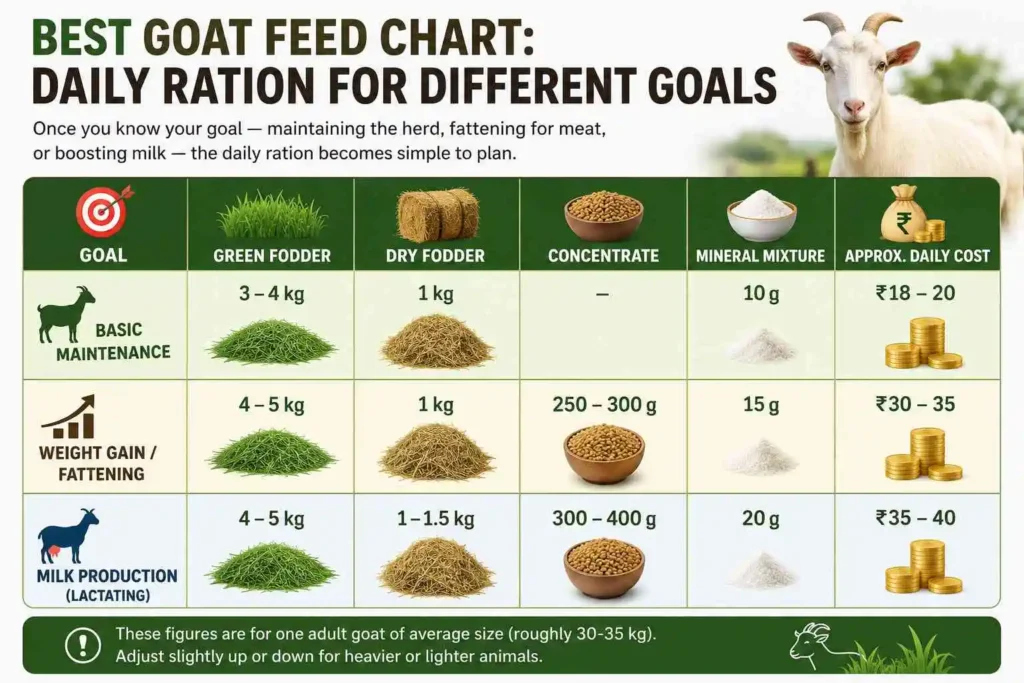
Once you know your goal — maintaining the herd, fattening for meat, or boosting milk — the daily ration becomes simple to plan.
| Goal | Green Fodder | Dry Fodder | Concentrate | Mineral Mixture | Approx. Daily Cost |
|---|---|---|---|---|---|
| Basic Maintenance | 3 – 4 kg | 1 kg | – | 10 g | ₹18 – 20 |
| Weight Gain / Fattening | 4 – 5 kg | 1 kg | 250 – 300 g | 15 g | ₹30 – 35 |
| Milk Production (lactating) | 4 – 5 kg | 1 – 1.5 kg | 300 – 400 g | 20 g | ₹35 – 40 |
These figures are for one adult goat of average size (roughly 30-35 kg). Adjust slightly up or down for heavier or lighter animals.
Monthly Goat Feed Budget: What Will It Really Cost You?
Here’s a full month’s feed cost for a herd of 10 goats being raised for weight gain — the most common goal on small commercial farms.
| Feed Item | Monthly Quantity | Rate (₹/kg) | Monthly Cost (₹) |
|---|---|---|---|
| Green Fodder | 1,350 kg | ₹3 | ₹4,050 |
| Dry Fodder | 300 kg | ₹7 | ₹2,100 |
| Concentrate | 82 kg | ₹35 | ₹2,870 |
| Mineral Mixture | 4.5 kg | ₹80 | ₹360 |
| Total | ≈ ₹9,380 |
That works out to roughly ₹938 per goat per month. Here’s the honest part most guides skip: if you grow your own Napier or Lucerne instead of buying it, you can cut that ₹4,050 green fodder line down to almost zero, dropping your total monthly bill by nearly half. Growing your own fodder is usually the single biggest cost lever available to any small farmer.
How to Choose the Best Goat Feed for Your Farm
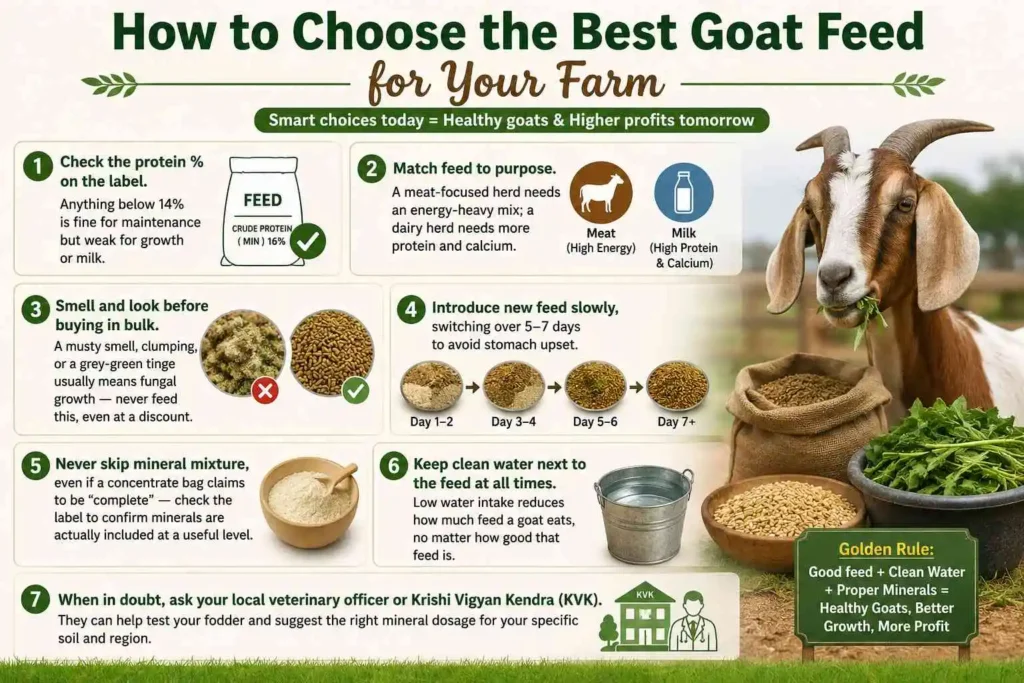
There’s no universal winner between branded and homemade feed. Run through this checklist before you buy in bulk:
- Check the protein % on the label. Anything below 14% is fine for maintenance but weak for growth or milk.
- Match feed to purpose. A meat-focused herd needs an energy-heavy mix; a dairy herd needs more protein and calcium.
- Smell and look before buying in bulk. A musty smell, clumping, or a grey-green tinge usually means fungal growth — never feed this, even at a discount.
- Introduce new feed slowly, switching over 5–7 days to avoid stomach upset.
- Never skip mineral mixture, even if a concentrate bag claims to be “complete” — check the label to confirm minerals are actually included at a useful level.
- Keep clean water next to the feed at all times. Low water intake reduces how much feed a goat eats, no matter how good that feed is.
- When in doubt, ask your local veterinary officer or Krishi Vigyan Kendra (KVK). They can help test your fodder and suggest the right mineral dosage for your specific soil and region.
Low-Cost Homemade Goat Feed Recipe (Save Money Without Cutting Nutrition)
If branded pellet feed feels expensive, you can mix your own concentrate at home. This recipe gives roughly 18-19% crude protein — enough for both growth and lactation.
| Ingredient | Quantity (per 100 kg batch) | Rate (₹/kg) | Cost (₹) |
|---|---|---|---|
| Maize or Jowar (broken) | 40 kg | ₹22 | ₹880 |
| Mustard or Soybean Cake | 30 kg | ₹28 | ₹840 |
| Wheat Bran | 25 kg | ₹18 | ₹450 |
| Mineral Mixture | 3 kg | ₹80 | ₹240 |
| Common Salt | 2 kg | ₹8 | ₹16 |
| Total | 100 kg | – | ₹2,426 |
That comes to about ₹24 per kg — noticeably cheaper than fully branded pellet feed, which usually sells between ₹35 and ₹45 per kg. The catch is consistency: weigh each ingredient rather than eyeballing it, and mix thoroughly so every handful has roughly the same ratio. An uneven mix is the main reason homemade feed sometimes underperforms compared to machine-made pellets.
Common Goat Feeding Mistakes That Cost You Money
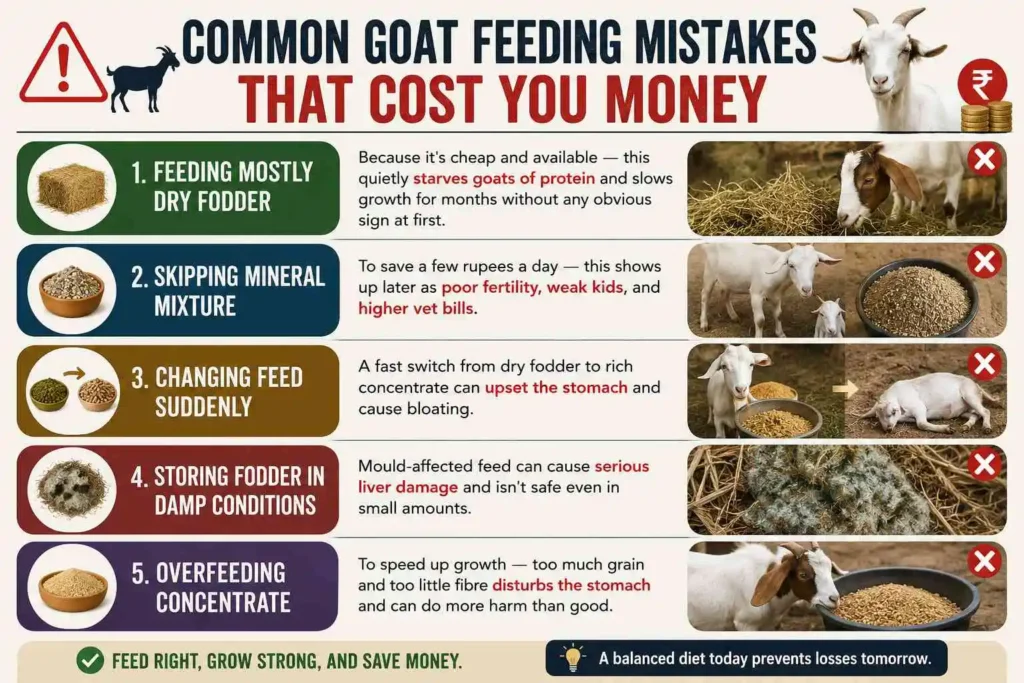
- Feeding mostly dry fodder because it’s cheap and available — this quietly starves goats of protein and slows growth for months without any obvious sign at first.
- Skipping mineral mixture to save a few rupees a day — this shows up later as poor fertility, weak kids, and higher vet bills.
- Changing feed suddenly — a fast switch from dry fodder to rich concentrate can upset the stomach and cause bloating.
- Storing fodder in damp conditions — mould-affected feed can cause serious liver damage and isn’t safe even in small amounts.
- Overfeeding concentrate to speed up growth — too much grain and too little fibre disturbs the stomach and can do more harm than good.
Simple Ways to Cut Feed Cost Without Hurting Growth
- Grow Napier grass or Lucerne on bunds, field edges, or waste land — the single biggest saving available to most farmers.
- Buy oil cake, bran, and mineral mixture in bulk directly from a local mill instead of small retail packs.
- Deworm goats on a fixed schedule — a goat full of worms wastes a large share of whatever you feed it.
- Store dry fodder off the ground and under cover to avoid spoilage and waste.
- Mix your own concentrate at home once you’re confident with the ratios, instead of relying only on premium branded pellets.
Final Word on the Best Goat Feed
The best goat feed isn’t a single product you can buy off a shelf—it’s a balanced combination of green fodder, dry fodder, concentrate, and mineral mixture tailored to your goat’s age, purpose, and stage of life. A growing kid, a pregnant doe, a lactating goat, and a breeding buck all have different nutritional needs. Feeding them according to those needs can improve weight gain, milk production, reproductive performance, and overall herd health while reducing unnecessary veterinary expenses.
Keep in mind that the prices mentioned in this guide are approximate and may vary depending on your state, season, feed availability, and local market conditions. Before purchasing feed in bulk, compare prices from nearby suppliers and consult your local veterinary officer or livestock extension worker for the recommended mineral mixture and feeding schedule in your area.
If you’re planning to start or expand a goat farming business, don’t stop here. Read our complete Goat Farming Guide, where you’ll learn about choosing the right breeds, housing design, disease prevention, breeding management, costs, profits, and practical tips to build a successful and profitable goat farm.
FAQs on Best Goat Feed
What is the best feed for goat weight gain?
A concentrate mix with 16-18% crude protein, fed at 250-300 g a day alongside green and dry fodder, works well for weight gain. A home mix of maize, oil cake, and wheat bran is often cheaper than branded options and just as effective.
How much does it cost to feed one goat per month in India?
Depending on the goat’s stage and whether you buy or grow your fodder, expect somewhere between ₹550 and ₹1,200 per month per adult goat.
Is homemade goat feed as good as branded feed?
A carefully weighed homemade mix can match or even beat many branded feeds in protein content, usually at a lower cost per kg. The main risk is inconsistent mixing, so measure ingredients rather than guessing.
How much green fodder should a goat eat daily?
An adult goat generally needs 3-5 kg of green fodder a day, depending on its weight and whether it’s lactating or pregnant. Growing kids need less, usually 1-2 kg.
Can goats survive on dry fodder alone?
They can survive short-term, but dry fodder alone (3-5% protein) can’t support healthy growth, good milk yield, or normal breeding. Long-term reliance on only dry fodder usually leads to weak, underweight animals.
How much protein does a pregnant or milking goat need?
Late-pregnancy and lactating does need roughly 12-16% crude protein in their overall diet, well above the 7-9% needed for simple maintenance. This gap is usually closed by adding 250-400 g of a good concentrate mix daily.
Newsletter