

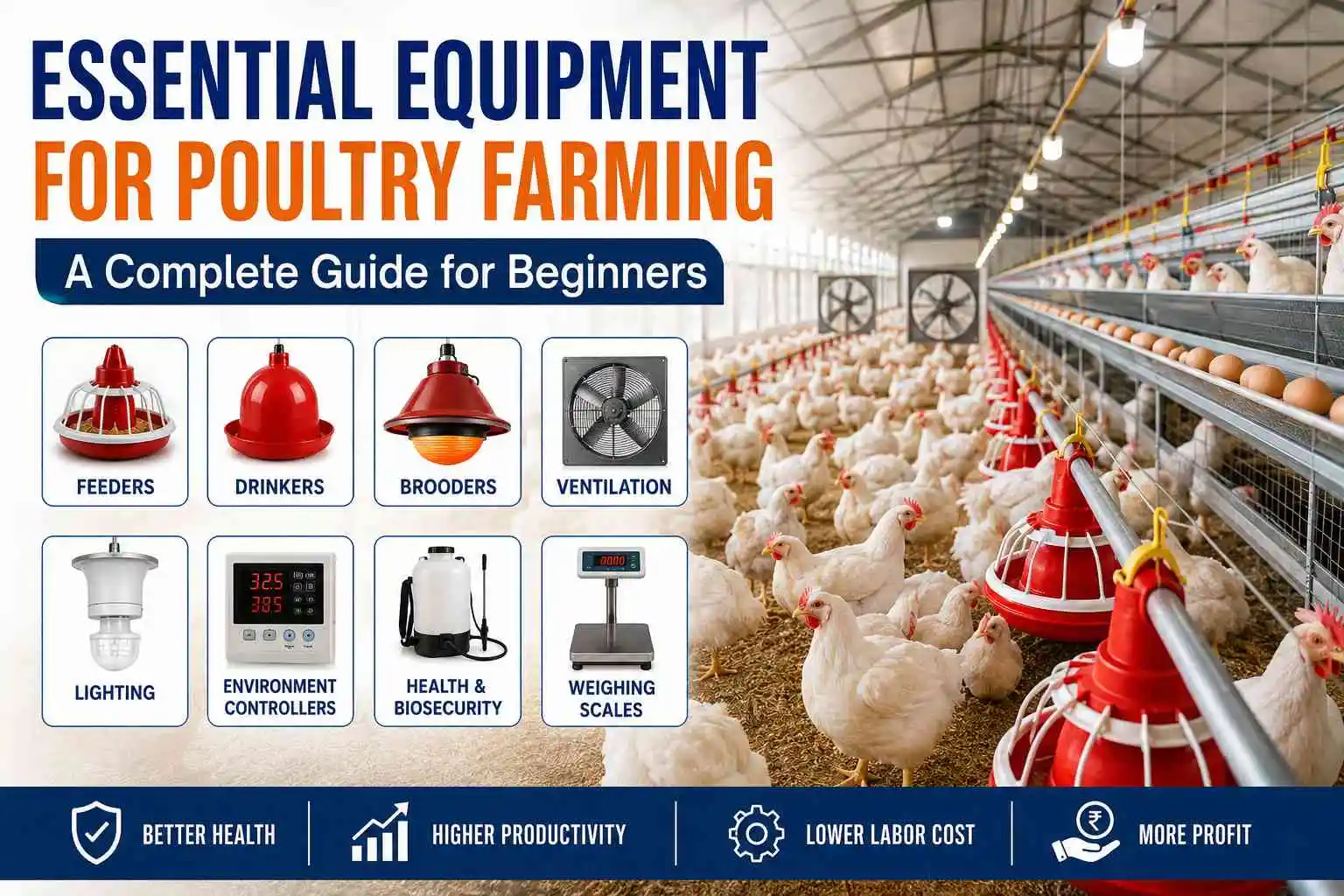

What are the Essential Equipment for Poultry Farming
If you’re planning to start a poultry farm — whether a small backyard flock or a large commercial operation — one of the first questions you’ll ask is: what are the essential equipment for poultry farming? Getting the right equipment from the start can make the difference between a thriving, profitable farm and one that constantly struggles with productivity, disease, and high mortality rates. Proper poultry equipment improves bird health, increases productivity, reduces labor costs, and helps maintain hygiene standards.
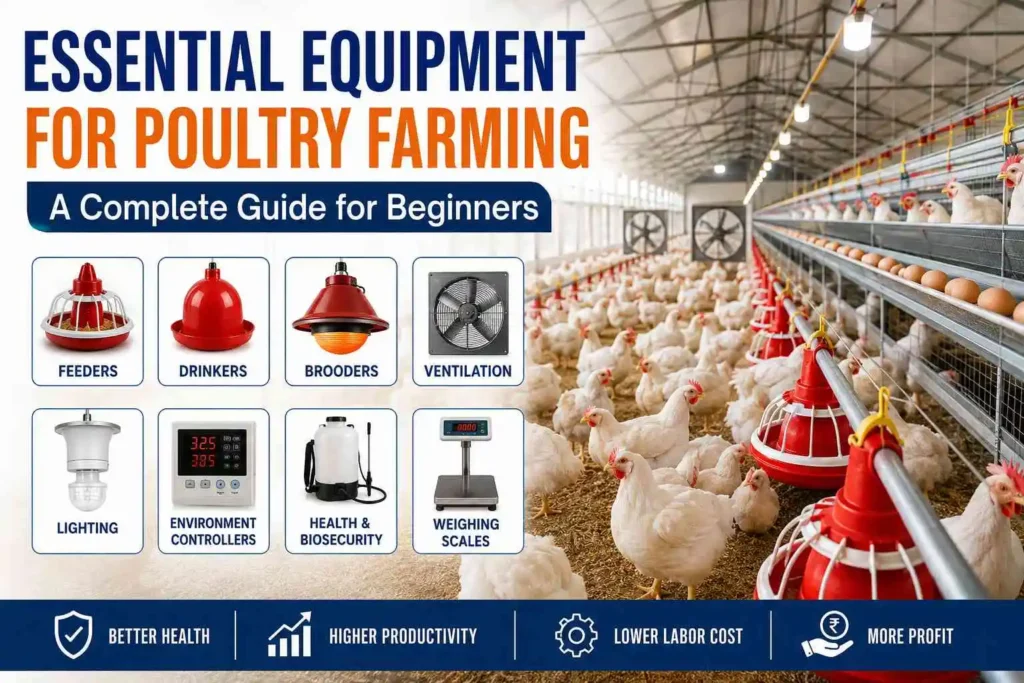
This comprehensive guide walks you through every essential piece of equipment needed in modern poultry farming, explains why each one matters, and helps you make informed purchasing decisions based on the scale of your operation.
Why the Right Equipment Poultry Farming Matters
Poultry farming is a highly profitable but management-intensive business. Birds are sensitive creatures. Their health, growth rate, egg production, and feed conversion ratios are all directly influenced by the quality of equipment and the environment you create for them.
Investing in the right equipment upfront reduces labour costs, minimises feed wastage, controls disease outbreaks, and ultimately increases profitability. Whether you’re raising broilers, layers, turkeys, or ducks, the core categories of equipment remain largely the same.
Proper poultry farming equipment helps:
- Improve feeding efficiency
- Ensure continuous water supply
- Maintain proper temperature
- Reduce disease outbreaks
- Improve bird comfort and welfare
- Increase egg and meat production
- Save labor and operational costs
- Enhance overall farm management
Essential Equipment for Poultry Farming
Before any birds arrive, you need a properly designed poultry house. The structure is the foundation of your entire operation.
Poultry House Frame and Roofing
The house must be sturdy, weather-resistant, and well-ventilated. In hot climates like India, galvanised iron (GI) frame structures with asbestos or iron sheet roofing are commonly used. In colder regions, insulated walls and ceilings are critical. It provides shelter and protection from predators, harsh weather conditions, and diseases.
Types of Poultry Housing
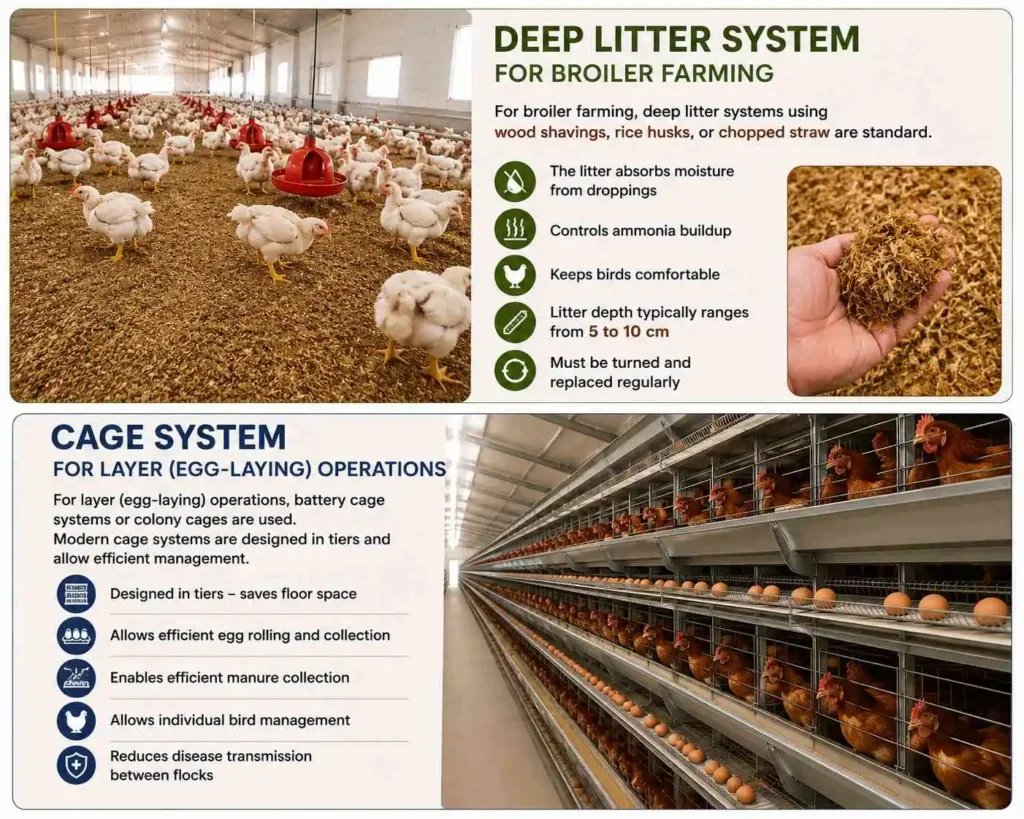
Deep Litter System
For broiler farming, deep litter systems using wood shavings, rice husks, or chopped straw are standard. The litter absorbs moisture from droppings, controls ammonia buildup, and keeps birds comfortable. Litter depth typically ranges from 5 to 10 cm and must be turned and replaced regularly.
Cage System
For layer (egg-laying) operations, battery cage systems or colony cages are used. Modern cage systems are designed in tiers and allow efficient manure collection, egg rolling, and individual bird management. They also significantly reduce floor space requirements and disease transmission between flocks.
Feeding Equipment for poultry farming
Feed typically accounts for 65–70% of total poultry production costs, making feeding equipment among the most critical investments you’ll make.
Chick Feeders
Designed specifically for young chicks. Chick feeders are used during the first few weeks after hatching. They are placed low to the ground so chicks can easily reach their feed. These feeders help young birds eat comfortably and ensure they receive enough nutrition for healthy growth.
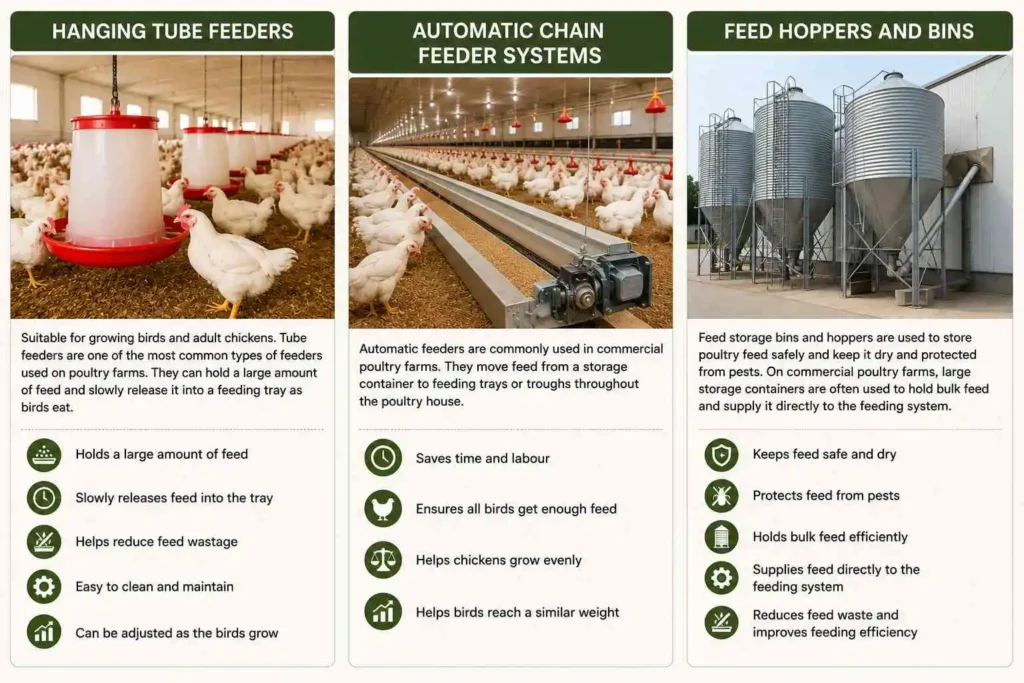
Hanging Tube Feeders
Suitable for growing birds and adult chickens. Tube feeders are one of the most common types of feeders used on poultry farms. They can hold a large amount of feed and slowly release it into a feeding tray as birds eat. These feeders help reduce feed wastage, are easy to clean, and can be adjusted as the birds grow.
Automatic Chain Feeder Systems
Automatic feeders are commonly used in commercial poultry farms. They move feed from a storage container to feeding trays or troughs throughout the poultry house. These systems save time and labour, ensure all birds get enough feed, and help chickens grow evenly and reach a similar weight.
Feed Hoppers and Bins
Feed storage bins and hoppers are used to store poultry feed safely and keep it dry and protected from pests. On commercial poultry farms, large storage containers are often used to hold bulk feed and supply it directly to the feeding system. This helps reduce feed waste and makes feeding more efficient.
Watering (Drinker) Equipment
Water is the most important nutrient for poultry. Birds drink roughly twice as much water as they eat in feed weight. Clean, consistent access to fresh water is non-negotiable.
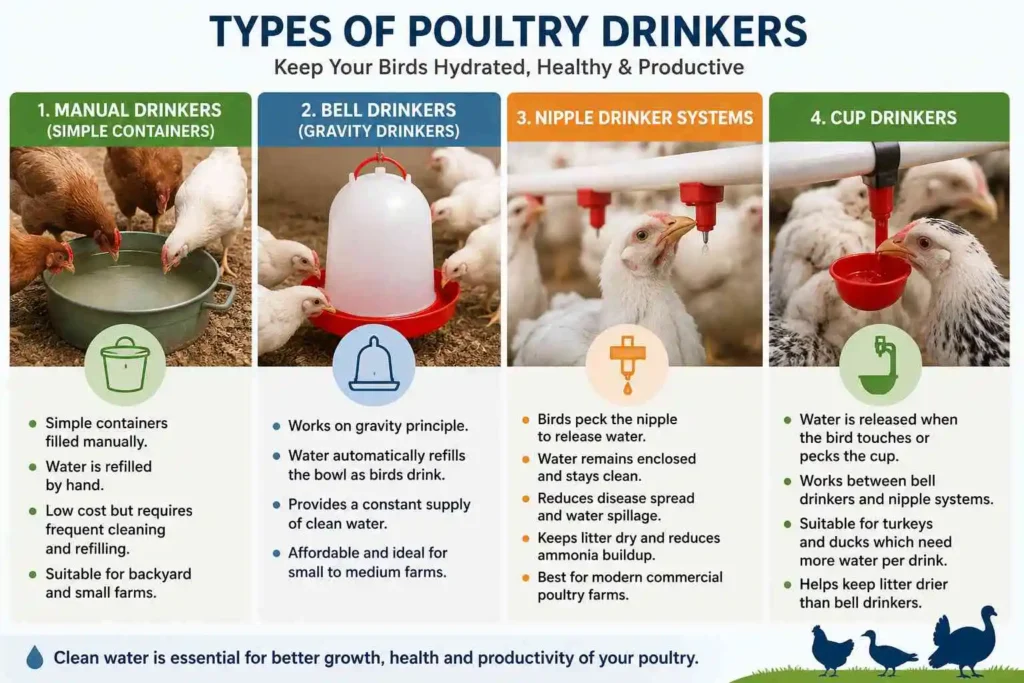
Manual Drinkers
Simple containers filled manually.
Bell Drinkers (Gravity Drinkers)
Bell drinkers are commonly used on small and medium-sized poultry farms. They are simple, affordable, and connected to a water source that automatically refills the drinker as birds consume water. This ensures that chickens have a constant supply of clean drinking water.
Nipple Drinker Systems
Nipple drinker systems are considered one of the best watering systems for modern commercial poultry farms. Birds peck a small nipple to release water when they need it. Because the water stays enclosed, it remains cleaner and helps reduce the spread of disease. These systems also prevent water spillage, keeping the litter dry, reducing ammonia buildup, and creating a healthier environment for the birds.
Cup Drinkers
Cup drinkers are a simple watering system that works between bell drinkers and nipple systems. When a bird touches the cup with its beak, a small amount of water is released. They are especially useful for turkeys and ducks because these birds need more water with each drink.
Brooders for poultry farming
The first few weeks of a chick’s life are the most critical. Young birds cannot regulate their own body temperature, making supplemental heat essential during the brooding phase.
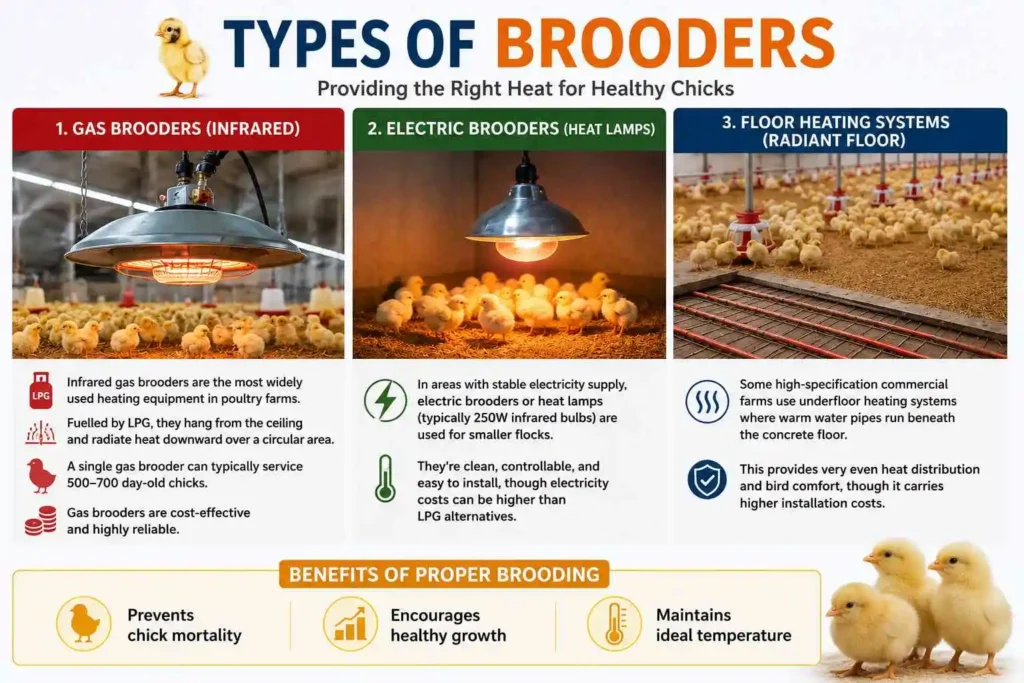
Gas Brooders
Infrared gas brooders are the most widely used heating equipment in poultry farms. Fuelled by LPG, they hang from the ceiling and radiate heat downward over a circular area. A single gas brooder can typically service 500–700 day-old chicks. Gas brooders are cost-effective and highly reliable.
Electric Brooders
In areas with stable electricity supply, electric brooders or heat lamps (typically 250W infrared bulbs) are used for smaller flocks. They’re clean, controllable, and easy to install, though electricity costs can be higher than LPG alternatives.
Floor Heating Systems (Radiant Floor)
Some high-specification commercial farms use underfloor heating systems where warm water pipes run beneath the concrete floor. This provides very even heat distribution and bird comfort, though it carries higher installation costs.
Benefits
- Prevents chick mortality
- Encourages healthy growth
- Maintains ideal temperature
A good brooder setup significantly improves chick survival rates.
Ventilation and Climate Control Equipment
Proper air quality is directly linked to bird health, feed conversion, and growth rates. Poor ventilation leads to ammonia buildup, respiratory disease, and heat stress — all major causes of mortality.
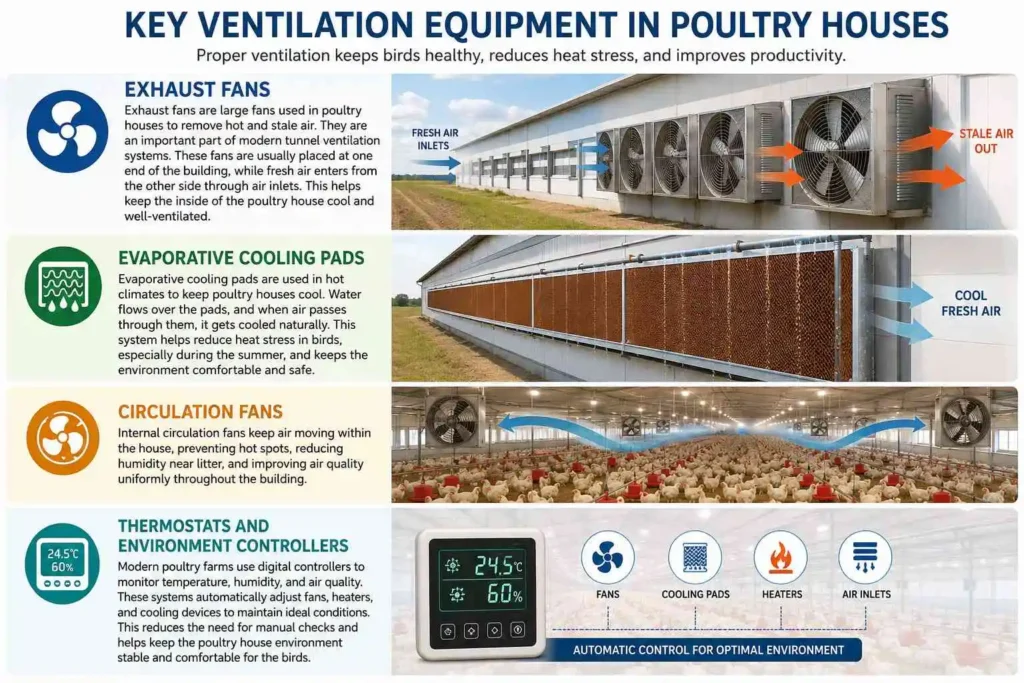
Exhaust Fans
Exhaust fans are large fans used in poultry houses to remove hot and stale air. They are an important part of modern tunnel ventilation systems. These fans are usually placed at one end of the building, while fresh air enters from the other side through air inlets. This helps keep the inside of the poultry house cool and well-ventilated.
Evaporative Cooling Pads
Evaporative cooling pads are used in hot climates to keep poultry houses cool. Water flows over the pads, and when air passes through them, it gets cooled naturally. This system helps reduce heat stress in birds, especially during the summer, and keeps the environment comfortable and safe.
Circulation Fans
Internal circulation fans keep air moving within the house, preventing hot spots, reducing humidity near litter, and improving air quality uniformly throughout the building.
Thermostats and Environment Controllers
Modern poultry farms use digital controllers to monitor temperature, humidity, and air quality. These systems automatically adjust fans, heaters, and cooling devices to maintain ideal conditions. This reduces the need for manual checks and helps keep the poultry house environment stable and comfortable for the birds.
Lighting Equipment for poultry farming
Lighting plays a major role in poultry production, especially for layer chickens. Light management influences feed intake, growth rate, reproductive cycles, and egg production. Both intensity and duration of light must be carefully managed.
LED Poultry Lighting Systems
LED lighting systems are commonly used in modern poultry houses. They consume less electricity, last longer, and can be adjusted in brightness. The right light color also helps reduce stress and aggressive behavior in birds, while supporting better growth in broilers and higher egg production in layers.
Lighting Controllers and Timers
Lighting controllers and timers are used in poultry farms to automatically manage light levels. They can gradually increase or decrease brightness and control how many hours of light birds receive each day. This helps improve egg production in commercial layer farms and reduces the need for manual monitoring.
Health and Biosecurity Equipment
Disease prevention is the foundation of profitable poultry farming. The right health management equipment plays a key role in preventing serious disease outbreaks that can cause heavy losses. Using proper biosecurity tools and health equipment helps protect the flock, maintain good bird health, and ensure smooth farm productivity. For more details on common poultry health issues, read our poultry disease blog.
Sprayers and Disinfection Systems
Knapsack sprayers and automated fogging systems are used to disinfect houses between flocks and to administer medications via the air. Foot dip trays at house entrances are a simple but essential biosecurity measure.
Vaccination Equipment
Vaccines are administered via drinking water, spray, eye drops, or injection. Proper vaccination equipment includes dosing pumps for water-based vaccines, spray cabinets for respiratory vaccines, and syringes and needles for injectable vaccines.
Weighing Scales
Regular flock weighing is critical to track growth performance and adjust feeding programmes. Hanging scales or platform scales with smooth, easy-to-clean surfaces are used for this purpose.
Summary: Essential Poultry Farming Equipment Checklist
| Category | Equipment |
| Housing | Frames, roofing, cages, litter |
| Feeding | Tray feeders, tube feeders, auto chains, bins |
| Watering | Bell drinkers, nipple systems, cup drinkers |
| Heating | Gas brooders, electric brooders, floor heating |
| Ventilation | Exhaust fans, cooling pads, thermostats |
| Lighting | LED systems, dimmers, timers |
| Egg Handling | Collection belts, graders, washers |
| Health | Sprayers, vaccinators, weighing scales |
| Waste | Litter turners, manure belts |
| Catching | Crates, transport cages |
Final Thoughts
Understanding what are the essential equipment for poultry farming is first step toward building a productive, disease-resistant, and profitable operation. The scale of your farm will dictate which equipment is immediately necessary and which can be added as your operation grows. However, cutting corners on fundamentals — ventilation, water quality, and heating — is never advisable, as these directly determine bird welfare and financial outcomes.
Start with quality core equipment, maintain it diligently, and continuously upgrade as your farm expands. A well-equipped poultry house not only produces better results today but also lays the foundation for long-term, sustainable profitability. You can Read How to Start Poultry Farming.
Frequently Asked Questions
Can I start poultry farming with low cost equipment?
Yes. You can start small with:
Simple shed or bamboo house
Plastic feeders and waterers
Basic bulb for heat
Later you can upgrade as your farm grows.
Is ventilation equipment necessary?
Yes. Good airflow is very important because it:
Removes bad smell and ammonia
Keeps air fresh
Prevents disease
What is a brooder or heating lamp used for?
A brooder keeps baby chicks warm.
Chicks cannot control their body temperature, so they need heat for survival.
Newsletter