

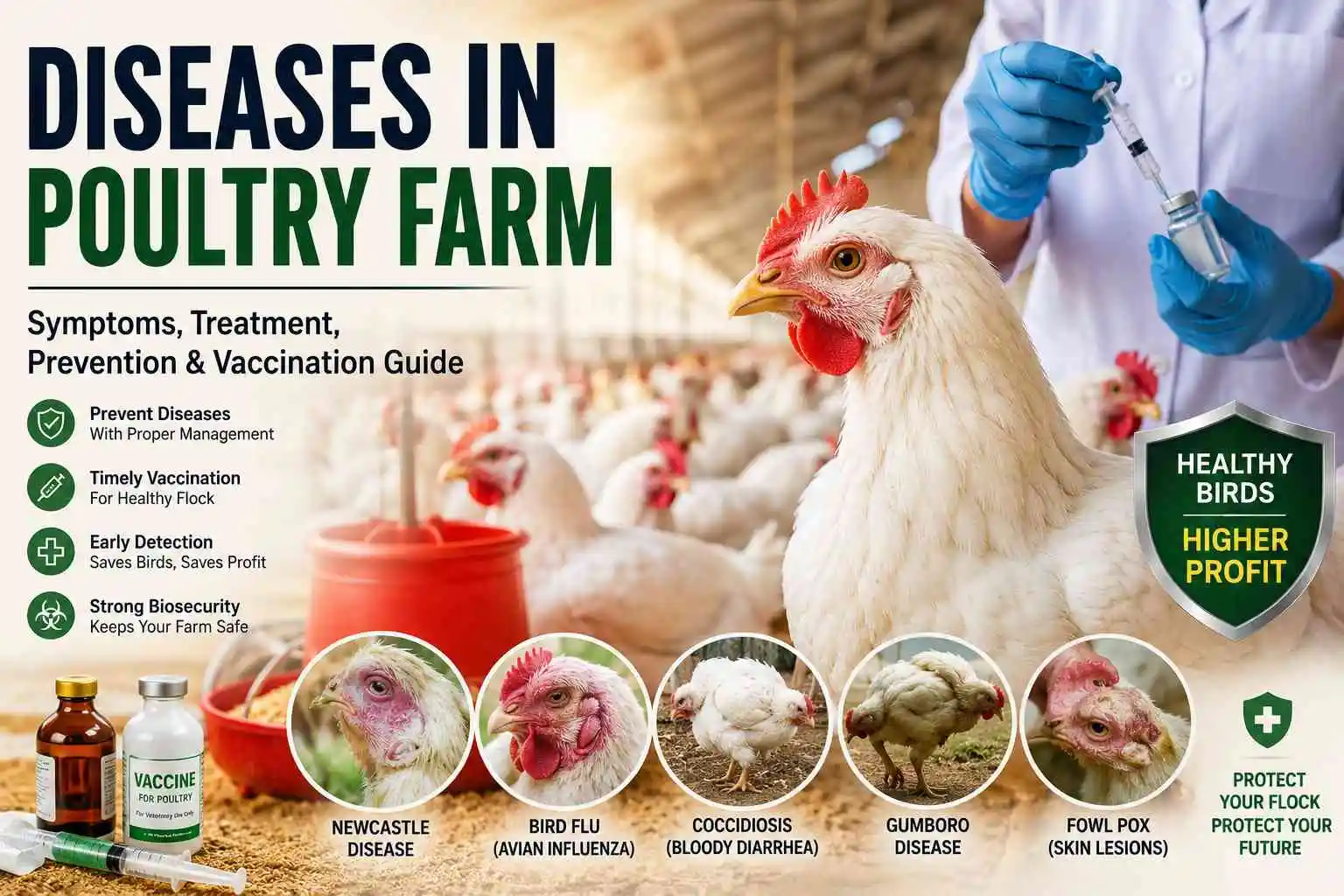

Diseases in Poultry Farm | Prevention, Treament and Vaccination
Poultry farming is one of the fastest-growing sources of income in agriculture today. Many farmers are earning stable profits from broiler and layer farming. However, one of the biggest challenges in this business is the risk of diseases in poultry farm systems.
When diseases enter a poultry farm, they spread very quickly because birds are kept in close contact with each other. Within a few days, even a small infection can turn into a serious outbreak. This leads to sudden death of birds, reduced egg production, poor growth, and heavy financial loss for farmers.
Most poultry diseases occur due to poor hygiene, contaminated water or feed, overcrowding, lack of vaccination, and weak biosecurity. The important point is that most of these diseases can be controlled if farmers follow proper management practices.
In poultry farming, prevention is always more important than treatment because many diseases have no cure once they spread.
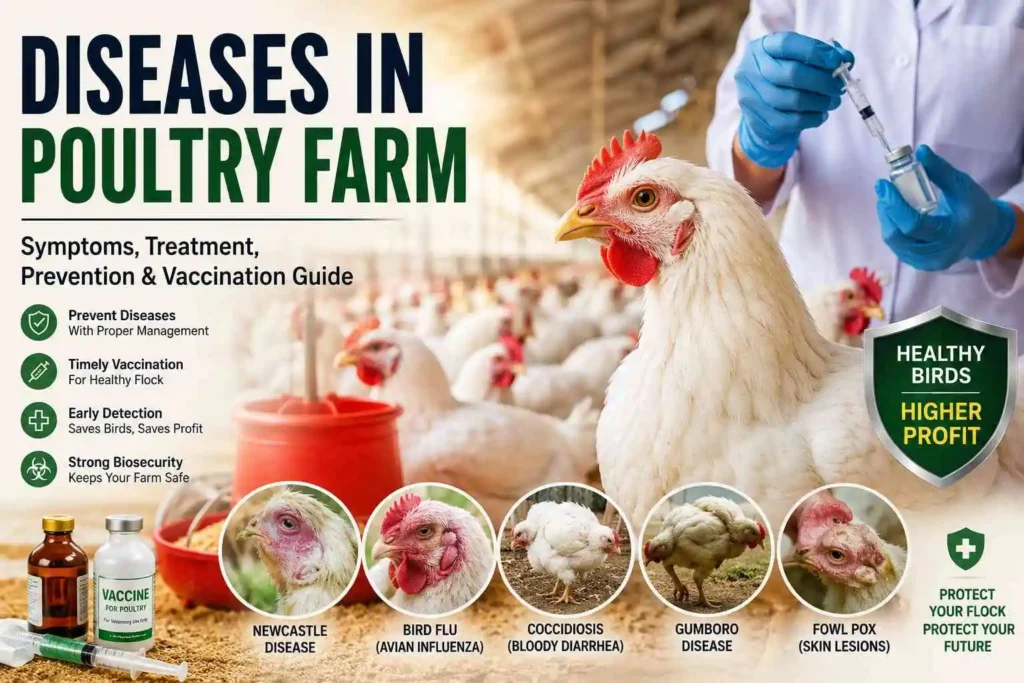
Why Diseases in Poultry Farms Spreads Quickly
Diseases spread faster in poultry farms compared to other livestock because birds are raised in large numbers in a small space. This close contact allows viruses and bacteria to move from one bird to another within hours.
Another major reason is stress. When birds are stressed due to heat, overcrowding, or poor ventilation, their immunity becomes weak. Weak immunity makes them an easy target for infections.
Dirty litter, contaminated water, and poor air circulation further increase disease risk. That is why successful poultry farming always depends on strong hygiene and biosecurity practices.
Major Diseases in Poultry Farm
Newcastle Disease in Poultry Farm (Ranikhet Disease)
Newcastle disease is one of the most dangerous and common diseases in poultry farming. It spreads very fast and can affect almost the entire flock in a short time.
Birds infected with this disease show breathing problems, green-colored diarrhea, neck twisting, paralysis, and sudden death. In many cases, farmers notice a sharp drop in egg production before deaths begin.
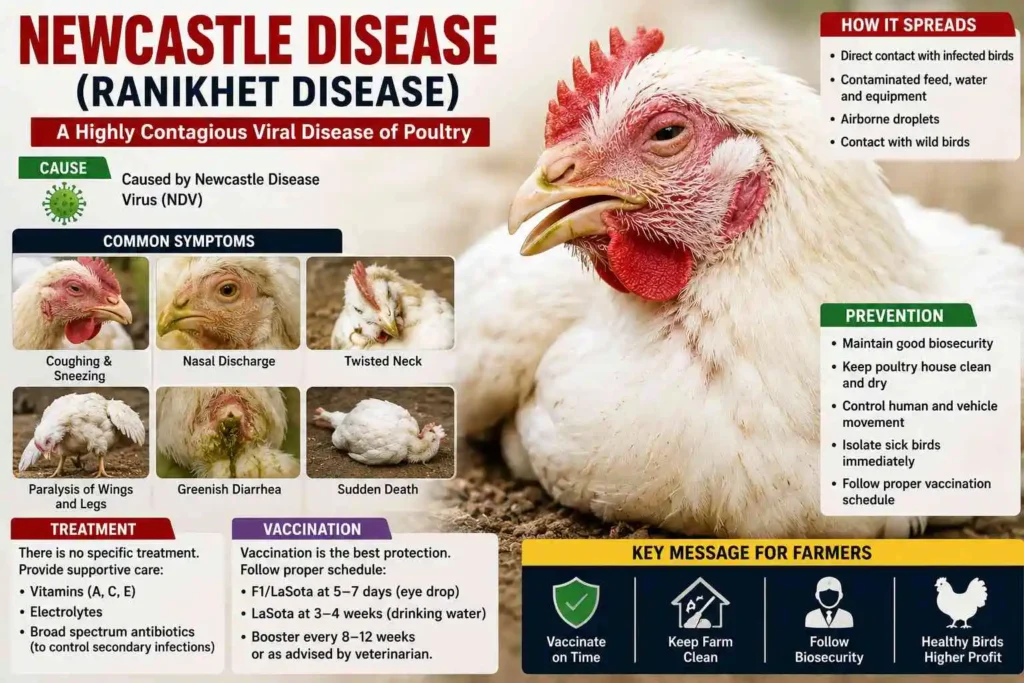
There is no direct cure for Newcastle disease once infection starts. Farmers can only provide supportive care such as vitamins, electrolytes, and medicines to prevent secondary bacterial infections. However, this disease is mainly controlled through vaccination.
Vaccination at the correct age is extremely important. A proper booster schedule helps build strong immunity in birds. Along with vaccination, maintaining cleanliness and isolating sick birds can reduce spread.
Vaccination: Vaccination is the cornerstone of Newcastle disease control. Live attenuated vaccines (LaSota, B1, Clone 30, Hitchner) are administered via drinking water, eye drop, or spray.
Inactivated (killed) oil-emulsion vaccines are used for layer and breeder flocks to provide stronger, longer-lasting immunity. A typical program involves primary vaccination at day 7–10 via eye drop, a booster at 3–4 weeks, and repeat dosing every 8–12 weeks depending on the disease pressure in the region.
Avian Influenza Disease in Poultry Farm (Bird Flu)
Avian influenza, also known as bird flu, is a highly dangerous viral disease in poultry farms. It spreads very quickly and can cause mass death in birds within a short time.
One of the most serious features of this disease is sudden death without clear symptoms. In other cases, birds may show swelling in the face, difficulty in breathing, and a sharp drop in egg production.
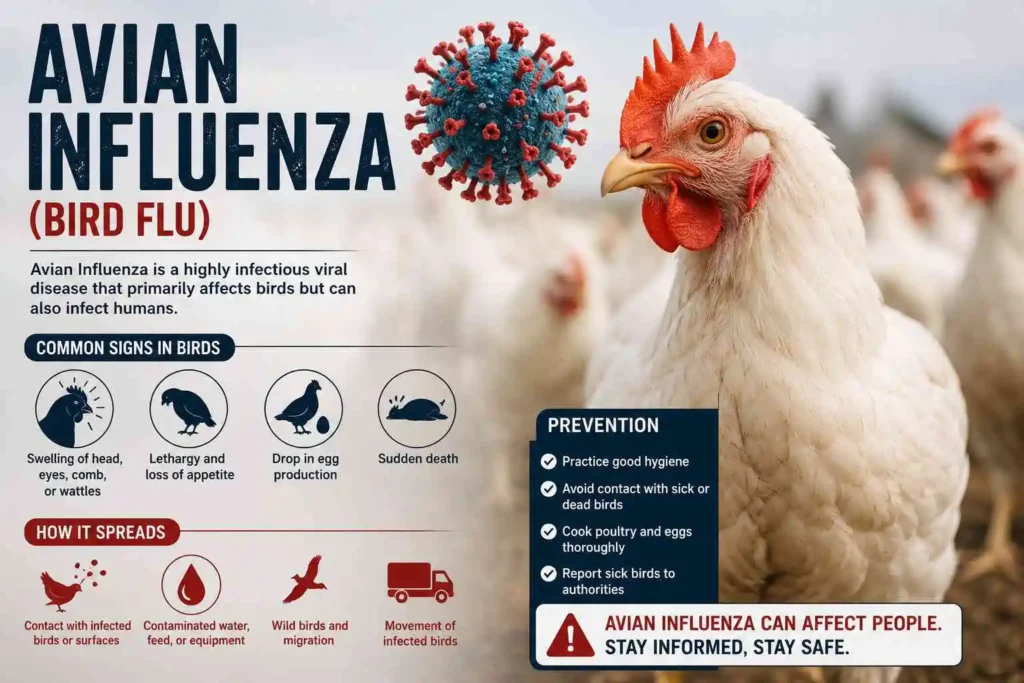
There is no treatment for bird flu in poultry. In severe cases, infected birds are destroyed to prevent the spread of disease.
Prevention is the only protection. Farmers must avoid contact between poultry birds and wild birds. Proper farm fencing, hygiene, and controlled movement of people and equipment are very important. In some countries, vaccination is used under government supervision.
Vaccination: In countries where vaccination is permitted, inactivated H5 or H7 vaccines are used. Vaccination does not eliminate infection but reduces clinical signs, mortality, and virus shedding. Vaccine strains must match circulating field strains for optimal protection.
In many countries, particularly those with endemic HPAI, vaccination of commercial flocks is part of the national control program alongside strict movement controls.
Coccidiosis (Intestinal Disease)
Coccidiosis is one of the most common diseases in chicks and young birds. It affects the intestines and is caused by parasites that grow in wet and dirty litter.
Infected birds show symptoms like blood in droppings, weakness, loss of appetite, dehydration, and poor growth. If not treated in time, it can lead to heavy losses in chicks.
Treatment is possible using anti-coccidial medicines along with vitamins for recovery. However, prevention is much more important than treatment.
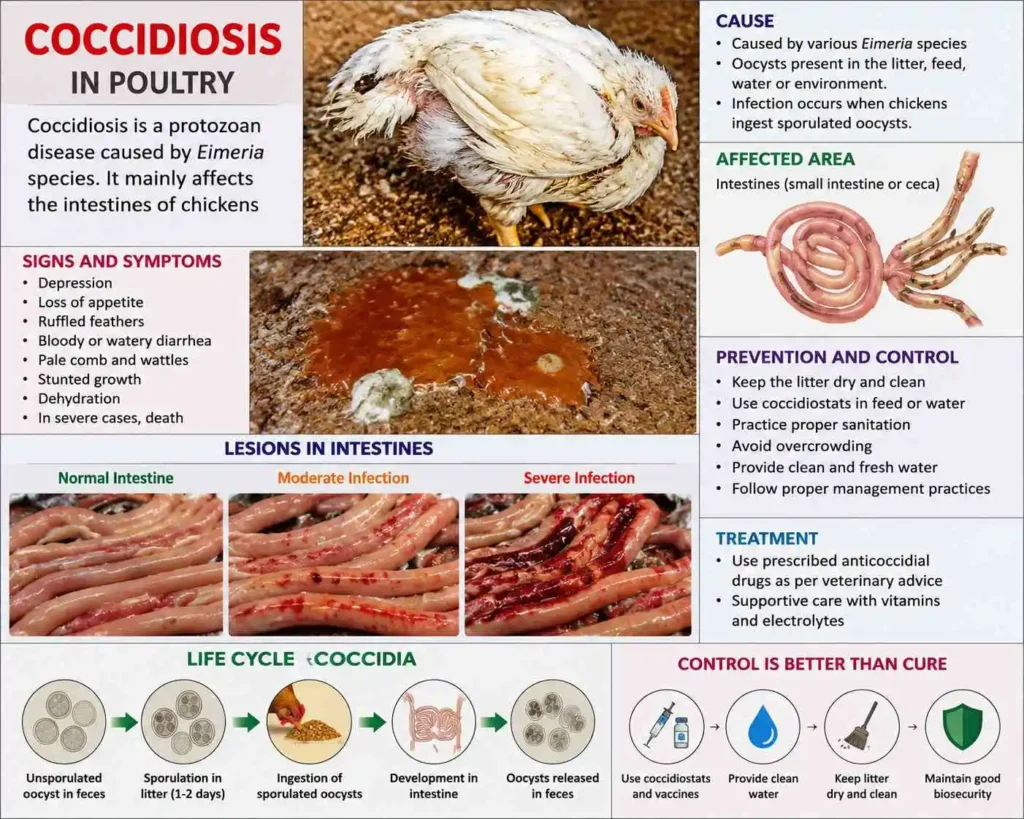
Keeping litter dry, maintaining proper ventilation, and providing clean drinking water are the best ways to control this disease. Many farms also use preventive feed additives.
Vaccination: Live coccidiosis vaccines containing sporulated oocysts of all relevant Eimeria species are used in broiler farms with a rotation or shuttle program, and widely in breeder and layer farms where lifelong immunity is desirable.
Vaccination is given at day 1 via spray in the hatchery or via gel bead on paper in the first week of life. Vaccinated birds develop protective immunity after controlled exposure, eliminating the need for prolonged coccidiostat use and reducing the risk of drug resistance development.
Gumboro Disease Diease in Poultry Farm (Infectious Bursal Disease)
Gumboro disease is a viral infection that mainly affects young birds. Its biggest danger is that it weakens the immune system of chickens, making them more vulnerable to other diseases.
Birds infected with this disease show weakness, white diarrhea, feather loss, and sudden death in severe cases. Even if birds survive, their immunity remains weak.
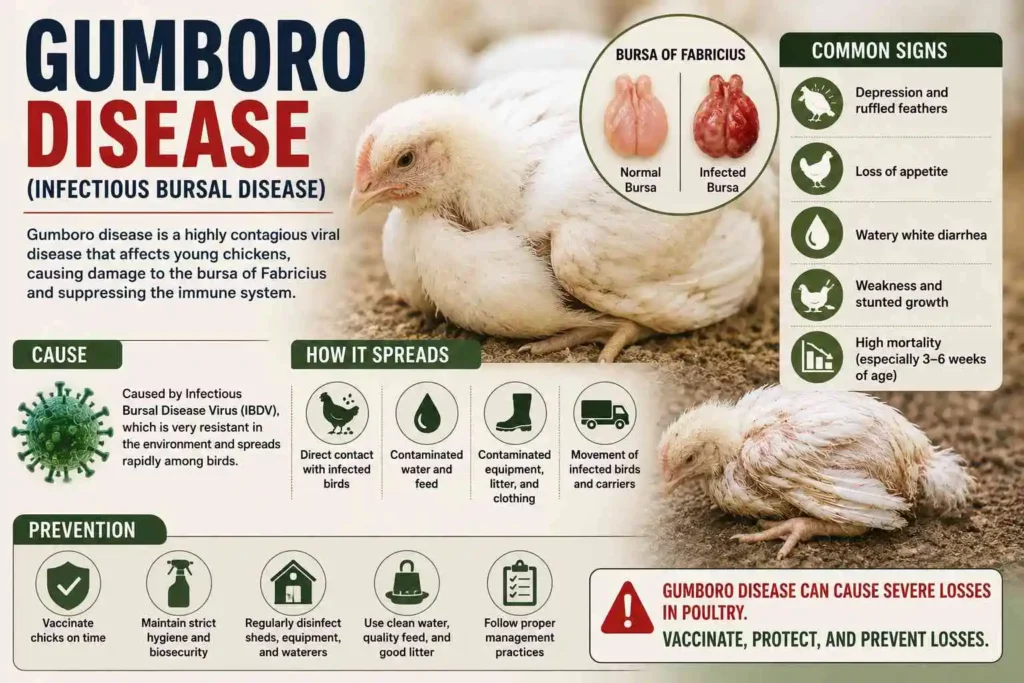
There is no direct treatment for this disease. Only supportive care like vitamins and electrolytes can help birds recover.
Vaccination at the correct age is the most effective prevention method. Clean brooding conditions and proper hygiene are also important to reduce risk.
Vaccination: A carefully timed vaccination program is critical. Parent (breeder) flocks are vaccinated with live vaccines followed by inactivated oil vaccines before lay, passing on high levels of maternal antibody to chicks. Chicks from well-vaccinated parents receive live intermediate or intermediate-plus vaccines at 14–18 days, timed to overcome maternal antibody interference.
In farms with high disease pressure, immune complex vaccines (where live virus is complexed with antibody) given at day-old provide prolonged protection. The exact timing should be based on Deventer formula calculations from maternal antibody titres.
Fowl Pox Disease in Poultry Farm
Fowl pox is a slow-spreading viral disease that affects the skin of birds and sometimes the respiratory system. It spreads mainly through mosquito bites and infected birds.
Birds develop wart-like growths on the comb, face, and wattles. In severe cases, they may have difficulty eating and breathing.
There is no direct treatment for this disease. Farmers can only use antiseptic care to prevent infection from worsening.
Vaccination and mosquito control are the most effective prevention methods. Keeping the farm clean also helps reduce mosquito breeding.
Salmonella Infection
Salmonella is a bacterial disease that affects poultry birds and can also spread to humans through contaminated food. That makes it a serious food safety concern.
Infected birds show diarrhea, weakness, loss of appetite, and high mortality in chicks. In some cases, adult birds may not show clear symptoms but still carry the infection.
Treatment is possible using antibiotics, but only under veterinary supervision. Misuse of antibiotics can lead to resistance.
Prevention is more important. Clean feed storage, safe drinking water, rodent control, and proper hygiene are key factors in controlling this disease.
Vaccination: Live attenuated Salmonella Typhimurium and Salmonella Enteritidis vaccines are available for use in layer flocks in several countries, significantly reducing colonization and egg contamination. These are typically given to chicks at day 1 and again at 5–6 weeks.
Inactivated vaccines are used as boosters in adult layers and breeders. Vaccination does not replace biosecurity and testing programs but is an important additional layer of protection in layer and breeder flocks.
Chronic Respiratory Disease (CRD)
CRD is a respiratory infection that affects the breathing system of poultry birds. It is common in poorly ventilated farms.
Birds show coughing, sneezing, nasal discharge, and slow growth. Egg production in layers also decreases over time.
Antibiotics can help control symptoms, but prevention is better. Proper ventilation, fresh air circulation, and avoiding overcrowding are very important for prevention.
Vaccination: Live MG vaccines (F-strain, ts-11, 6/85) are used widely in layer and breeder flocks in endemic areas. They are administered via eye drop and help reduce egg production losses and clinical severity.
However, vaccinated birds remain carriers of the vaccine strain, complicating MG eradication programs. MS vaccines (modified live) are also available and used similarly. Vaccination programs for Mycoplasma should always be designed with veterinary guidance, considering the farm’s breeder flock status.
Marek’s Disease
Marek’s disease is a viral infection that affects nerves and internal organs. It can cause paralysis, tumors, weight loss, and blindness in birds.
This disease spreads through feather dust and remains in the environment for a long time, making it very difficult to eliminate once it enters a farm.
There is no treatment available. Vaccination at day-old chick stage is the only effective protection.
Clean hatchery practices and early vaccination are extremely important for prevention.
Vaccination: Vaccination is the only effective control measure. Marek’s disease vaccines must be given at the hatchery on the day of hatch (day 0) because the virus establishes itself very rapidly after exposure. The most widely used vaccines are HVT (Herpesvirus of Turkeys, strain FC-126), bivalent vaccines (HVT + SB-1 or Rispens/CVI988), and trivalent combinations.
The Rispens/CVI988 strain offers the highest level of protection against very virulent strains. Importantly, Marek’s vaccines prevent tumour formation and disease but do not prevent infection or shedding of field virus.
Prevention of Diseases in Poultry Farm
Prevention is the most important part of poultry farming. A successful farmer always focuses more on prevention than treatment.
The most effective prevention methods include maintaining clean sheds, providing fresh water, using quality feed, following vaccination schedules, and ensuring proper ventilation.
Farmers should also remove dead birds quickly, avoid overcrowding, and maintain strict biosecurity rules. These simple steps can significantly reduce disease risk and improve farm profitability.
Basic Poultry Vaccination Schedule
A simple vaccination plan includes:
- Day 0: Marek’s disease vaccine
- Day 5–7: Newcastle disease vaccine
- Day 10–14: Gumboro vaccine
- Day 18–21: Booster Newcastle vaccine
- Week 4–5: Fowl pox vaccine (for layers)
This schedule may vary depending on local disease conditions and veterinary advice also you can visit TNAU.
Economic Loss Due to Diseases in Poultry Farm
Diseases in poultry farms cause serious financial losses. Farmers face sudden death of birds, poor growth, low egg production, high medicine costs, and loss of market reputation.
Even a small outbreak can reduce overall profit significantly, especially for small farmers. That is why disease prevention is essential for long-term success.
Conclusion
Diseases in poultry farm systems are one of the biggest challenges in poultry farming, but they can be controlled with proper management and awareness.
Most diseases spread due to poor hygiene, lack of vaccination, and weak biosecurity. By following proper farming practices, farmers can protect their birds and increase profits.
Successful poultry farming is not just about feeding birds—it is about protecting them every day from diseases.
If you are planning to start Poultry Farming the read our Chicken Farming Guide.
You can also read other guides to our Livestock Farming.
Frequently Asked Questions
What are the most common diseases in poultry?
The most common diseases are:
Newcastle disease (Ranikhet disease)
Coccidiosis
Avian influenza (bird flu)
Fowl pox
Infectious bronchitis
Gumboro disease (IBD)
How does bird flu spread?
Bird flu spreads through:
Wild birds
Contaminated feed or water
Equipment and human contact
What is the role of vaccination in poultry?
Vaccination protects birds from deadly diseases like Newcastle disease, Gumboro, and fowl pox. It is essential for survival and profit.
What should be done when a disease outbreak happens?
Isolate sick birds immediately
Consult a veterinary doctor
Disinfect the shed
Stop movement of birds and people
Follow treatment or vaccination advice
Newsletter




❤️❤️