

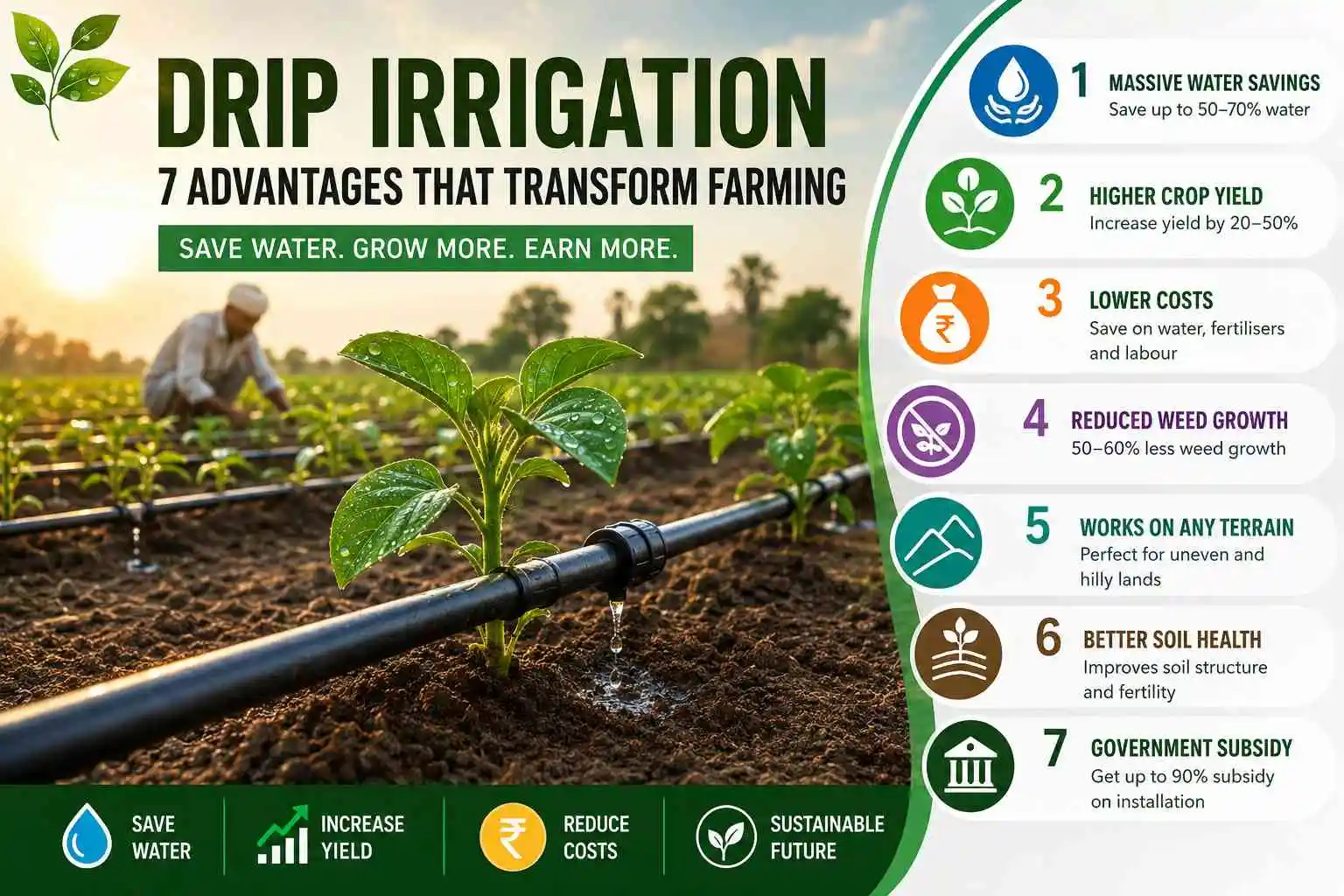

Drip Irrigation Benefits: 7 Advantages of Drip Irrigation
Introduction: Why Are Lakhs of Farmers Switching to Drip Irrigation?
Imagine you are watering your field with a bucket that has 100 holes in it. Most of the water spills on the ground before it even reaches the plant roots. That is exactly what happens with flood irrigation — the traditional method that most Indian farmers have used for generations.
Now imagine a thin pipe going directly to every single plant root, delivering just the right amount of water — drop by drop — exactly where it is needed. No waste. No runoff. No evaporation.
That is drip irrigation.
In India today, more than 50 lakh hectares of farmland is already under drip and micro-irrigation systems. And the number keeps growing every year. Why? Because farmers who switch are seeing results they never imagined possible — less water usage, lower electricity bills, bigger harvests, and healthier soil.
In this blog, we will break down the drip irrigation benefits in simple language, back it with real numbers in Indian Rupees, and show you exactly why the 7 advantages of drip irrigation are changing Indian farming forever.
What Is Drip Irrigation? (Quick Explanation)
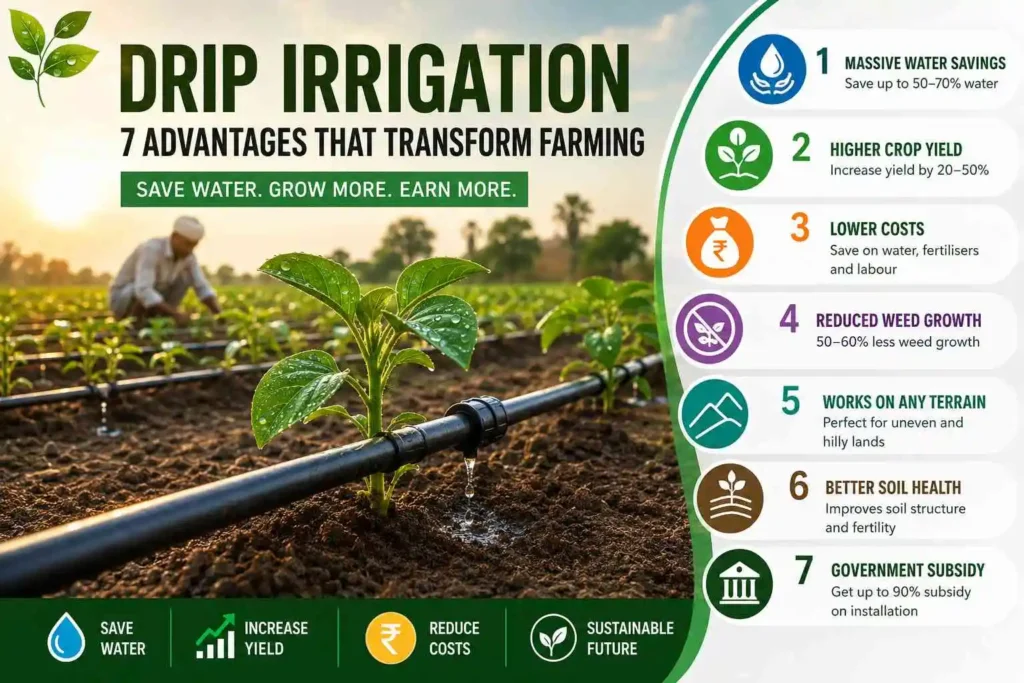
Drip irrigation is a method of watering crops where water is delivered directly to the root zone of each plant through a network of pipes, tubes, valves, and emitters (small nozzles). The water drips slowly and steadily — sometimes drop by drop — right at the base of the plant.
It is also called trickle irrigation or micro-irrigation. You can check out full setup guide of Drip Irrigation
It works for almost all crops — fruits, vegetables, sugarcane, cotton, banana, pomegranate, tomato, onion, grapes, and even flowers. Whether you have 1 bigha of land or 100 acres, drip irrigation can work for you.
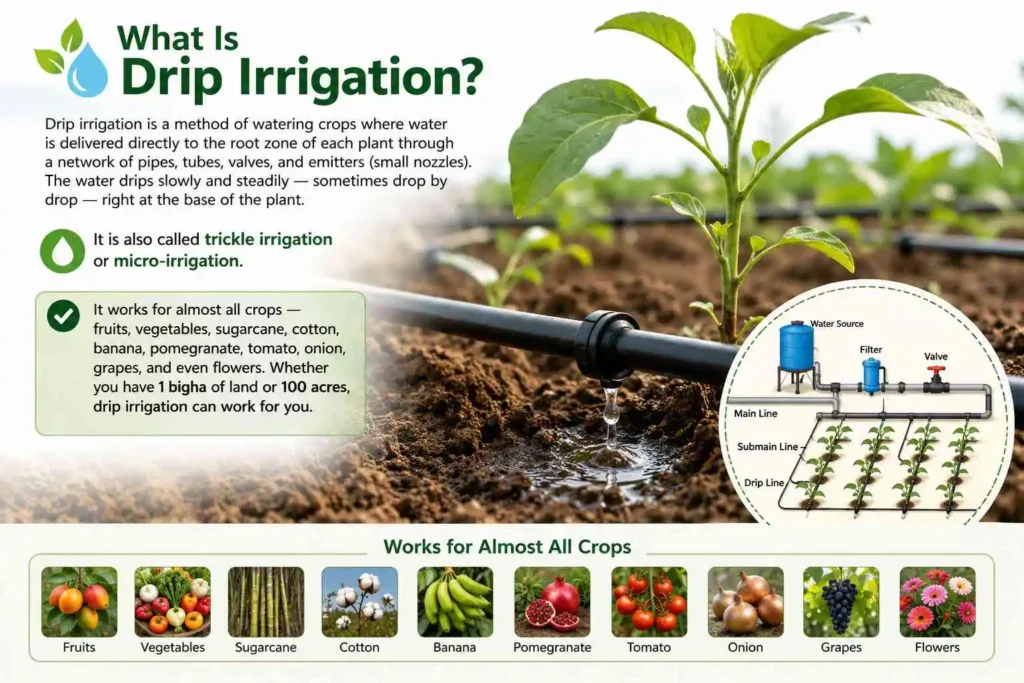
Drip Irrigation Benefits: 7 Advantages of Drip Irrigation
Let us now go through each benefit one by one in detail.
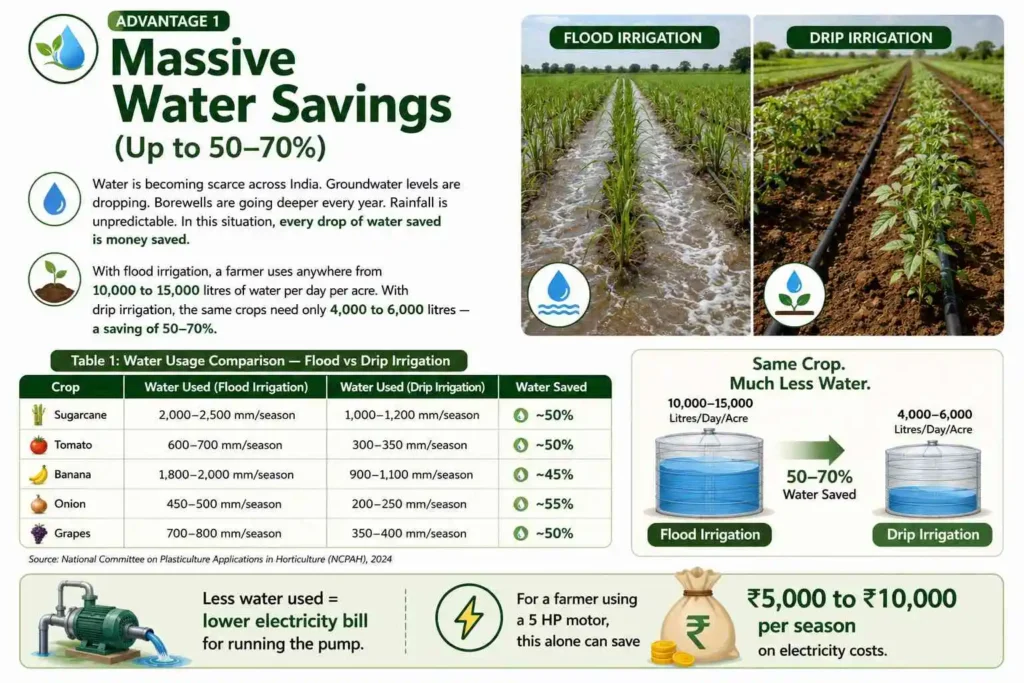
Advantage 1: Massive Water Savings (Up to 50–70%)
Water is becoming scarce across India. Groundwater levels are dropping. Borewells are going deeper every year. Rainfall is unpredictable. In this situation, every drop of water saved is money saved.
With flood irrigation, a farmer uses anywhere from 10,000 to 15,000 litres of water per day per acre. With drip irrigation, the same crops need only 4,000 to 6,000 litres — a saving of 50–70%.
Table 1: Water Usage Comparison — Flood vs Drip Irrigation
| Crop | Water Used (Flood Irrigation) | Water Used (Drip Irrigation) | Water Saved |
|---|---|---|---|
| Sugarcane | 2,000–2,500 mm/season | 1,000–1,200 mm/season | ~50% |
| Tomato | 600–700 mm/season | 300–350 mm/season | ~50% |
| Banana | 1,800–2,000 mm/season | 900–1,100 mm/season | ~45% |
| Onion | 450–500 mm/season | 200–250 mm/season | ~55% |
| Grapes | 700–800 mm/season | 350–400 mm/season | ~50% |
Source: National Committee on Plasticulture Applications in Horticulture (NCPAH), 2024
Less water used = lower electricity bill for running the pump. For a farmer using a 5 HP motor, this alone can save ₹15,000 to ₹25,000 per acre per season in electricity costs.
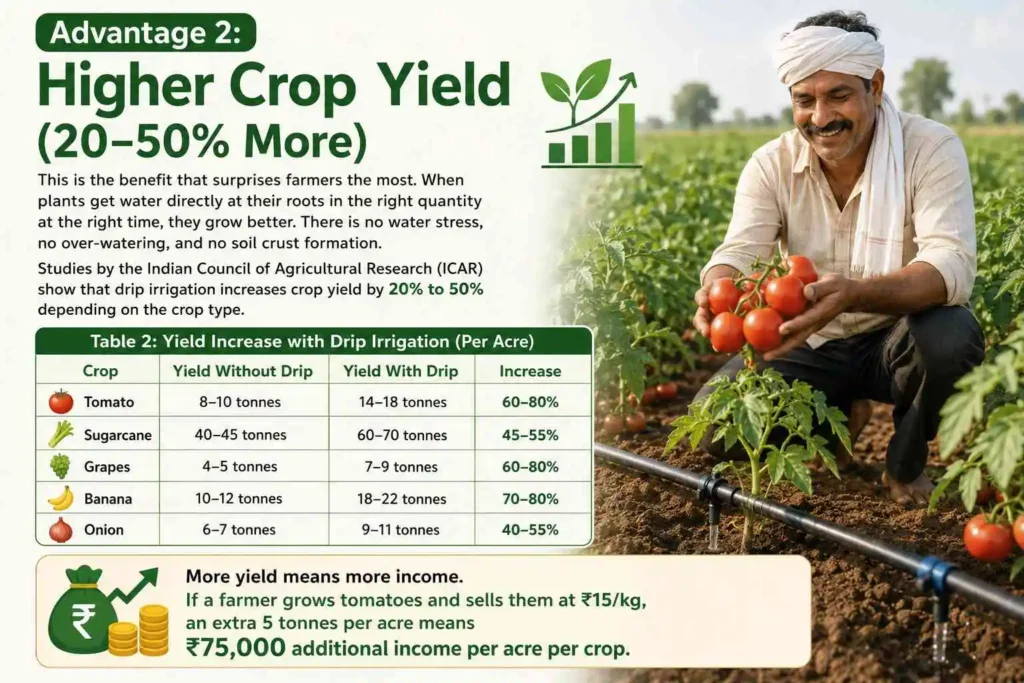
Advantage 2: Higher Crop Yield (20–50% More)
This is the benefit that surprises farmers the most. When plants get water directly at their roots in the right quantity at the right time, they grow better. There is no water stress, no over-watering, and no soil crust formation.
Studies by the Indian Council of Agricultural Research (ICAR) show that drip irrigation increases crop yield by 20% to 50% depending on the crop type.
Table 2: Yield Increase with Drip Irrigation (Per Acre)
| Crop | Yield Without Drip | Yield With Drip | Increase |
|---|---|---|---|
| Tomato | 8–10 tonnes | 14–18 tonnes | 60–80% |
| Sugarcane | 40–45 tonnes | 60–70 tonnes | 45–55% |
| Grapes | 4–5 tonnes | 7–9 tonnes | 60–80% |
| Banana | 10–12 tonnes | 18–22 tonnes | 70–80% |
| Onion | 6–7 tonnes | 9–11 tonnes | 40–55% |
More yield means more income. If a farmer grows tomatoes and sells them at ₹15/kg, an extra 5 tonnes per acre means ₹75,000 additional income per acre per crop.
Advantage 3: Big Reduction in Fertiliser and Labour Cost
One of the smartest features of modern drip irrigation is fertigation — the practice of mixing fertilisers directly into the drip water. The fertiliser goes straight to the plant roots, so nothing is wasted on empty soil patches.
With traditional broadcasting of fertilisers, 30–40% of nutrients are lost to runoff and evaporation. With drip fertigation, nearly 90% of the fertiliser is absorbed by the plant.
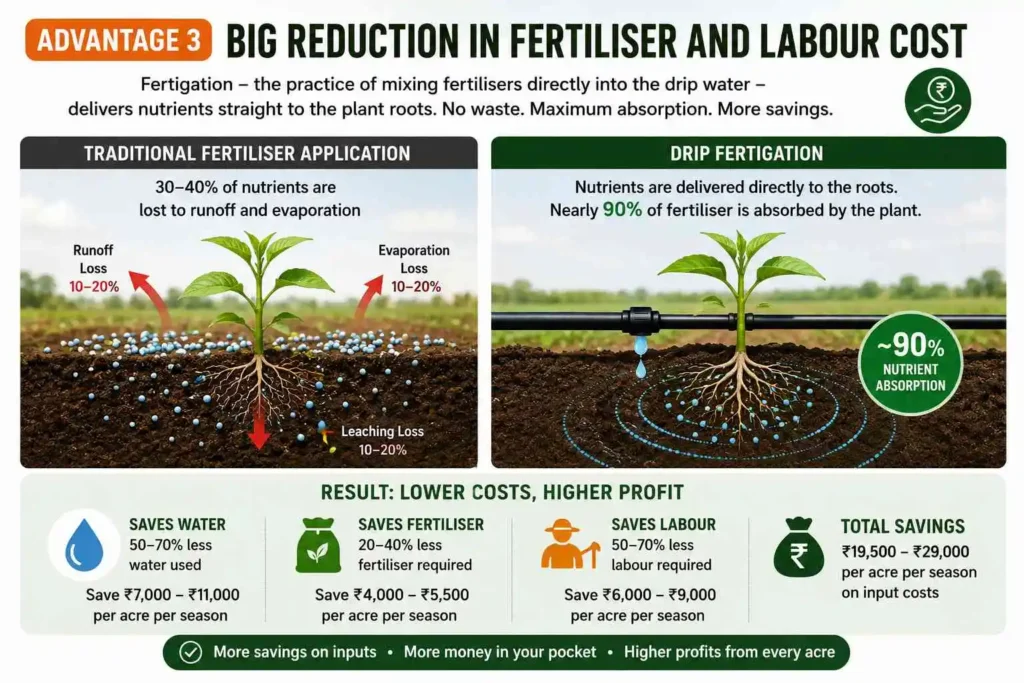
Table 3: Cost Comparison — Traditional vs Drip System (Per Acre Per Season)
| Expense Head | Traditional Method (₹) | Drip Irrigation (₹) | Savings (₹) |
|---|---|---|---|
| Water/Electricity | ₹12,000 – ₹18,000 | ₹5,000 – ₹7,000 | ₹7,000 – ₹11,000 |
| Fertilisers | ₹10,000 – ₹14,000 | ₹6,000 – ₹8,500 | ₹4,000 – ₹5,500 |
| Labour (irrigation) | ₹8,000 – ₹12,000 | ₹2,000 – ₹3,000 | ₹6,000 – ₹9,000 |
| Weed Control | ₹4,000 – ₹6,000 | ₹1,500 – ₹2,500 | ₹2,500 – ₹3,500 |
| Total Savings | — | — | ₹19,500 – ₹29,000 |
That is a saving of nearly ₹20,000 to ₹29,000 per acre per season just on input costs — before even counting the extra yield income.
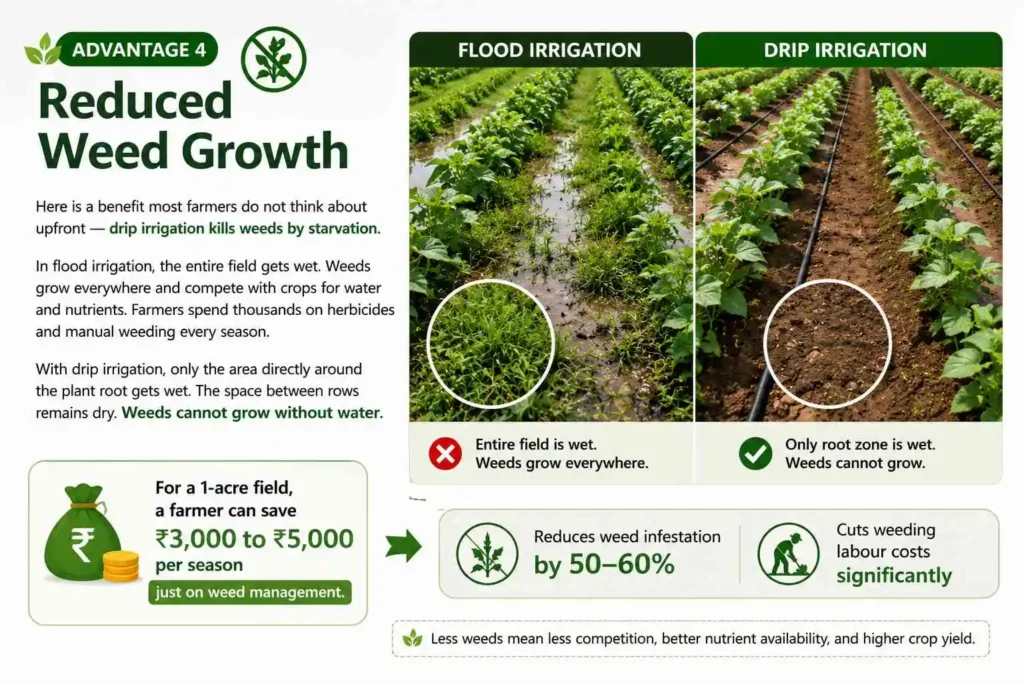
Advantage 4: Reduced Weed Growth
Here is a benefit most farmers do not think about upfront — drip irrigation kills weeds by starvation.
In flood irrigation, the entire field gets wet. Weeds grow everywhere and compete with crops for water and nutrients. Farmers spend thousands on herbicides and manual weeding every season.
With drip irrigation, only the area directly around the plant root gets wet. The space between rows remains dry. Weeds cannot grow without water. This alone reduces weed infestation by 50–60% and cuts weeding labour costs significantly.
For a 1-acre field, a farmer can save ₹3,000 to ₹5,000 per season just on weed management.
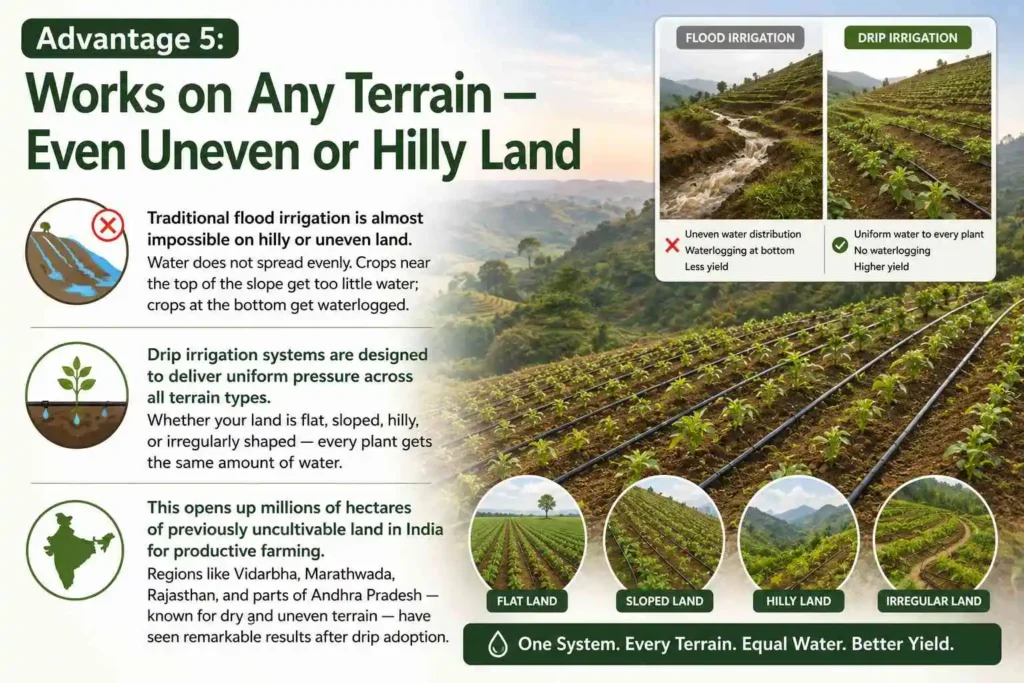
Advantage 5: Works on Any Terrain — Even Uneven or Hilly Land
Traditional flood irrigation is almost impossible on hilly or uneven land. Water does not spread evenly. Crops near the top of the slope get too little water; crops at the bottom get waterlogged.
Drip irrigation systems are designed to deliver uniform pressure across all terrain types. Whether your land is flat, sloped, hilly, or irregularly shaped — every plant gets the same amount of water.
This opens up millions of hectares of previously uncultivable land in India for productive farming. Regions like Vidarbha, Marathwada, Rajasthan, and parts of Andhra Pradesh — known for dry and uneven terrain — have seen remarkable results after drip adoption.
Advantage 6: Better Soil Health and Less Soil Erosion
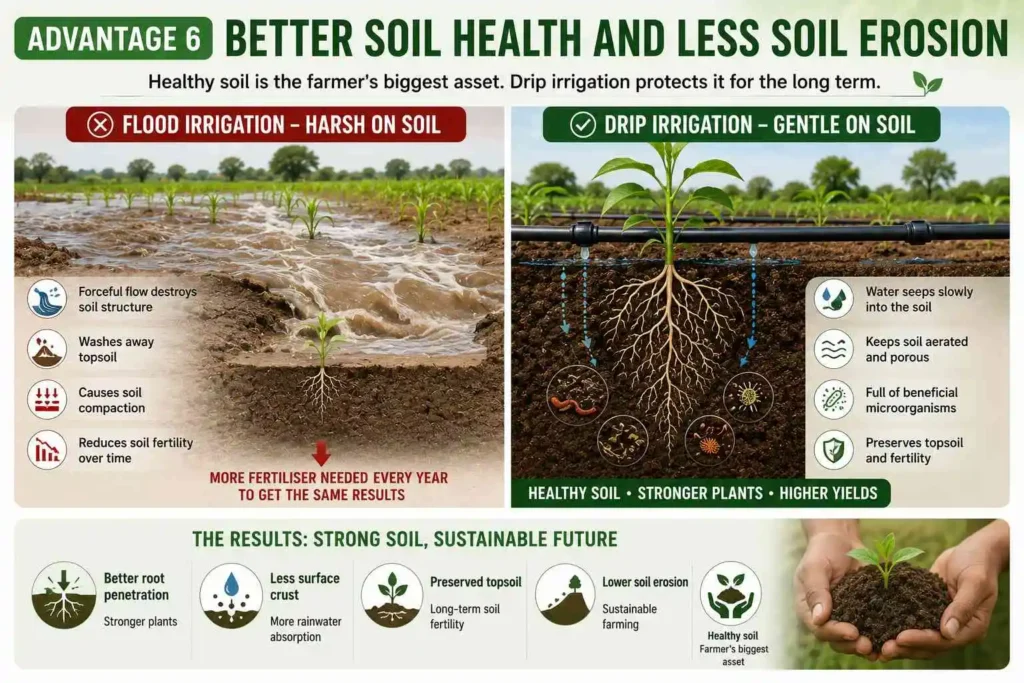
Flood irrigation is harsh on soil. The forceful flow of water destroys soil structure, washes away topsoil, and causes compaction. Over time, this leads to reduced soil fertility and the farmer needs to use more fertiliser every year just to get the same results.
Drip irrigation is gentle. Water seeps slowly into the soil without disturbing the structure. This keeps the soil aerated, porous, and full of beneficial microorganisms. The result:
- Better root penetration → stronger plants
- Less surface crust → more rainwater absorption
- Preserved topsoil → long-term soil fertility
- Lower soil erosion → sustainable farming
Healthy soil is the farmer’s biggest asset. Drip irrigation protects it for the long term.
Advantage 7: Government Subsidy Makes It Affordable
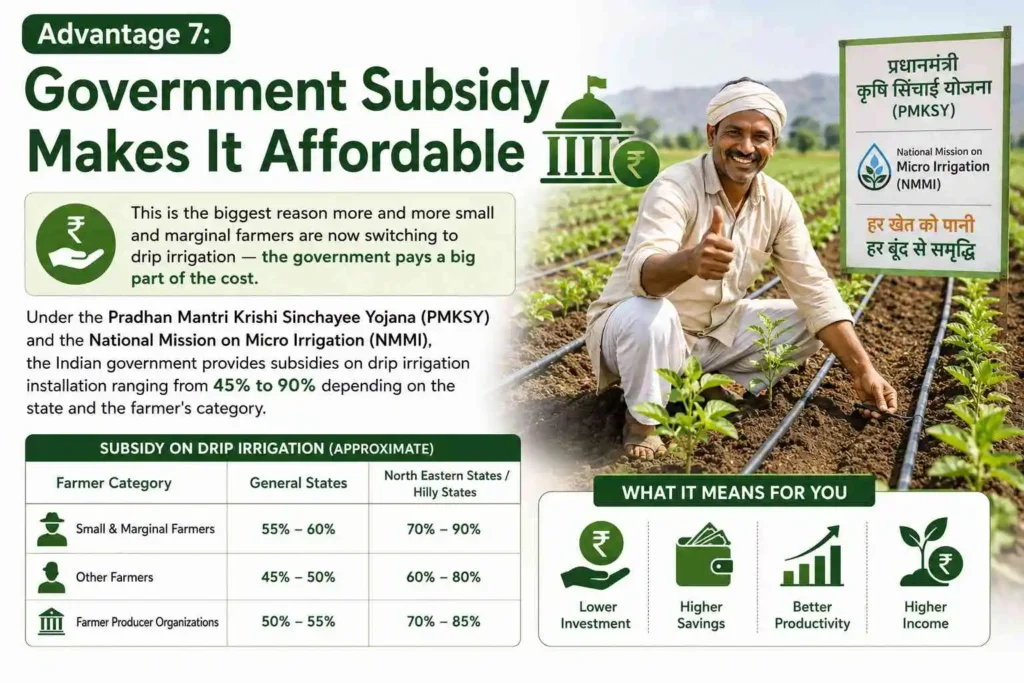
This is the biggest reason more and more small and marginal farmers are now switching to drip irrigation — the government pays a big part of the cost.
Under the Pradhan Mantri Krishi Sinchayee Yojana (PMKSY) and the National Mission on Micro Irrigation (NMMI), the Indian government provides subsidies on drip irrigation installation ranging from 45% to 90% depending on the state and the farmer’s category.
Table 4: Drip Irrigation Installation Cost and Subsidy (Per Acre)
| Farmer Category | Installation Cost (₹) | Government Subsidy (%) | Farmer’s Share (₹) |
|---|---|---|---|
| Small & Marginal (SC/ST) | ₹40,000 – ₹60,000 | 90% | ₹4,000 – ₹6,000 |
| Small & Marginal (General) | ₹40,000 – ₹60,000 | 75–80% | ₹8,000 – ₹15,000 |
| Other Farmers | ₹40,000 – ₹60,000 | 50–55% | ₹18,000 – ₹27,000 |
Rates vary by state. Contact your nearest Agriculture Department office or Krishi Vigyan Kendra (KVK) for exact subsidy available in your district.
The system typically pays back its cost within 1 to 2 seasons through saved water, reduced inputs, and higher yield. After that, every season is pure profit.
Quick Summary: Drip Irrigation Benefits at a Glance
| Sq. No. | Benefit | Impact |
|---|---|---|
| 1 | Water Savings | 50–70% less water used |
| 2 | Higher Yield | 20–80% more production |
| 3 | Lower Input Cost | Saves ₹19,500–₹29,000/acre/season |
| 4 | Fewer Weeds | 50–60% less weed growth |
| 5 | Works on Any Land | Even slopes and hilly areas |
| 6 | Better Soil Health | Preserves structure and fertility |
| 7 | Government Subsidy | 45–90% cost covered by government |
Conclusion: The Drop That Changes Everything
The drip irrigation benefits are not just numbers on paper — they are the difference between a farmer who struggles each season and a farmer who thrives. The 7 advantages of drip irrigation we covered — water savings, higher yield, lower costs, weed control, terrain flexibility, better soil health, and government support — make a powerful, undeniable case for adoption. Read our orange farming guide to learn how drip irrigation can increase your income.
With climate change making monsoons unpredictable and groundwater levels falling every year, drip irrigation is not just an option for Indian farmers anymore. It is a survival strategy.
If you have not already applied for the government subsidy and made the switch, now is the best time. Talk to your nearest KVK, contact your state agriculture department, or speak to a local drip equipment dealer who can survey your field for free.
One drop of change can start a flood of prosperity. Plant the seed today.
Disclaimer: Subsidy rates, yield data, and cost figures are approximate and vary by state, crop, and season. Consult your local agricultural extension officer for region-specific guidance before making decisions.
Frequently Asked Questions (FAQs)
Q1. How long does a drip irrigation system last?
A good quality drip system lasts 8 to 12 years with proper maintenance. Clean the filters regularly, flush the lines at the end of each season, and protect pipes from UV and pests.
Q2. Is drip irrigation suitable for small farmers with 1–2 acres?
Absolutely yes. In fact, small farmers benefit the most because they have limited water and labour resources. The government subsidy makes it very affordable for them.
Q3. Can drip irrigation work for crops like rice or wheat?
Drip is most effective for horticultural crops (fruits, vegetables, spices), sugarcane, and cotton. For rice, alternate wetting and drying methods work better. For wheat, sprinkler irrigation is more common.
Q4. Where can I apply for the drip irrigation subsidy?
You can apply at your local District Agriculture Office, through the PM-KUSUM portal, or through your state’s agriculture department website. Your nearest Krishi Vigyan Kendra (KVK) will also guide you through the process at no cost.
Q5. What is the minimum land size needed for drip irrigation?
There is no minimum. Systems are available for even 0.5 bigha of land. Costs scale with area, and the subsidy applies regardless of land size (within scheme limits).
Newsletter